Texas' Greatest Treasure Hunt: Aury is the prequel that makes all of it make sense
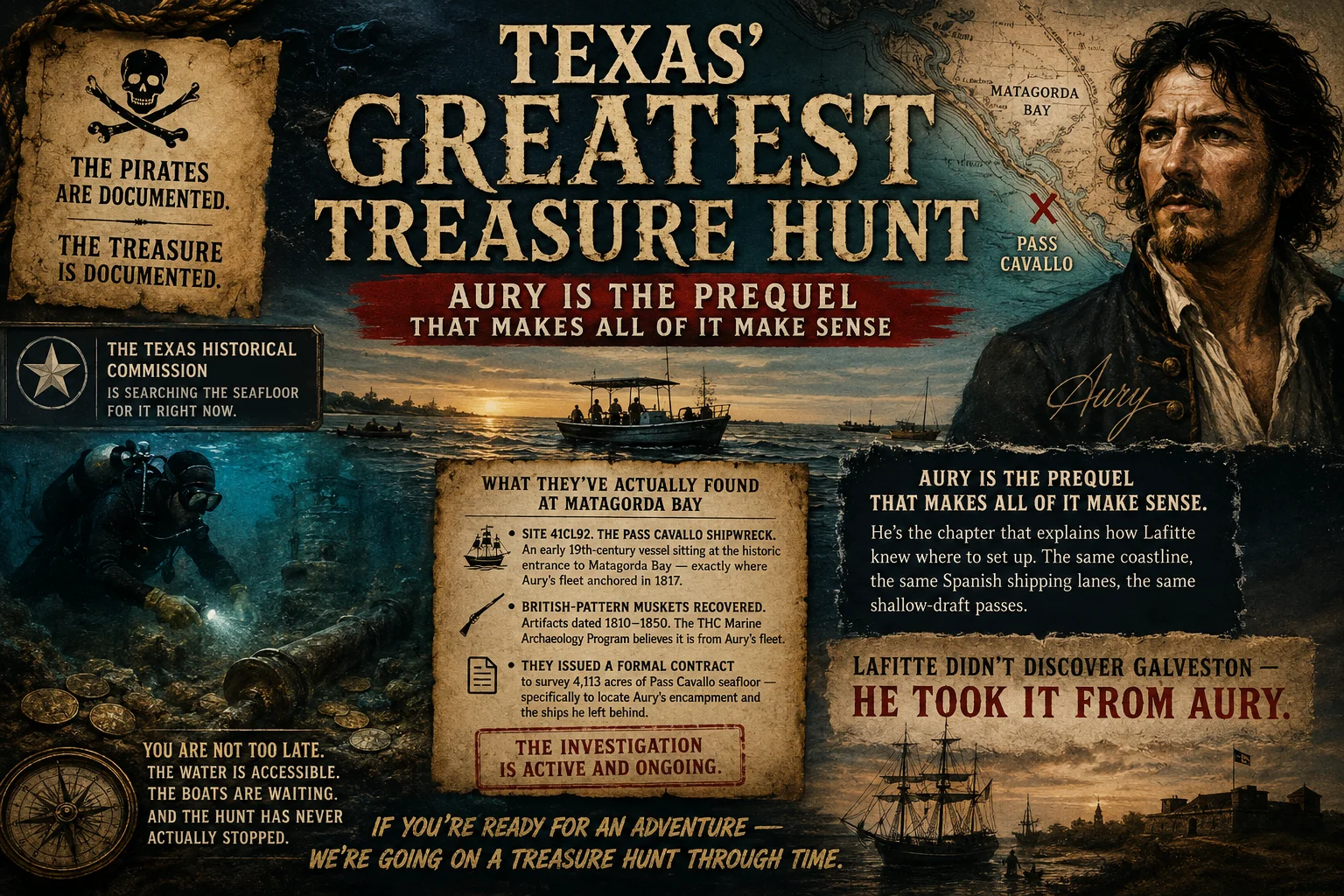
The pirates are documented.
The treasure is documented.
The Texas Historical Commission is searching the seafloor for it right now — and a descendant of Lafitte’s most trusted lieutenant just surfaced after seeing a Trek4Free article.
You are not too late. The water is accessible. The boats are waiting. And the hunt has never actually stopped.
If you’re ready for an adventure — we’re going on a treasure hunt through time.
What they’ve actually found at Matagorda Bay —
Site 41CL92. The Pass Cavallo Shipwreck. An early 19th-century vessel at the historic entrance to Matagorda Bay — the same pass where Aury’s fleet anchored in 1817.
British-pattern muskets recovered. Artifacts dated 1810–1850. The wreck appears to be a Texas Revolution gun runner — and its cannons were salvaged and used in the defense of the Alamo in 1836.
National Geographic covered it. The Texas Historical Commission is separately planning surveys for Aury’s abandoned fleet. Pass Cavallo has layers — and not all of them have been found.
The investigation is active and ongoing.
Aury is the prequel that makes all of it make sense. He’s the chapter that explains how Lafitte knew where to set up. The same coastline, the same Spanish shipping lanes, the same shallow-draft passes.
Lafitte didn’t discover Galveston — he took it from Aury.
Timeline
- 1540s — Spanish silver discovered in the mountains of northern New Spain; El Camino Real becomes the great silver highway — mule trains carry bullion south to Mexico City, then loaded onto Atlantic-bound ships at Veracruz
- 1554 — Three Spanish galleons sink off Padre Island carrying Camino Real silver bound for Spain — the same highway, the same ore, the end of a two-hundred-year supply chain (the oldest layer of this story)
- 1750s — Spanish missionaries establish the San Saba Mission; soldiers hunt the nearby Los Almagres silver mine — the same mine Jim Bowie will chase eighty years later
- 1808 — Slave import ban creates the Bowie/Lafitte scheme
- 1816 — Aury arrives at Galveston before Lafitte
- 1817 — Aury at Matagorda Bay with 13 ships — camp attacked, flees with 2 ships, leaves the rest behind
- 1817–1821 — Lafitte builds Campeche on what Aury left
- 1821 — Lafitte burns Campeche, vanishes
- 1831 — Bowie hunts San Saba, Battle of Calf Creek
- 1835 — The San Felipe sinks at Pass Cavallo evading a Mexican warship; her cannons are salvaged from the bay and sent to San Antonio
- 1836 — Those cannons help defend the Alamo. Bowie dies inside. The mine location dies with him.
- 1843 — Mirabeau Lamar investigates, finds no Lafitte death record
- 1856 — Samuel Colt buys half of Lamar
- 1937 — Doc Noss finds Victorio Peak
- Now — Texas Historical Commission planning dedicated surveys at Pass Cavallo for Aury’s fleet. A descendant of Nez Coupe reaches out. The search is live.
Before Campeche
Everyone knows Jean Lafitte.
French pirate. Smuggler. Hero of the Battle of New Orleans. Ran a pirate colony on Galveston Island called Campeche from 1817 to 1821, vanished without a confirmed death record. The buried gold on the Texas Gulf Coast — Mustang Island, the Lamar Peninsula, the shallow passes between the barrier islands — all points back to Lafitte.
What almost nobody knows is that Lafitte wasn’t the first one there.
When Jean Lafitte arrived at Galveston Island in 1817, someone had already built the port. Set up the cannon batteries. Established the supply lines. Mapped the shallow-draft passes that make this coastline navigable if you know what you’re doing.
His name was Louis Michel Aury. He was French, like Lafitte. He was a privateer, like Lafitte. And he had been raiding Spanish silver in these waters for a year before Lafitte showed up.
Lafitte pushed him out. Aury left in a hurry. And the historical record has never fully accounted for what he left behind.
The Man Who Ran the Gulf First
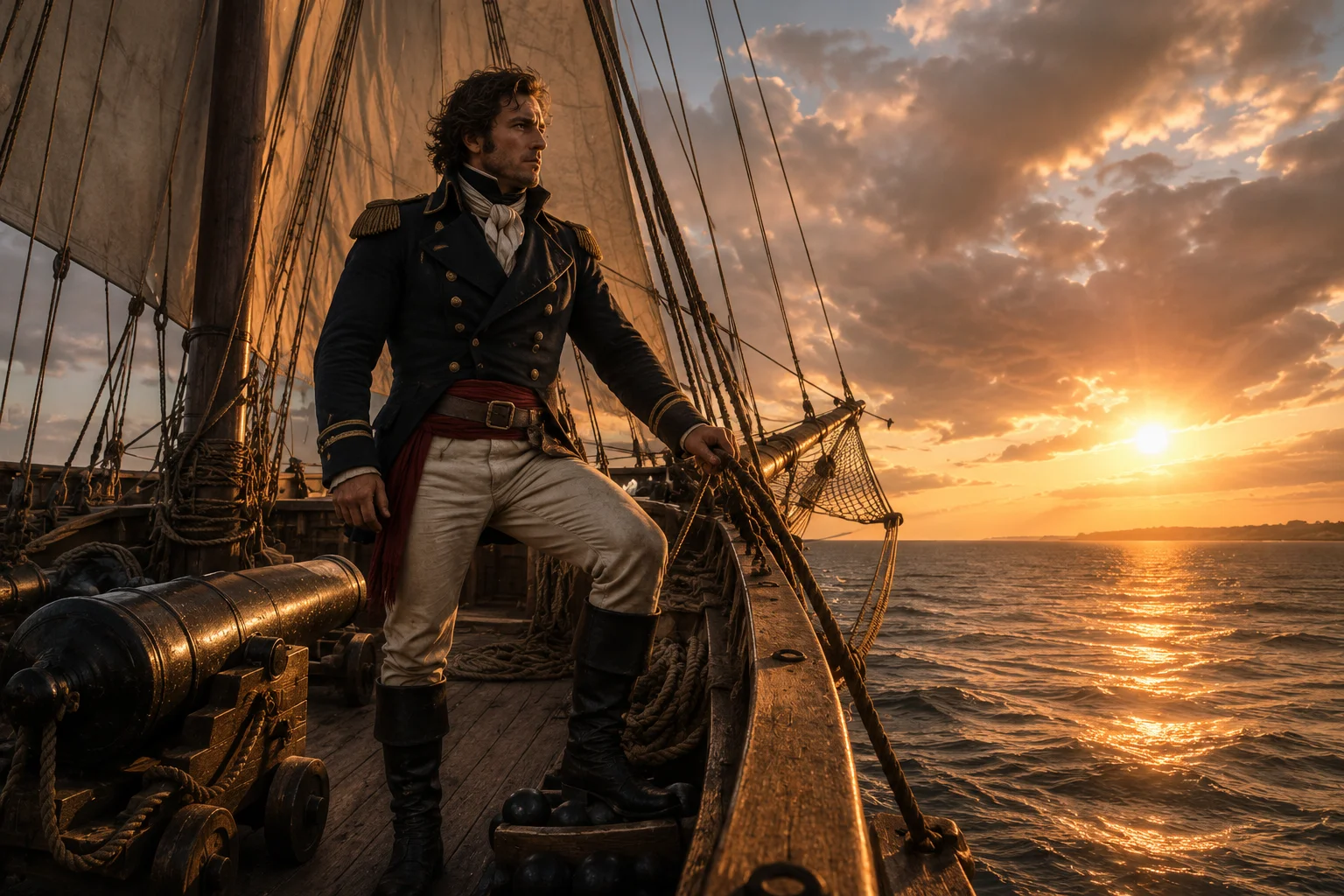
Louis Michel Aury was born in Paris around 1788. By his mid-twenties he had worked through the French navy, commanded his own vessels in the Caribbean, and built a reputation in the murky maritime world of revolutionary-era Latin America — where the line between privateer and pirate depended entirely on who was watching and which government had signed your paperwork.
He was fighting for the right side, or at least the winning one. Spain was losing its grip on the Americas. Mexico, Colombia, Venezuela — revolutionary movements were erupting across the continent. Aury aligned with them. He carried letters of marque from the Republic of Mexico, which made his attacks on Spanish ships technically legal acts of war rather than piracy.
The Spanish did not appreciate the distinction.
By 1816, Aury arrived at Galveston Island with something remarkable for a man operating in a political gray zone: a legitimate operation. He built a port. Log structures. Housing for his men. A fort with cannon batteries facing the harbor. And then — this detail says everything about what he was building — a printing press.
This was not a man planning to raid and run. He was building a colony.
In September 1816, José Manuel de Herrera, an envoy from the Republic of Mexico, formally appointed Aury resident commissioner of Galveston Island. He had a flag. He had a government behind him. He had 13 ships raiding Spanish cargo on the Gulf.
He had everything except luck.
The Money
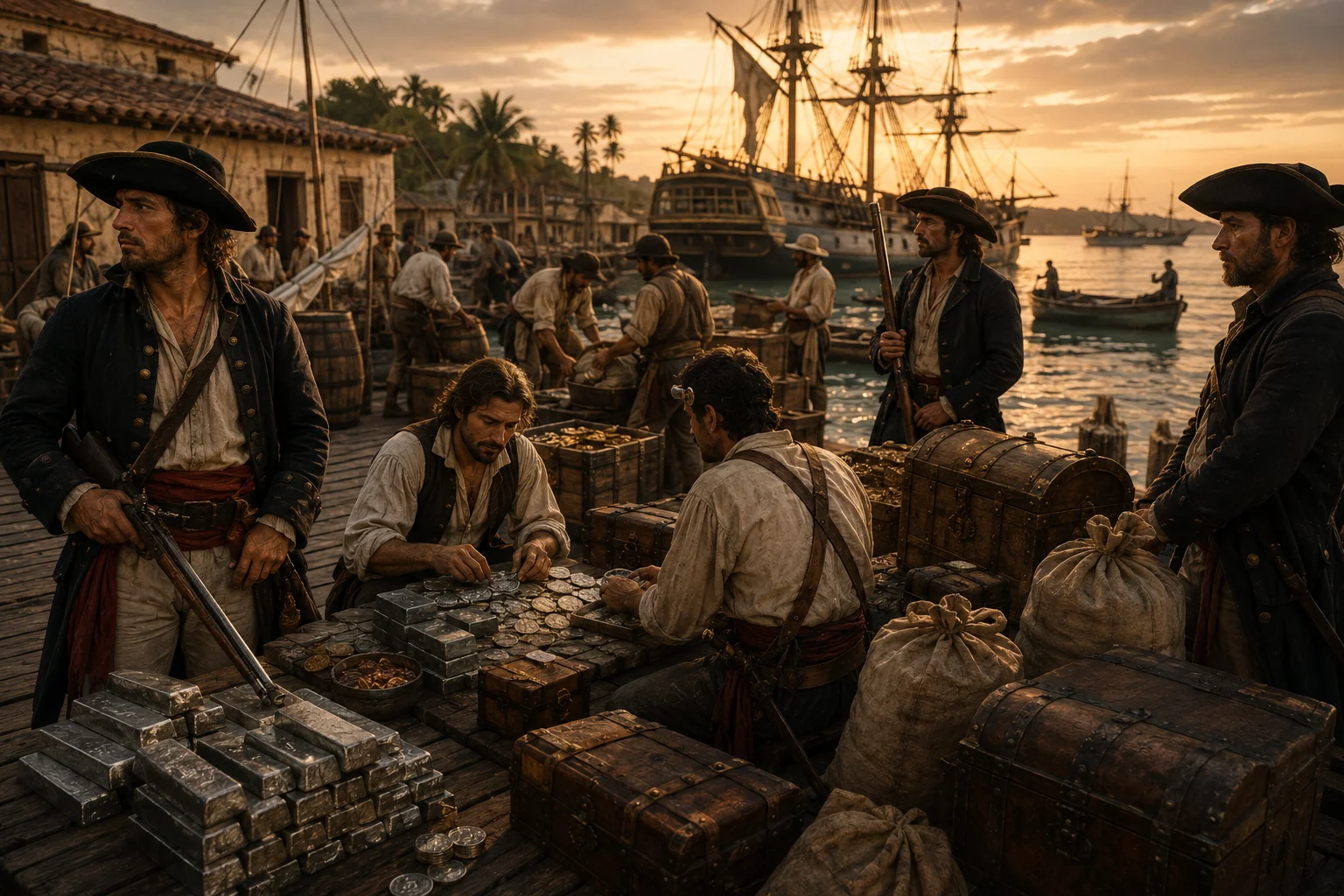
What made Spanish shipping worth raiding in the first place?
El Camino Real. The Royal Road.
The silver highway. Every ounce of ore mined from the mountains of northern New Spain came south on this road toward Mexico City. The mule trains loaded with silver bullion traveled this corridor for two hundred years — up from Chihuahua, through the Rio Grande valley past the ranges near Victorio Peak, through what is now New Mexico. Hundreds of mines fed into it. The ore consolidated at Mexico City into bars and coins, then moved to Veracruz and loaded into the holds of Atlantic-bound galleons pointed east toward Spain.
The Gulf of Mexico was the exit ramp of the entire system.
The three Spanish galleons that sank off Padre Island in 1554 were on exactly that run — loaded with Camino Real silver, lost in a Gulf storm before they cleared the coast.
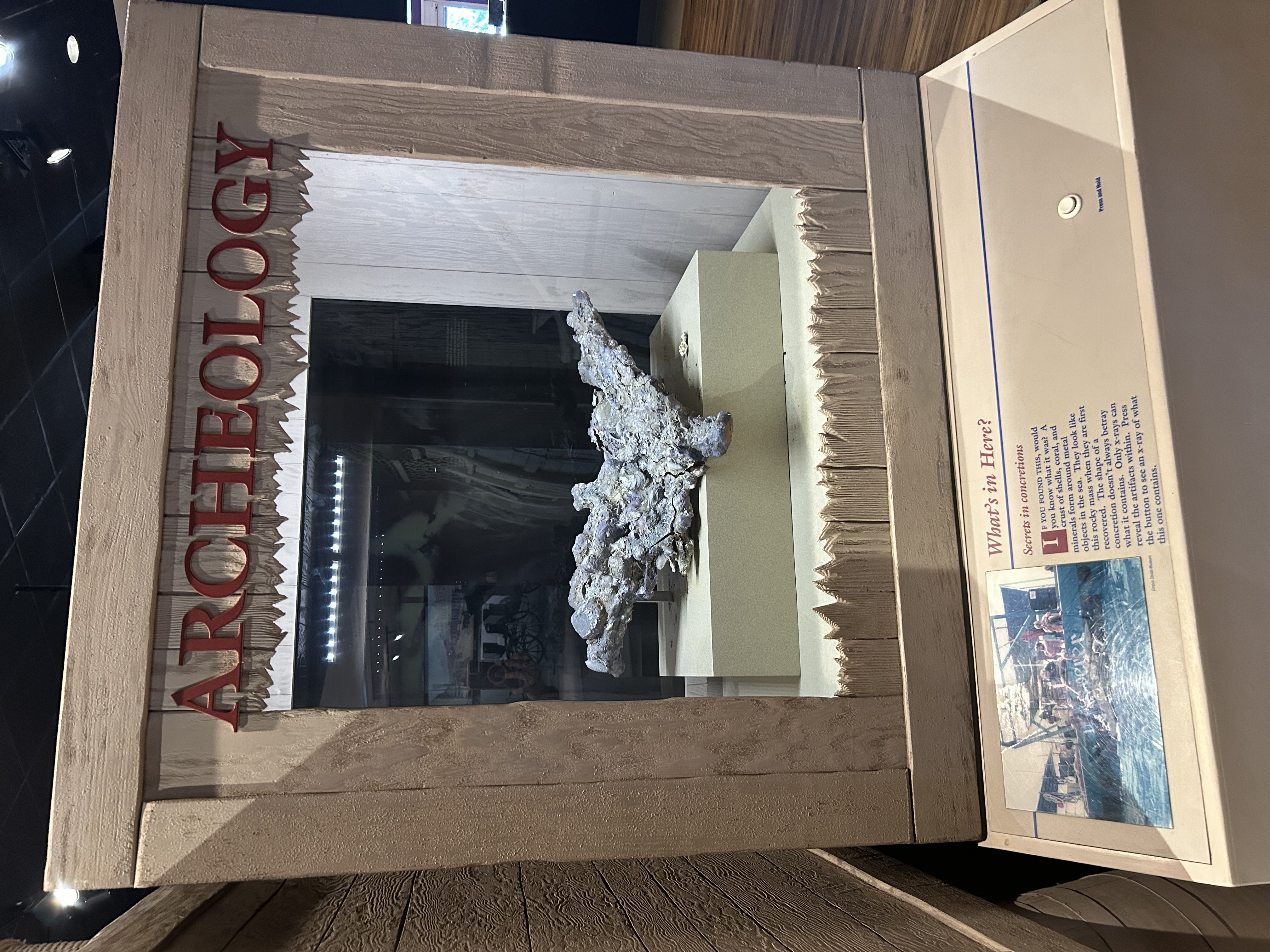
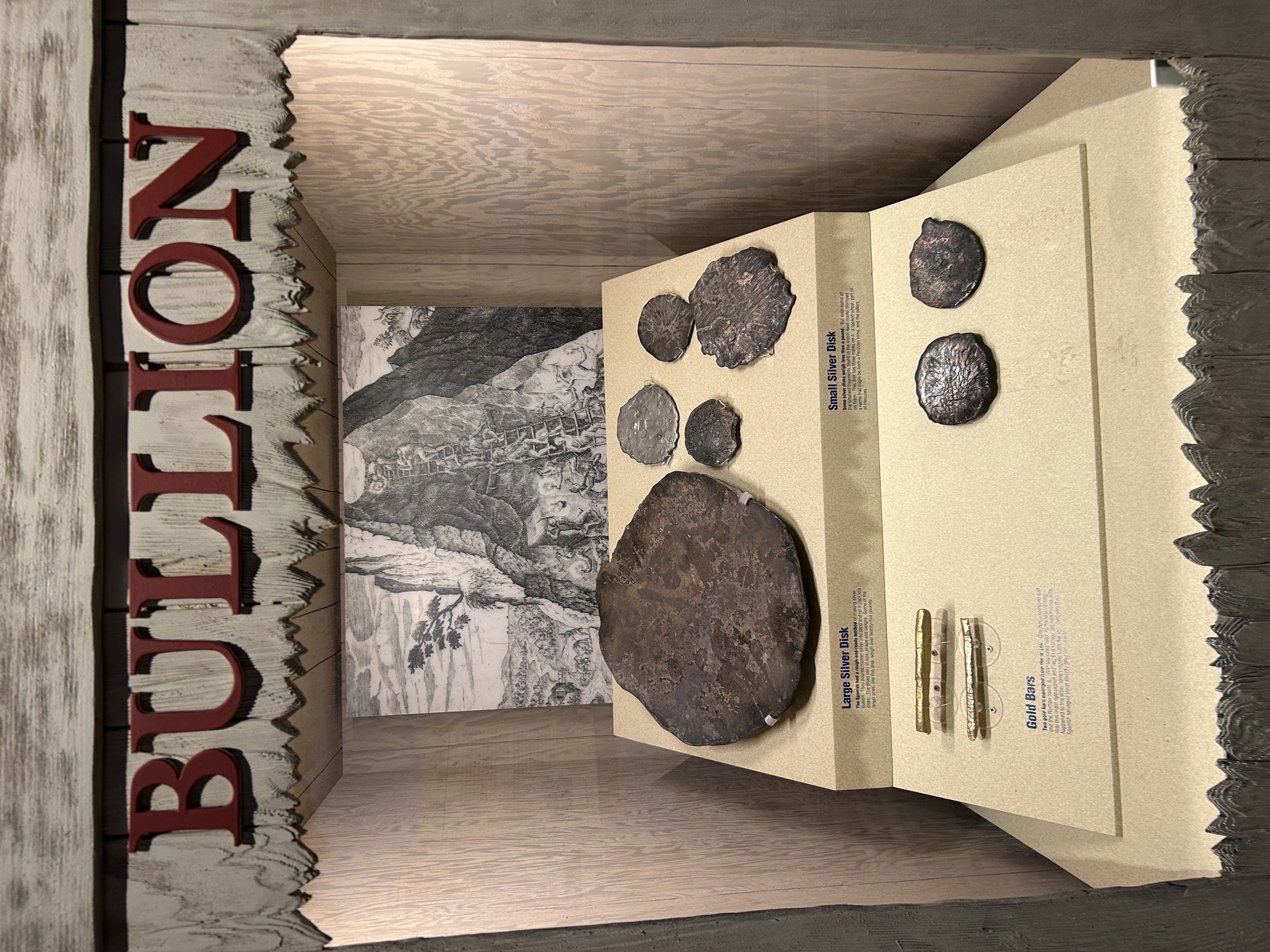
Artifacts from the 1554 fleet. On display at the Corpus Christi Museum of Science and History.
Real silver. Real ships. That is what two centuries of mountain mines and mule trains looked like when it finally reached the water.
Jim Bowie understood this world. He had run an operation with Jean Lafitte out of Galveston — smuggling enslaved people through the Texas coast before moving to Texas himself. Once there, Bowie became a treasure hunter chasing the same Spanish mines Spain had spent two centuries digging. The San Saba. Los Almagres. Every rumored deposit in the Hill Country. He fought 160 warriors to protect his access to one of them. He died at the Alamo in 1836 still looking. The mine location died with him.
Bowie and Aury never met — but they were hunting the same thing from opposite ends. Aury was taking the silver off the ships. Bowie was hunting the mountain where it came from.
That is what Aury’s fleet was intercepting in 1817. The same route. The same ore. The same Atlantic crossing — and Aury was waiting at the mouth of it.
Here is what the historical record documents about his take:
Of the prize ships that came through Galveston during his tenure, one carried a cargo of spice and indigo worth approximately $778,000.
That is one ship. One documented cargo. In 1817 dollars — roughly $18 million today.
He had thirteen ships. He was raiding continuously. The Gulf between Veracruz and the Florida Straits was a Spanish shipping highway, and Aury had men and vessels positioned to intercept it.
Where did the accumulated prize money go?
That is the question the historical record doesn’t answer cleanly.
The Mutiny
Before Aury ever reached Matagorda Bay, he took a hit he couldn’t recover from.
On September 7, 1816, a portion of his crew — Haitian sailors who were central to his Gulf operations — mutinied. They didn’t just leave. They sailed to Haiti with considerable booty and left Aury wounded.
Whatever Aury had accumulated to that point — prize money, coin, cargo — a significant portion of it sailed away on ships he never saw again.
He had been robbed from the inside. He was not yet at his strongest. He had already lost before Matagorda Bay.
Matagorda Bay, 1817
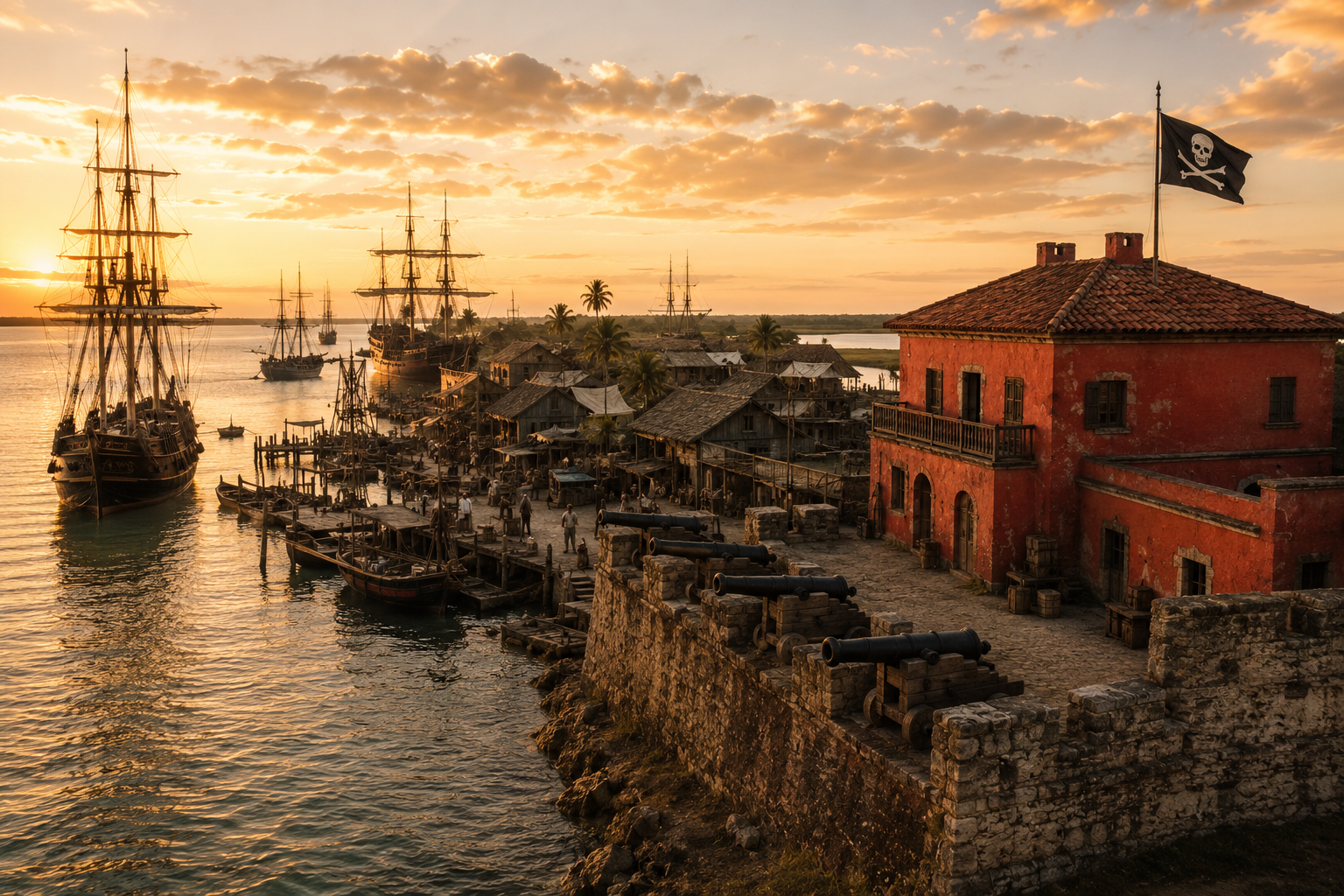
In 1817, while Aury was away from Galveston on operations, Jean Lafitte arrived. By the time Aury returned, Lafitte had made his move. The politics had shifted. Aury’s commission was undermined.
Aury left Galveston.
But he didn’t go far. He moved south and established a new base at Matagorda Bay — at the historic bay entrance called Pass Cavallo. He built a camp there in May and June of 1817:
Log houses for more than 200 soldiers.
Thirteen ships at anchor.
Pass Cavallo is not remote history. It is a stretch of Texas Gulf Coast water that fishing boats run today. It sits northeast of Rockport, between Matagorda Island and the mainland. If you have been out on Matagorda Bay, you have been in Aury’s water.
He had 200 men, 13 ships, and the same Spanish shipping lanes he had been working from Galveston. Whatever prize cargo he had salvaged and rebuilt after the mutiny was now ashore in those log houses at Pass Cavallo.
Then the camp was attacked.
Most of his ships were abandoned or burned. Aury fled with the last two vessels — two ships out of thirteen — and sailed east toward Florida.
Eleven ships stayed. The log houses stayed. Whatever was in them stayed.
Nobody has produced an accounting of what Aury left at Pass Cavallo in the summer of 1817.
What the Texas Historical Commission Found
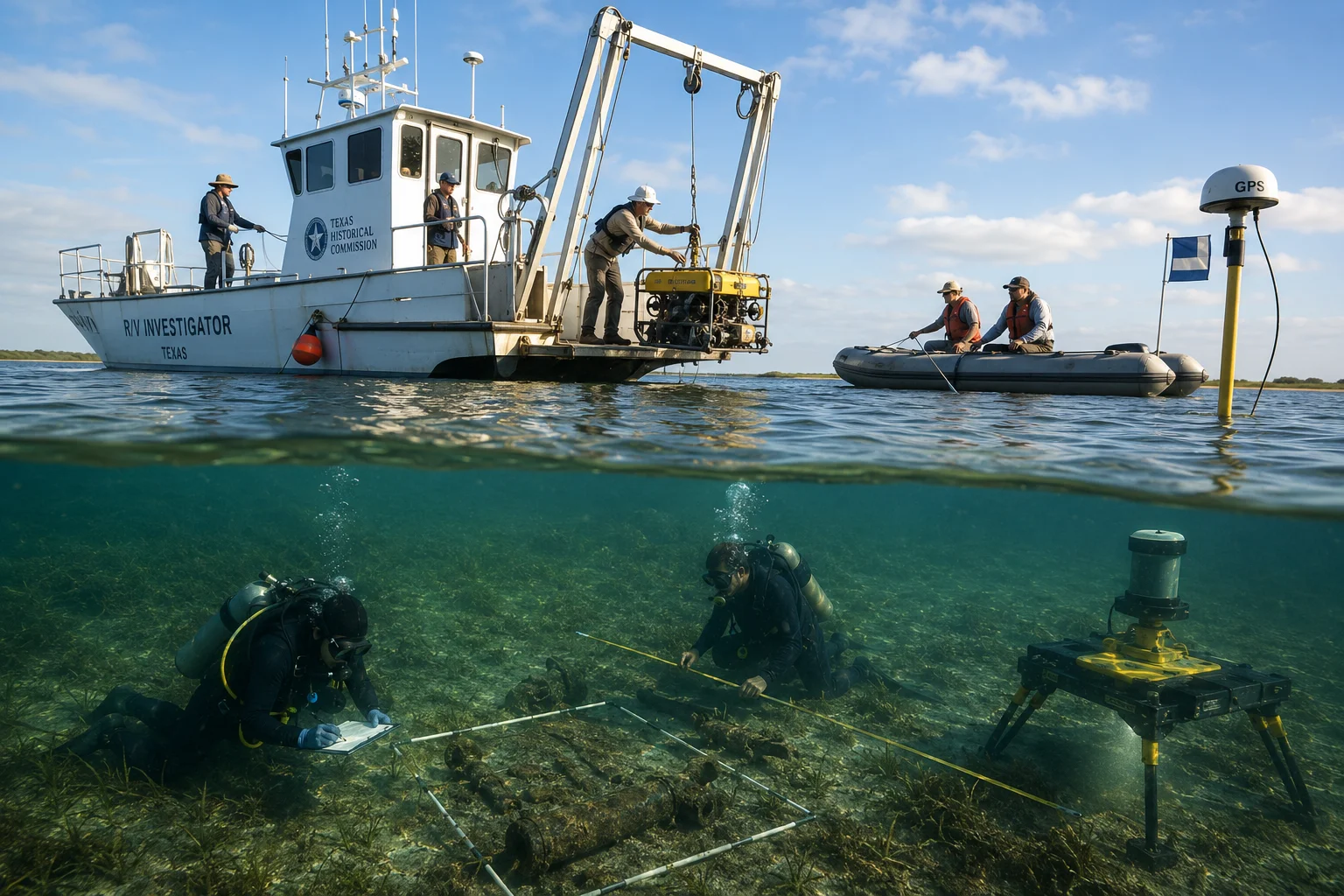
This is not legend. This is documented archaeology and an active ongoing investigation.
Pass Cavallo doesn’t have one lost fleet. It has layers.
What’s already been found and confirmed:
Site 41CL92 — the Pass Cavallo Shipwreck — is an early 19th-century vessel at the historic entrance to Matagorda Bay. Artifacts include British-pattern muskets (India and Short Land Pattern). Dating puts it between 1810 and 1850.
The leading identification: the San Felipe — a Texas Revolution gun runner that sank at Pass Cavallo in November 1835 while evading a Mexican warship. Her cannons were salvaged from the bay and sent to San Antonio, where they helped defend the Alamo in 1836.
National Geographic’s Drain the Oceans, Season 5, Episode 4 — “The Alamo” (December 27, 2022) covered this wreck alongside the Battle of the Alamo and San Jacinto Battlefield. The episode description: “Shipwrecks in the Gulf of Mexico tell of weapon trafficking that foreshadowed the epic battle.”
Not a footnote. A full National Geographic episode — confirmed.
What the Texas Historical Commission is hunting now:
That is the Texas Revolution wreck. Aury’s fleet is a different story entirely — 1817, thirteen ships, the privateer who was there before Lafitte.
The Texas Historical Commission Marine Archaeology Program has been planning dedicated archaeological surveys of Aury’s 1817 Matagorda Bay camp and the ships he left behind. The historical record shows nearly 150 vessels have been lost in Matagorda Bay and its entrance at Pass Cavallo. Aury’s ships are somewhere in that count.
They haven’t found them yet.
This is what an active treasure hunt looks like from the outside.
The Man Who Replaced Him
When Aury fled Pass Cavallo with his last two ships, Lafitte was consolidating Campeche on Galveston Island — the same port Aury had built. Lafitte’s operation ran the same coastline, the same shallow passes, the same barrier island geography that Aury had mapped.
Did Lafitte know what Aury had left at Matagorda Bay?
Almost certainly. The privateer world of the Gulf Coast in 1817 was a community of a few hundred serious operators who knew each other’s ships, captains, and cargo. Lafitte’s intelligence on the Gulf was unmatched. If there was prize cargo abandoned at Pass Cavallo, Lafitte knew about it.
Whether he retrieved it — or whether Aury’s cargo is still down there alongside his ships — is one of the questions the Texas Historical Commission survey is answering right now.
The full Lafitte story — how he ran Campeche for four years, why Samuel Colt quietly bought half the Lamar Peninsula, why the President of the Republic of Texas spent years investigating his disappearance — lives in The Gunmaker, the President, and the Pirate →
The Descendant Who Just Surfaced
In July 2026, a woman left a comment on the Aransas County History Center’s Facebook page after they shared the Trek4Free article about the Lamar Peninsula.
She wrote:
“I am related to Nez Coupe Chighizola. Lafitte’s trusted lieutenant. I did not realize they left treasure in Lamar. Maybe time for a family vacation.”
Nez Coupe — “Cut Nose” in French — was one of Jean Lafitte’s most famous and trusted lieutenants. He was inside Lafitte’s inner circle during the Campeche years. The Chighizola name appears in the documented historical record of Lafitte’s operation.
And a living descendant of that man just said she didn’t know there was treasure connected to this coastline.
That is either because the family story didn’t include the Lamar connection — or because she is the first in her family to see it written down, find her ancestor’s name in the story, and make the connection herself.
Either way: a person with direct family roots in Lafitte’s most trusted circle read a Trek4Free article and said maybe time for a family vacation.
This is not a cold case. This is a thread still unraveling in real time. Nez Coupe’s descendant is out there. Lafitte’s operation touched this coastline. And the people who carry the family stories of that world — stories that never made it into any history book — are still alive and reachable.
The Aransas County History Center is already on it. We’ll tell you what surfaces.
You Can Get There Today
Pass Cavallo is not behind a missile range fence. It’s not sitting beneath forty feet of protected federal ocean.
It’s a boat ride.
RockportBirdingHQ.com/tours connects you with boat captains who run these waters regularly. They know Matagorda Bay. They know the passes. They know where the currents run and where the bottom changes. They don’t carry the historical treasure information you now have — but they know every inch of the water where Louis Michel Aury anchored thirteen ships in 1817.
You bring the history. They get you there.
The Texas Historical Commission survey covers the underwater archaeology. The boat captains cover the water. And the coastline between Rockport and Pass Cavallo is the same Gulf shore Aury worked, that Lafitte inherited, and that a descendant of Lafitte’s most trusted lieutenant is now thinking about visiting.
This is not the Caribbean. You don’t need a passport or a dive team or a decade of academic credentials.
You need a boat captain who knows the water.
And you need to go.
The Full Thread
Aury comes first — before Lafitte, before Campeche, before the presidential investigation and the gunmaker’s deed and the galleons off Padre Island. He was the privateer who built the Texas pirate coast and left it unfinished.
The treasure hunt has been running for two hundred years. The Texas Historical Commission just joined it formally. A descendant of Lafitte’s most trusted lieutenant just raised her hand.
You are not too late.
The complete Texas Treasure Hunt series:
- What You’ve Walked Past → — What Spanish silver actually looks like. What a lost mine looks like from outside. How to find them.
- The Pirate, the Frontiersman, and the Lost Texas Silver Mine → — Jim Bowie worked with Lafitte, moved to Texas, fought 160 warriors for a silver mine, and died at the Alamo before he found it.
- Three Ships, One Storm, and the Coins That Still Wash Up → — Three Spanish galleons in forty feet of water off Padre Island. Coins still wash up after storms. The beach is free and open.
- The Gunmaker, the President, and the Pirate → — Lafitte, Mirabeau Lamar, Samuel Colt, and a peninsula ten miles north of Rockport. Nobody has found the gold.
- The Gold the Missile Range Is Hiding → — A deer hunter found thousands of gold bars in a New Mexico cave in 1937. The Army took the land. Nobody has been back since.
The adventure was always here. It still is.