40,000 Nests to 300: The Morning We Watched the World's Rarest Sea Turtle Come Back
6:45 a.m., July 5, 2014. Malaquite Beach, Padre Island National Seashore.
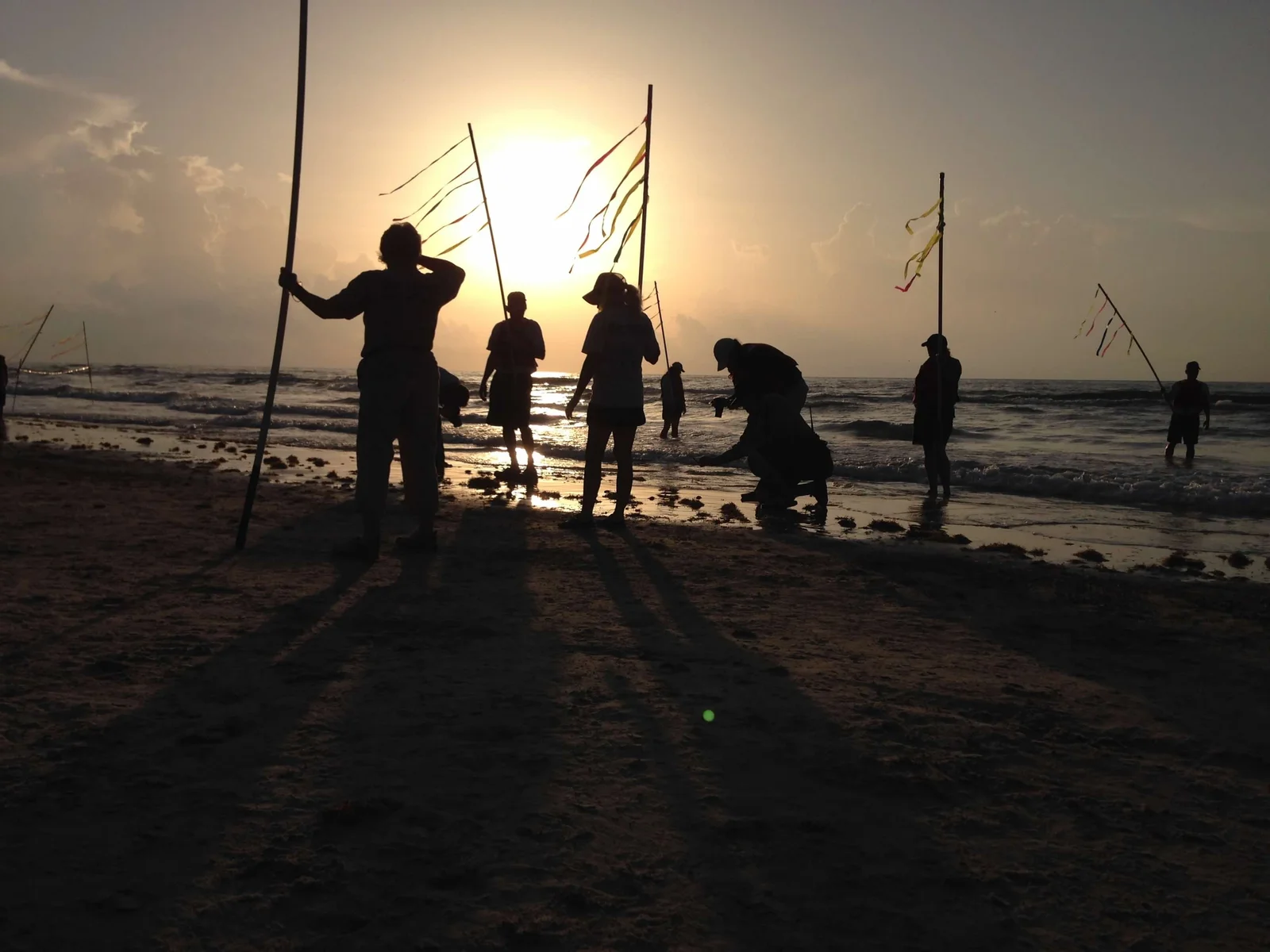
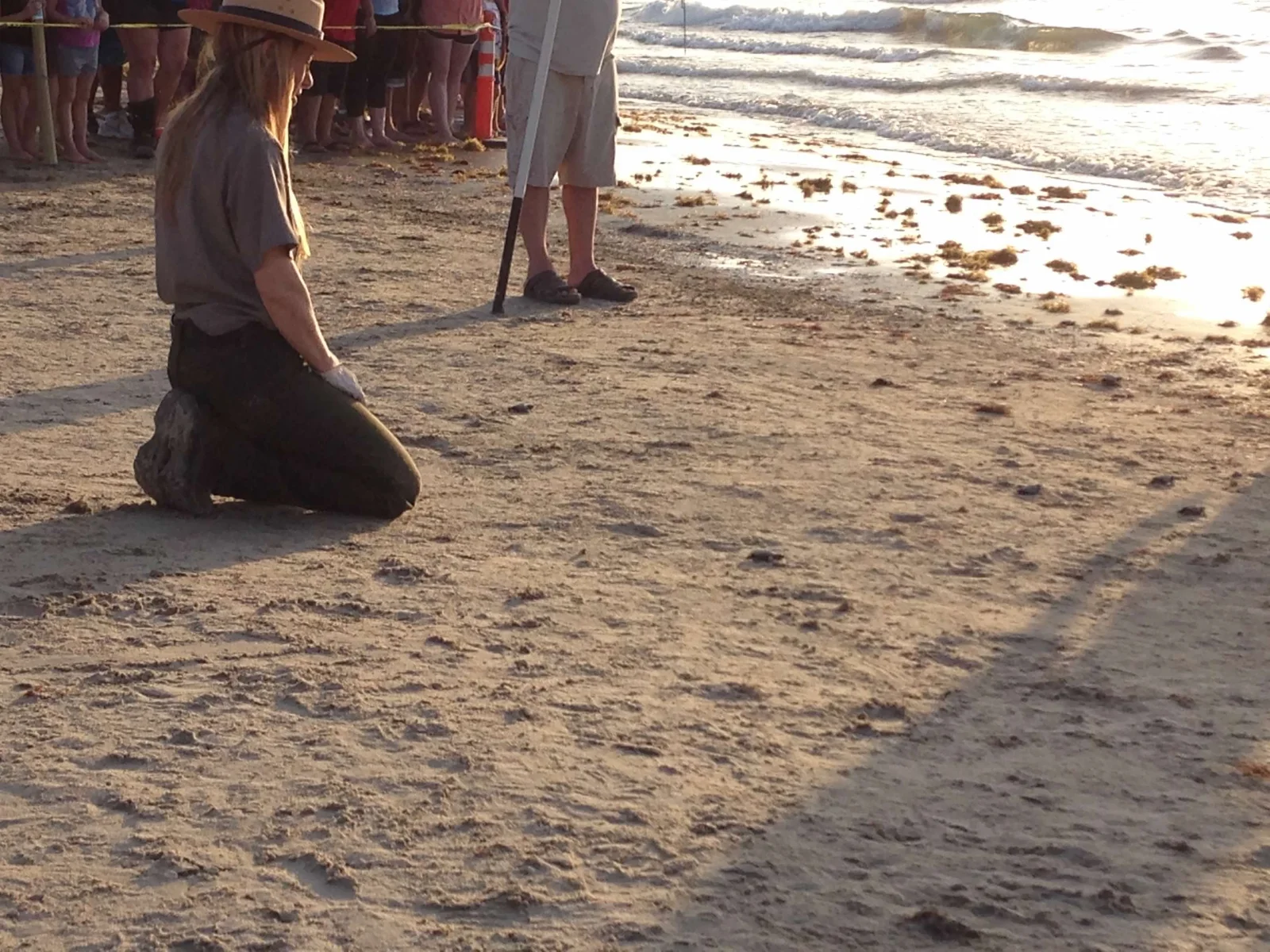
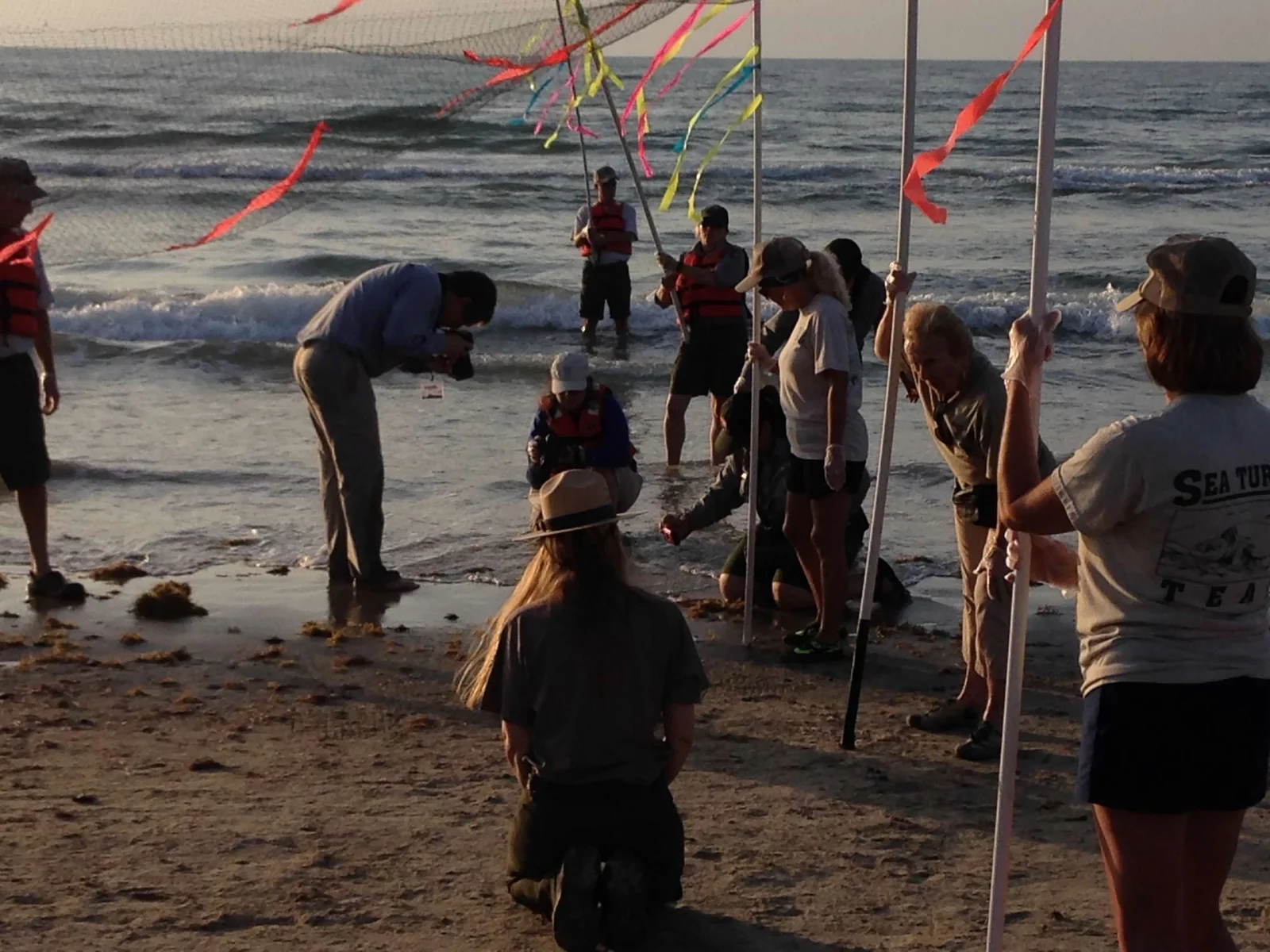
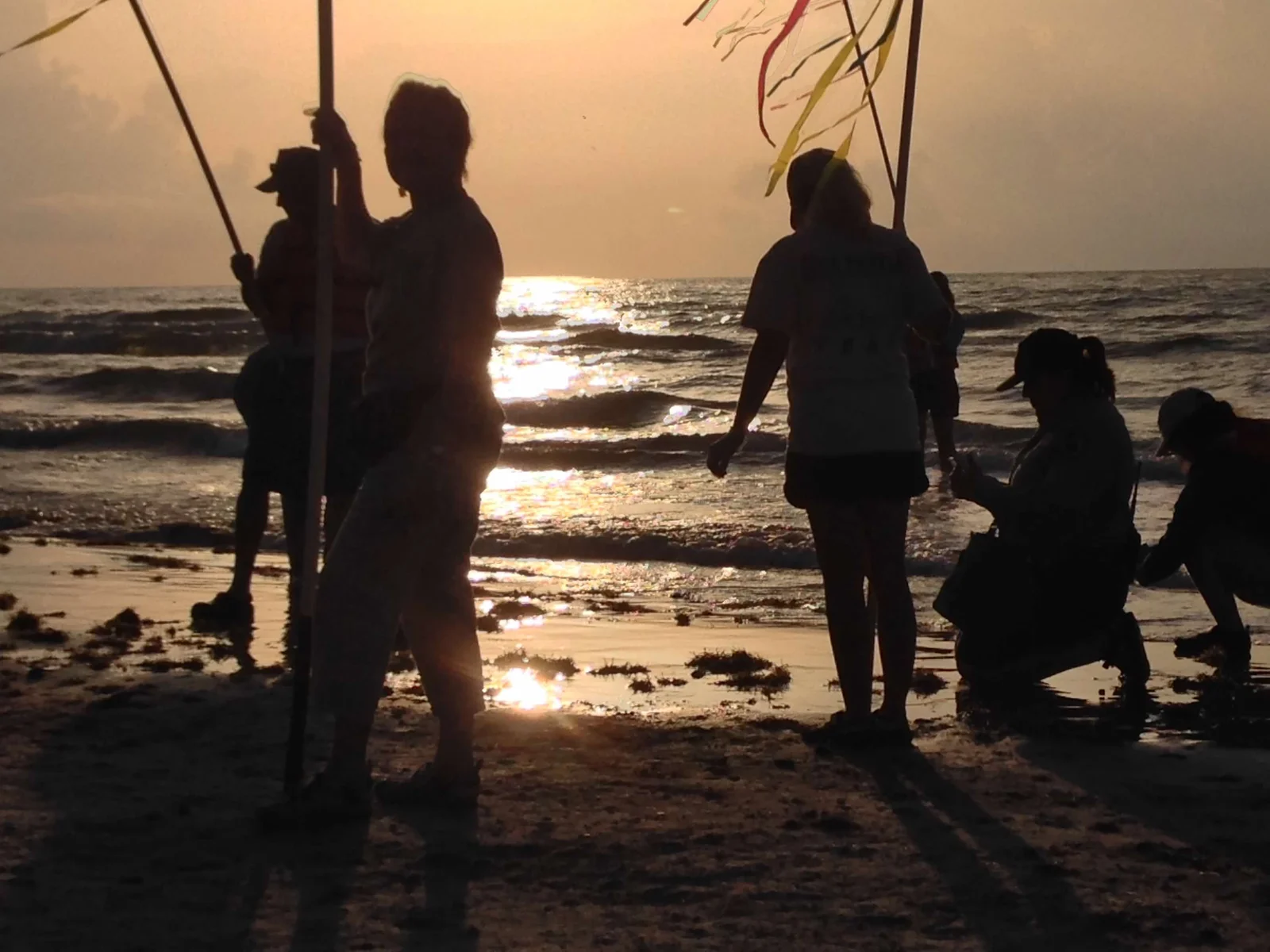
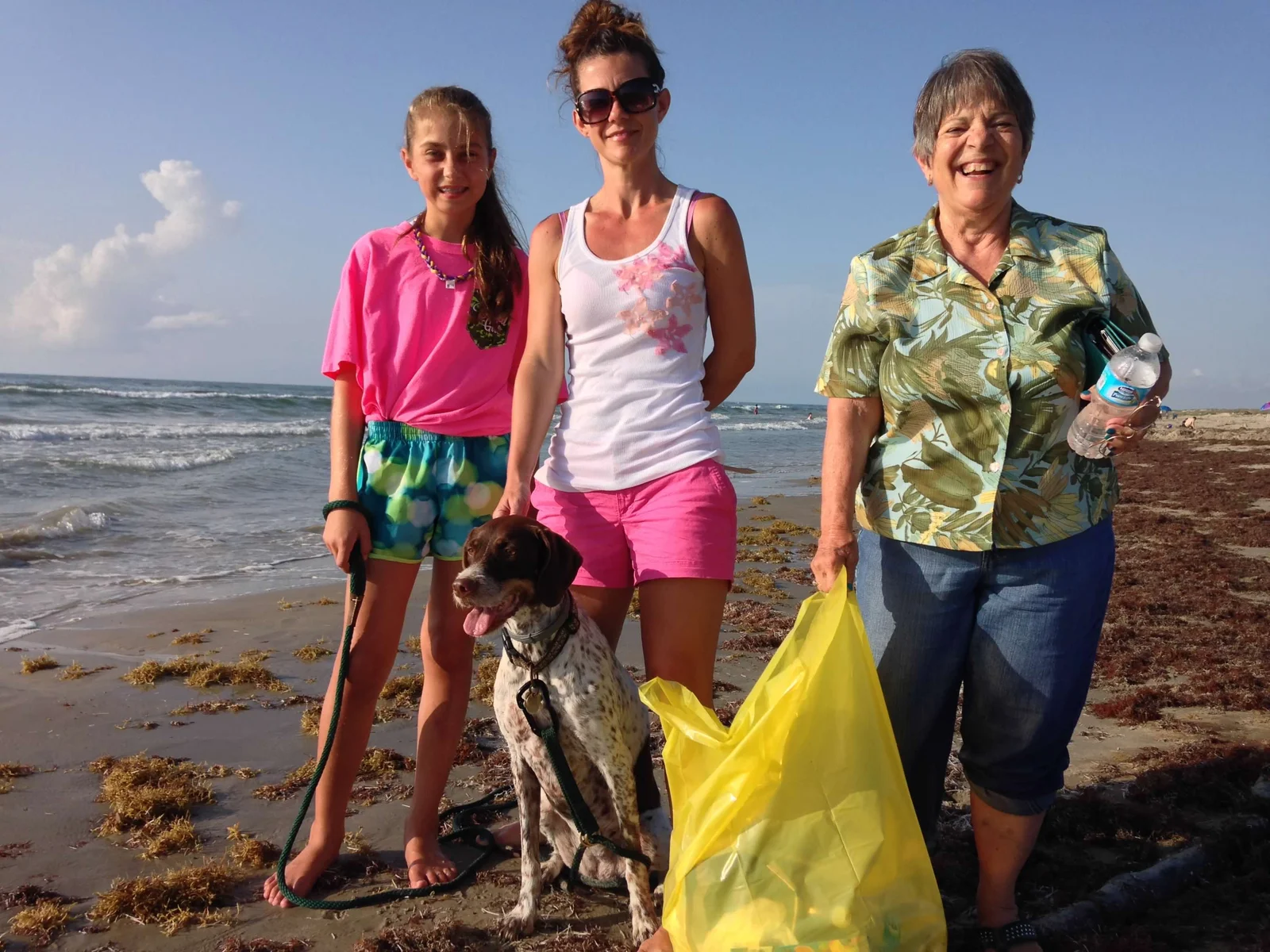
A line of volunteers wades into the surf holding poles strung with colored ribbon, marking a corridor from the dry sand down to the water. A ranger kneels at the edge of it. A crowd — us included, Polly and one of the girls and Lacy on a leash — stands behind a strip of caution tape, waiting.
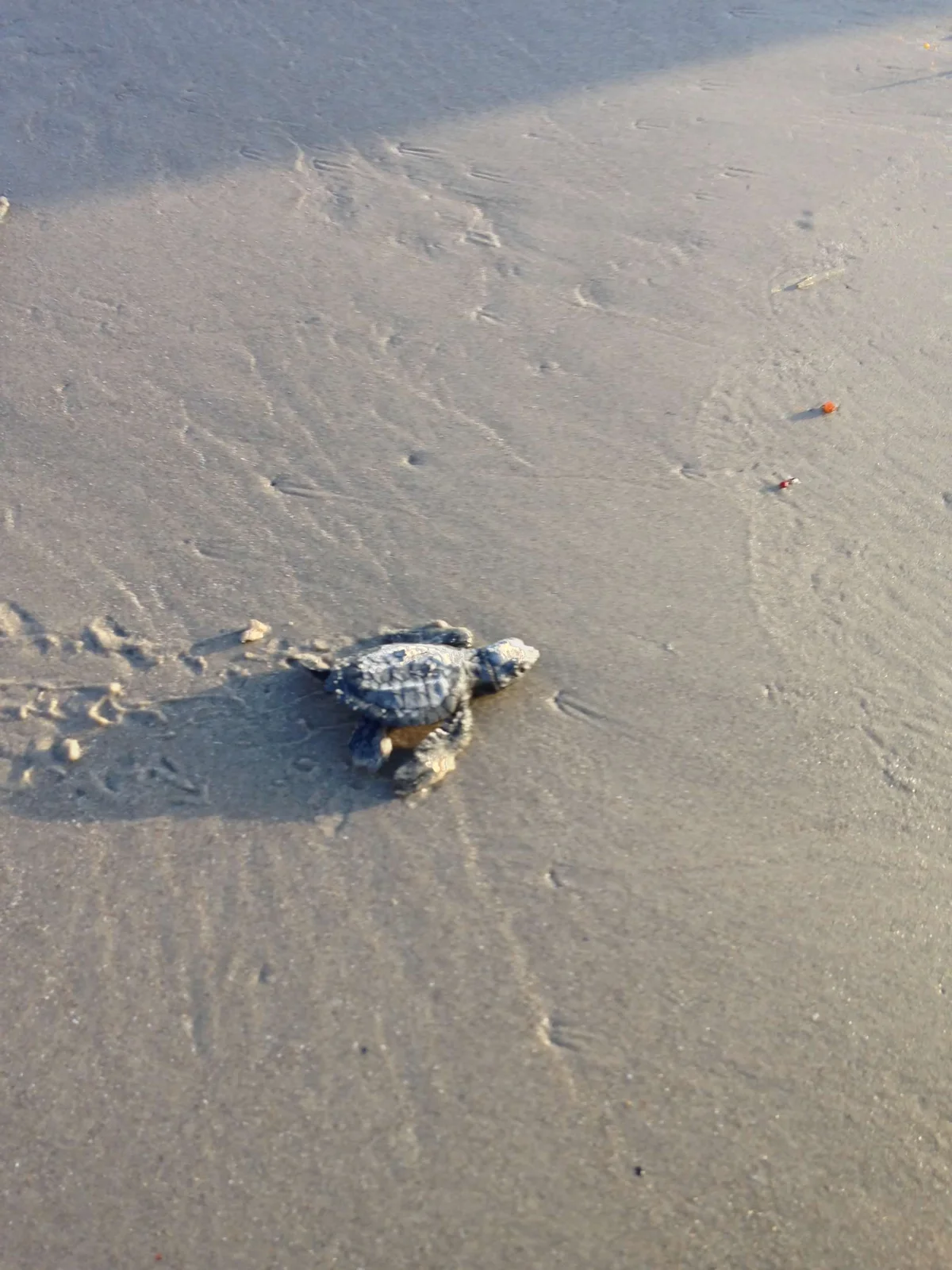
Then a cooler gets opened, and the sand starts moving.
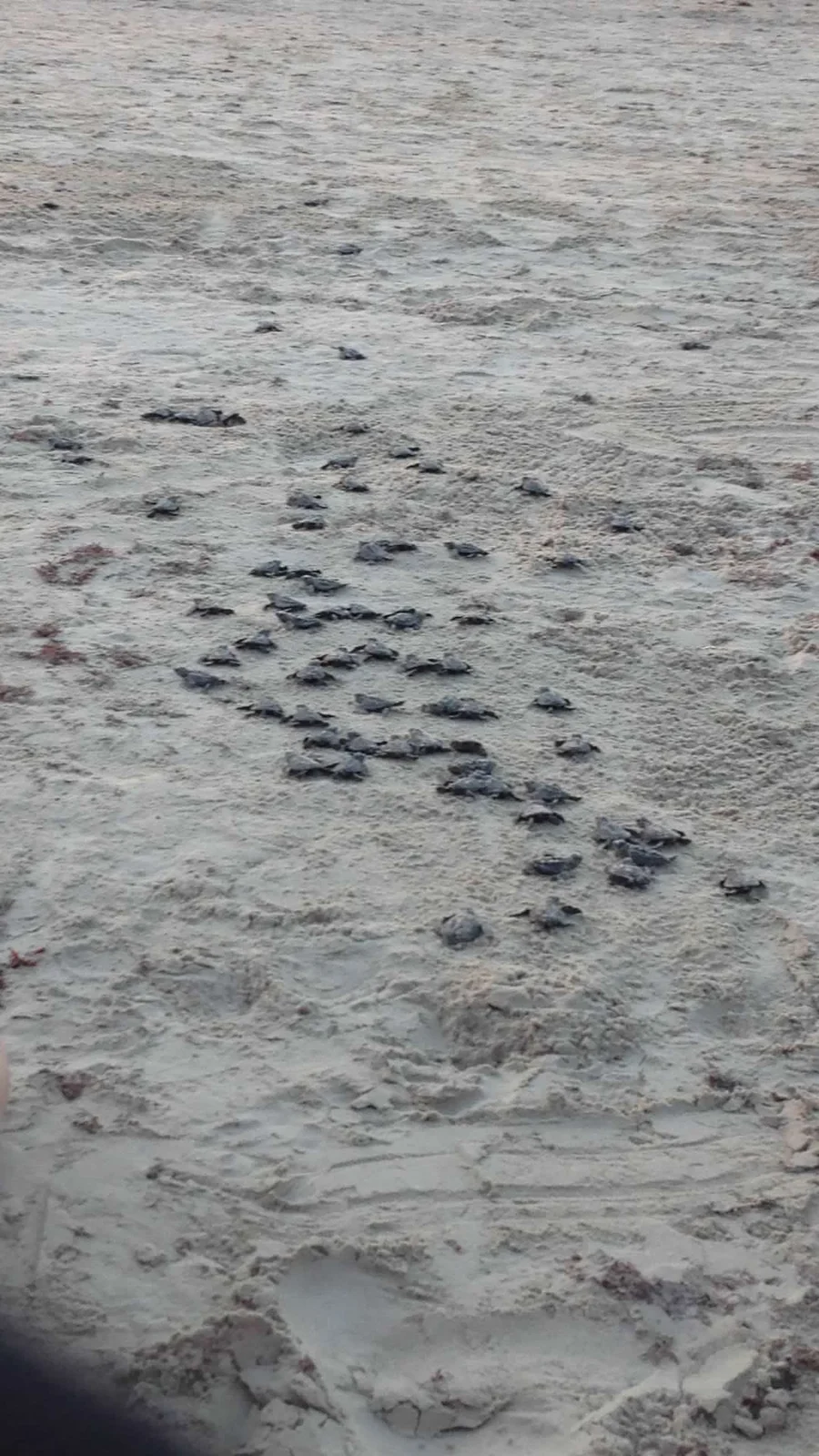
Dozens of Kemp’s Ridley hatchlings, each smaller than a silver dollar, crawling toward the Gulf of Mexico in the exact same light we thought for years was sunset. It wasn’t. This whole thing happens at sunrise, because that’s when it’s safest — cooler sand, fewer gulls awake yet, and a full day of daylight ahead for the hatchlings to put distance between themselves and the beach.
We didn’t know it that morning, but we were standing in the middle of one of the most dramatic wildlife recovery stories in the country.
Forty Thousand Down to Three Hundred
The Kemp’s Ridley is the smallest sea turtle in the world and, for most of its documented history, the rarest. In the late 1940s, a grainy home movie shot at a beach called Rancho Nuevo in Mexico captured an arribada — a mass nesting event — with an estimated 40,000 nesting females crawling ashore in a single day.
By the early 1980s, that same beach was down to around 300 nesting females.
That is not a slow decline. That is a species collapsing in three decades, and the reasons are almost mechanical in how simple they are:
Nearly the entire world population nested on one beach. When every egg a species will ever lay is concentrated on nineteen miles of Mexican coastline, that beach isn’t just important — it’s a single point of failure.
Egg poaching was easy and constant. An arribada announces itself. Thousands of turtles nesting in the same days on the same stretch of sand meant the eggs were simple to find and simple to take, year after year, faster than the beach could replace them.
Shrimp trawlers were drowning turtles that survived to adulthood. Before regulation, turtles that made it past the egg stage were getting caught and drowned in shrimping nets across the Gulf — an entirely different threat hitting the same shrinking population from the other end of its life cycle. That changed in 1987, when the U.S. began requiring Turtle Excluder Devices — trapdoors built into shrimp nets that let turtles escape — on commercial shrimp trawlers.
Habitat loss along developing Gulf shorelines made it worse still. By any honest measure, this species was headed for extinction inside a single human lifetime.
What DDT Actually Did — And Didn’t Do
It’s tempting to fold in every environmental disaster of the era, and the era genuinely was rough on Gulf Coast wildlife. It’s worth being precise about what actually happened, because the real story is dramatic enough without stretching it.
The CDC — founded in 1942 in Atlanta as the Office of Malaria Control in War Areas — made DDT its primary weapon against domestic malaria starting in 1943, eventually spraying more than 6.5 million American homes. DDT worked. It also didn’t stay where it was sprayed. It ran off into waterways, moved up the food chain through fish, and accumulated in the fatty tissue of the birds that ate them.
The mechanism that followed is one of the best-documented cases in environmental science: DDT’s metabolite, DDE, interfered with calcium metabolism in birds of prey, causing eggshells too thin to survive incubation. Bald eagles — an estimated 100,000 in the U.S. in the 1800s — had collapsed to just 487 nesting pairs by 1963. Ospreys, brown pelicans, and peregrine falcons took similar hits. DDT was banned for most uses in the U.S. in 1972, and raptor populations slowly recovered afterward.
That part is real, well-documented, and directly tied to the same coastlines and the same decades as the Kemp’s Ridley collapse. But it’s not the same story. Sea turtle eggs are leathery, not hard-shelled like a bird egg — the calcium-thinning mechanism that devastated eagles doesn’t transfer the same way to a turtle nest. Every conservation history of the Kemp’s Ridley collapse points to the same causes: one beach, egg poaching, shrimp nets. Not pesticide. We looked specifically for a DDT connection before writing this, because it seemed like it should be there, and it just isn’t in the record. The honest version of this story doesn’t need it — what actually happened is dramatic enough on its own.
The Plan Everyone Thought Had Failed
Here’s where it gets interesting.
In 1978, U.S. and Mexican wildlife agencies started an audacious experiment. If the entire species nesting on one beach was the core problem, the fix was to give it a second beach — but a sea turtle doesn’t just decide to nest somewhere new. Females return, with extraordinary precision, to nest on the same beach where they themselves hatched. So researchers set out to manufacture that memory in an entirely new generation.
Between 1978 and 1988, 22,507 eggs were collected at Rancho Nuevo and shipped to Padre Island National Seashore, Texas — the same beach where we’d be standing 36 years later. The eggs were incubated in Padre Island sand, and when they hatched, the hatchlings were released into the surf right there, on the theory that a hatchling briefly exposed to a beach’s sand and water chemistry imprints on it before ever swimming away. Then came the strange part: researchers immediately recaptured those same hatchlings from the water and shipped them to a National Marine Fisheries Service lab in Galveston, where they were raised in captivity for 9 to 11 months — a “headstart” — before finally being released into the Gulf as much larger, much harder-to-eat juveniles.
Then everyone waited for turtles that take 10 to 15 years to reach nesting age to prove whether any of it worked.
In 1988, with zero confirmed returns yet, the imprinting program was shut down. Researchers assumed it hadn’t worked. On paper, it looked like a failed experiment — a decade of effort with nothing to show for it.
They just hadn’t waited long enough.
Proof, Decades Later
The first confirmed nest from an imprinted, headstarted turtle came years after the program was already declared a failure and shut down. By 2014 — the same summer we were standing on that beach — 20 different Padre Island–imprinted turtles had laid a combined 69 nests on the beach they’d been engineered, as hatchlings, to think of as home.
A program that its own creators wrote off in 1988 was quietly proving itself right the entire time. It just operates on a sea turtle’s clock, not a grant cycle’s.
Combined with the 1987 Turtle Excluder Device mandate closing off the shrimp-trawl threat, Kemp’s Ridley nesting climbed steadily through the 1990s and 2000s. By 2009, nesting had recovered enough that researchers counted nearly 20,000 nests worldwide in a single year — up from a population that, thirty years earlier, could count its entire future in the low hundreds.
Then April 2010
Nesting had been climbing for two straight decades when the Deepwater Horizon oil spill happened, dumping millions of barrels of oil into exactly the waters this recovering population depends on for foraging and migration.
Nest counts dropped 30 percent that same year. Researchers at Padre Island analyzed thousands of unhatched eggs for oil exposure in the years that followed. Nesting numbers have largely plateaued since — not another collapse, but not the steady climb of the previous twenty years either. The recovery is real. It’s also not finished, and it took a direct hit right as it was gaining real momentum.
That’s the state of things the morning we were standing there in 2014 — four years past the spill, in the middle of a plateau nobody watching that day could have explained, in front of a program that had already quietly proven itself right after a decade of looking like a failure.
What’s Actually Happening on the Beach
The flagged poles and ribbon aren’t decoration — they mark a protected corridor so gulls and other predators can’t pick off hatchlings crossing open sand, and so the crowd stays back far enough to let the turtles crawl on their own. Staff wade into the surf itself for the same reason predators show up there too: the run from dry sand to open water is the most dangerous part of a Kemp’s Ridley’s entire life, and it lasts only a few minutes.
Every nest found along the 70 miles of Padre Island National Seashore gets relocated to a protected incubation facility, and when it’s ready to hatch, the park holds a public release. That’s not a special event we got lucky into — it’s the standing program, and it still runs every year.
See One Yourself
Hatchling releases happen at Malaquite Beach, in front of the visitor center, typically mid-June through August, most often around 6:45 a.m. Call the Hatchling Hotline — (361) 949-7163 — before you drive out; it’s a 24-hour recorded line that confirms whether a release is happening that day. Padre Island National Seashore charges a $10 per vehicle entrance fee, purchased online ahead of time if you can — but watching the release itself, once you’re in the park, costs nothing.
Get there before the sun’s fully up. That’s not atmosphere. That’s when it happens.
Padre Island National Seashore’s official hatchling release information is at nps.gov/pais. The species remains listed as critically endangered — the rarest sea turtle in the world, even 45 years into its recovery.