What I Walk Past Every Winter Almost Wasn't There
I’ve written before about not running past the good stuff — the newt, the leaf on the water, the piece of driftwood nobody else stopped for. That piece was about small things. This one is about something bigger that I almost missed the same way: some of the good stuff I walk past every day used to almost not exist at all.
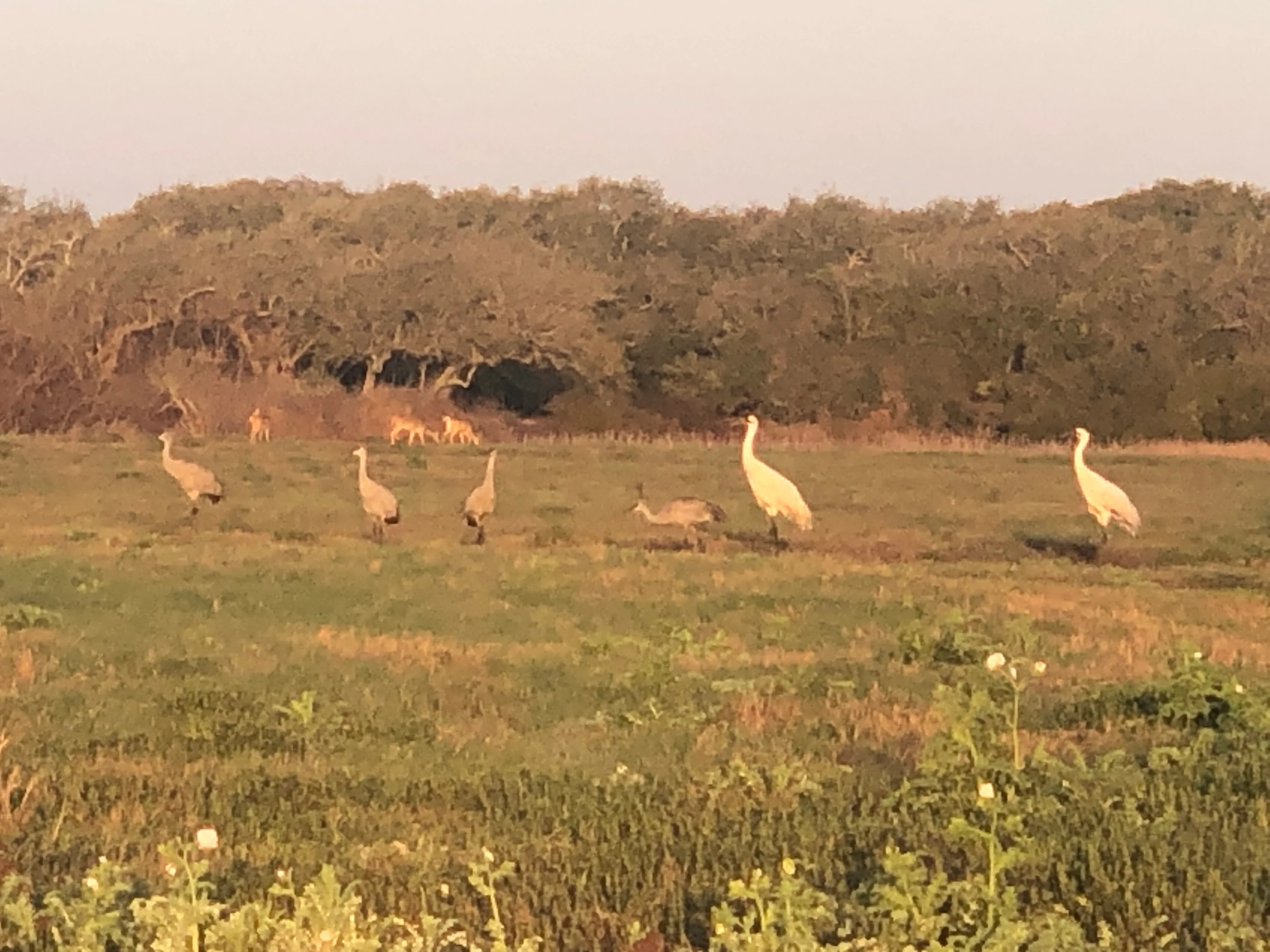
I live on the Texas coastal bend. In the winter, I walk and run past whooping cranes the way other people walk past pigeons. I’ve watched Kemp’s Ridley sea turtle hatchlings released into the Gulf. I’ve swum beside manatees. This is my actual backyard — the same stretch of coast where I’ve written about a sunken Spanish treasure fleet and a pirate’s hideout on the Lamar Peninsula. I’ve spent years fascinated by what happened here centuries ago. It took me longer to notice what’s been happening here in my own lifetime.
This isn’t a vacation observation. I’ve written before about our daily routine — four to six miles before 7:30am, most mornings, every week, not just the ones with a trip planned. We keep it simple on purpose. Two pairs of shoes, a route we know, no special training required, because the whole point is that we don’t have to gear up for a big trip — we already live like we’re on one. I don’t have to prepare to hike the Grand Canyon once a year because I’m always ready. I run the same stretch of Texas coastline most days of my life, and it happens to be the same stretch a five-foot bird nearly went extinct trying to hold onto.
None of this was inevitable. Most of it was almost gone.
The Cranes I Walk Past
In 1941, the entire wild population of whooping cranes had fallen to fifteen birds. Fifteen. Not fifteen thousand — fifteen individual animals, the entire genetic future of the tallest bird in North America, wintering on this same stretch of Texas coast.
Aransas National Wildlife Refuge was established in 1937, just ahead of that low point, specifically to protect this wintering ground. It worked. There are more than 500 whooping cranes in this population today, and I watch that number grow a little more every winter I’ve lived here — about a decade now.
I’ll tell you something the big travel sites get wrong constantly: they’ll send you to Aransas National Wildlife Refuge to see whooping cranes, and that’s not actually the best move. The best place, hands down, is Lamar Beach Road. I know because I walk it. We built an entire site, rockportbirdinghq.com, around getting that kind of information right for people who’d otherwise be sent to the wrong spot with the wrong expectations.
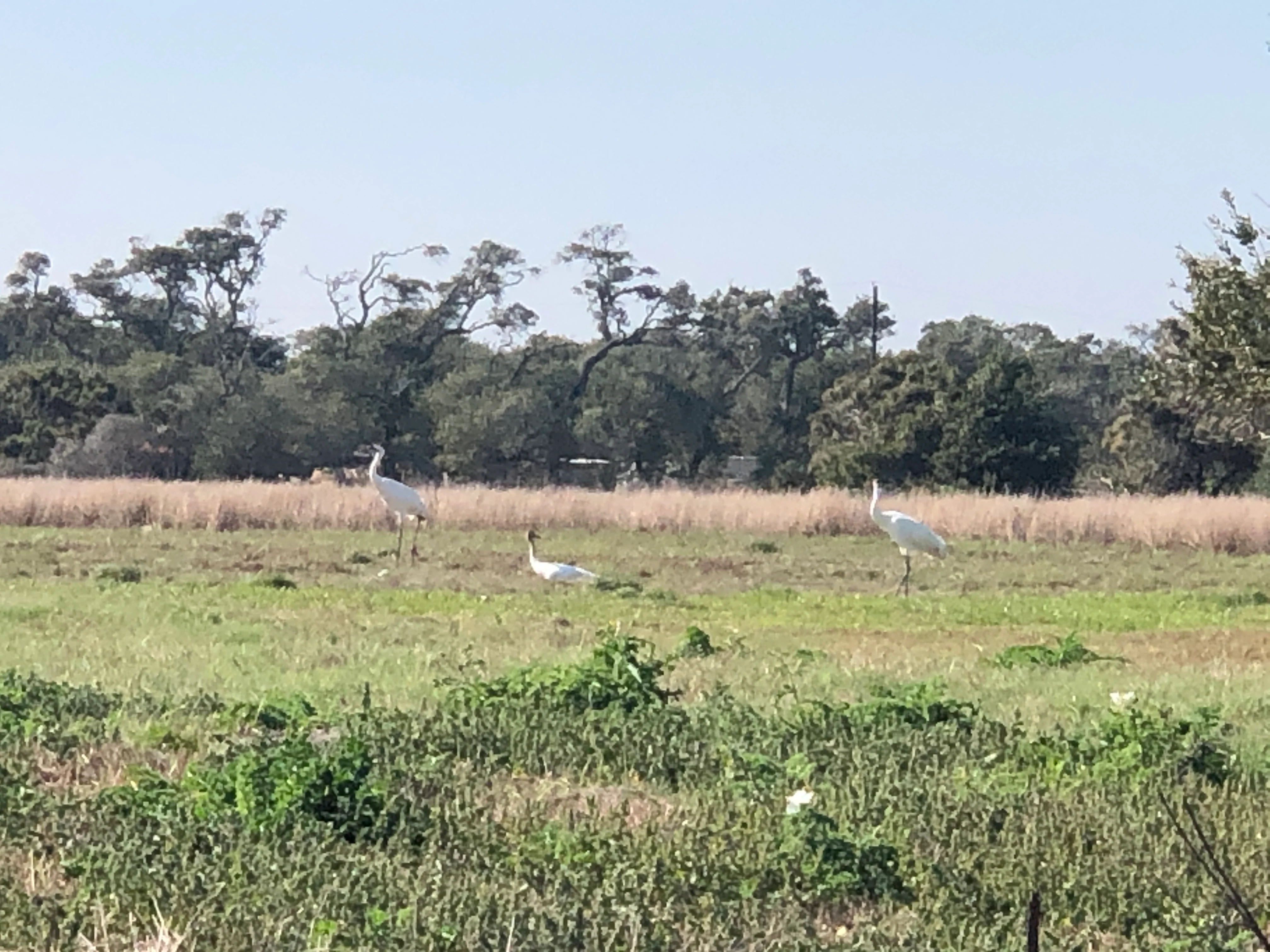
A five-foot-tall bird with a seven-foot wingspan, wintering fifty yards from my front porch, thirty years after it nearly went extinct. I walk past that most mornings without thinking twice about it. I’m trying to think twice about it more now.
The Turtles and the Manatees
I’ve written the fuller version of this one already — 40,000 Nests to 300: The Morning We Watched the World’s Rarest Sea Turtle Come Back. The short version: the Kemp’s Ridley sea turtle had exactly one nesting beach on Earth, in Mexico, and its eggs were being harvested into extinction. A second nesting population was deliberately imprinted onto Padre Island National Seashore as a hedge against losing the species entirely. I watched a hatchling release there myself.
What I didn’t fully connect until recently: the sea turtle rehabilitation facility on that same stretch of coast sits on the very peninsula I’ve already written about for its Spanish galleon history. Centuries of shipwreck history and a decades-long conservation project, same sand.
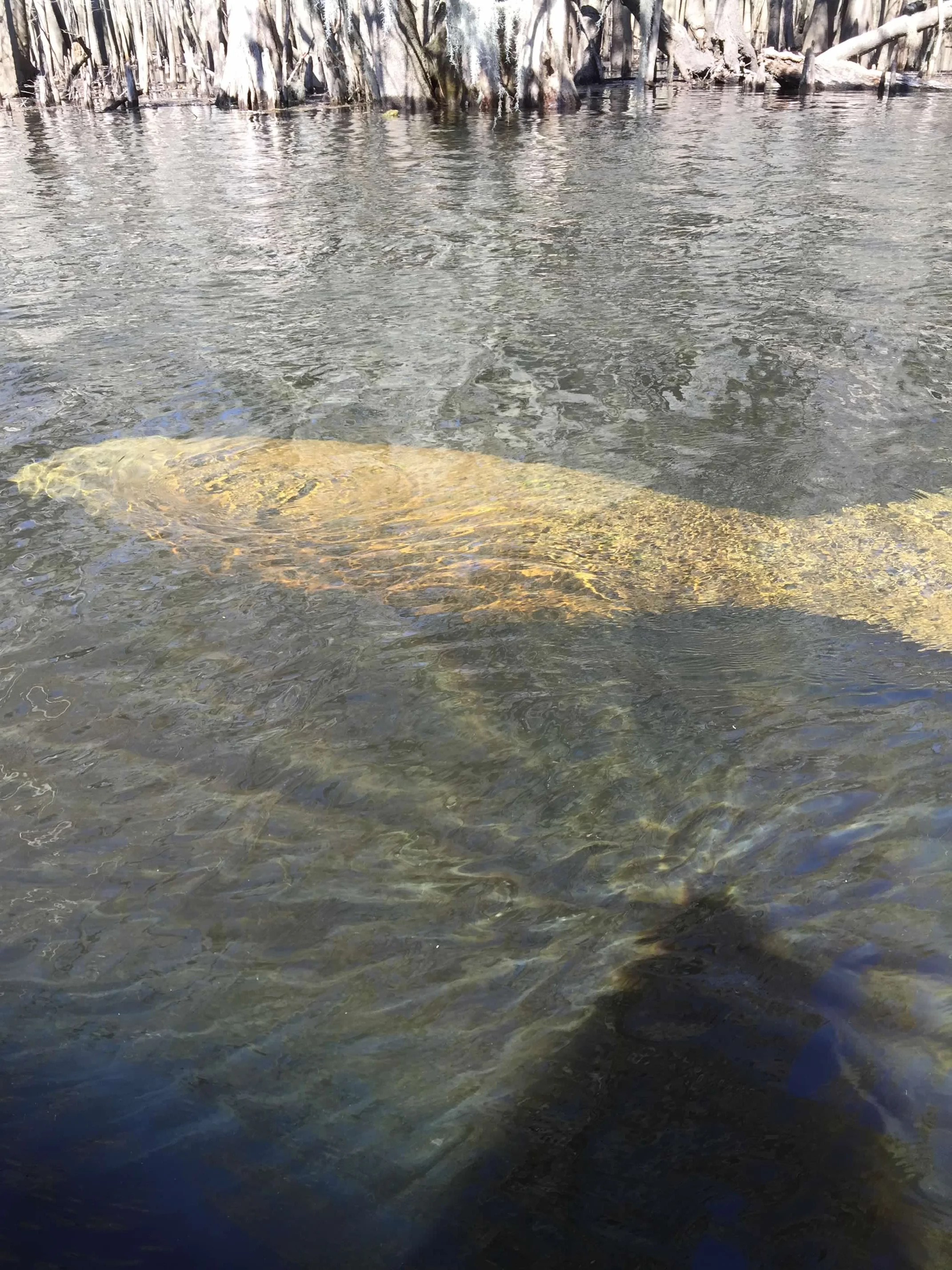
Manatees are the same kind of story, on a different coast — I’ve swum with them at Crystal River, animals that were down to a few hundred confirmed individuals in Florida within my own parents’ lifetime, now numbering in the thousands because someone decided that mattered enough to act on.
The Birds That Almost Disappeared for a Different Reason
The cranes and the turtles were nearly lost to hunting and habitat and direct harvest. The brown pelican and the bald eagle were nearly lost to something else entirely: a chemical.
DDT was sprayed across this coast for decades, first to fight malaria, then just as routine mosquito control long after malaria was gone. It didn’t kill the birds outright. It thinned their eggshells until the parents crushed their own eggs just by sitting on them. Bald eagles went from an estimated 100,000 birds continent-wide to fewer than 500 nesting pairs in the lower 48 by the early 1960s. Brown pelicans — the bird that defines every pier and every sunset photo on this coast — were nearly wiped out of the Gulf of Mexico entirely.
DDT was banned in 1972. Bald eagles came off the endangered species list in 2007. Brown pelicans came off it in 2009. I’ve watched pelicans get hammered again by hurricanes since I’ve lived here — nature still has its own say — but the population recovers, because the thing that was actually driving them toward extinction stopped.
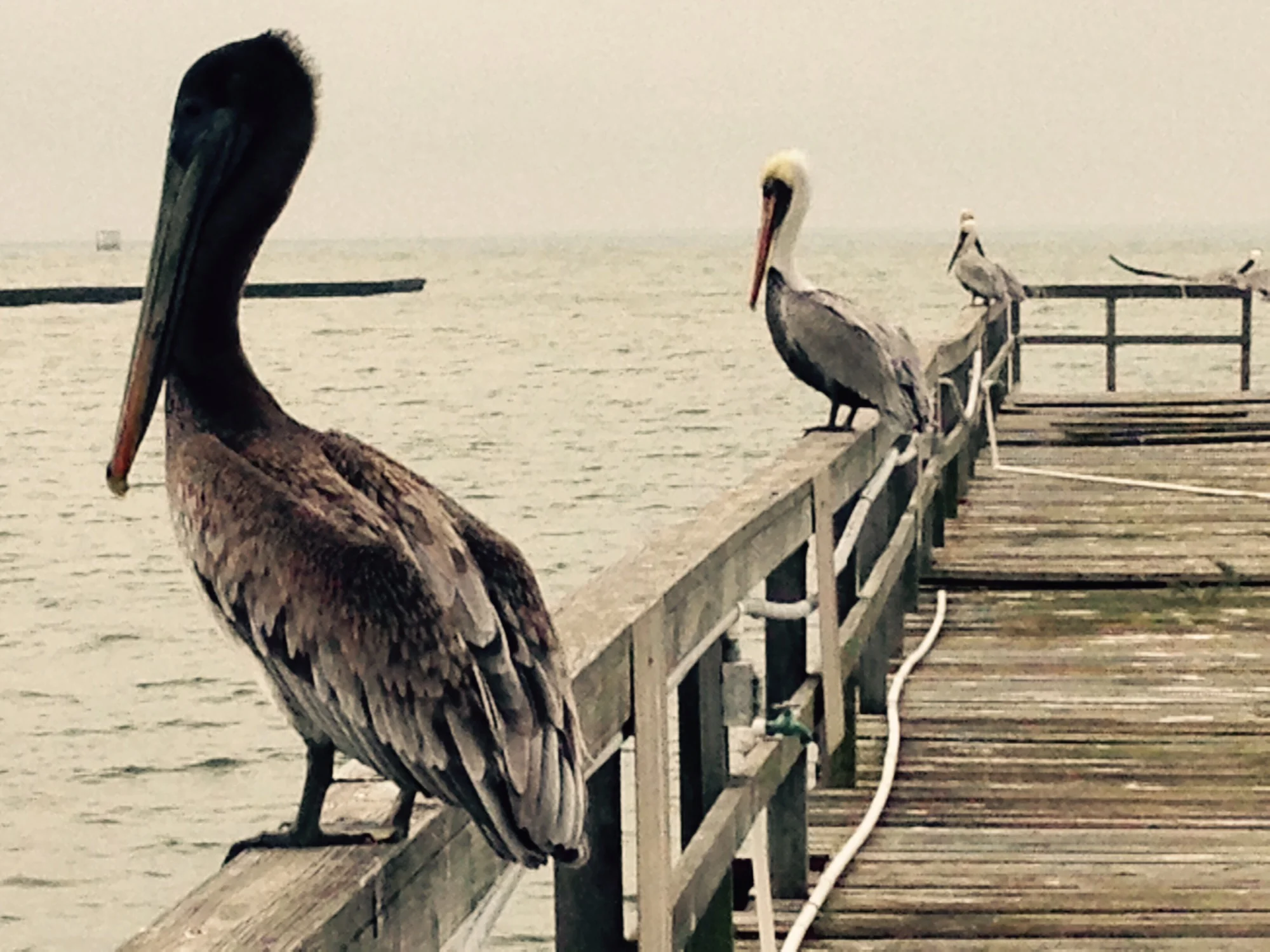
I don’t bring this up to relitigate the chemistry. I bring it up because it’s the same shape as the crane story: something we did, at scale, nearly erased a bird that now dives off every dock on this coast. Somebody decided to stop, and it worked.
Not Every Story Comes Back
I’d be lying if I made this sound like everything recovers if you just wait long enough. Some of it doesn’t.
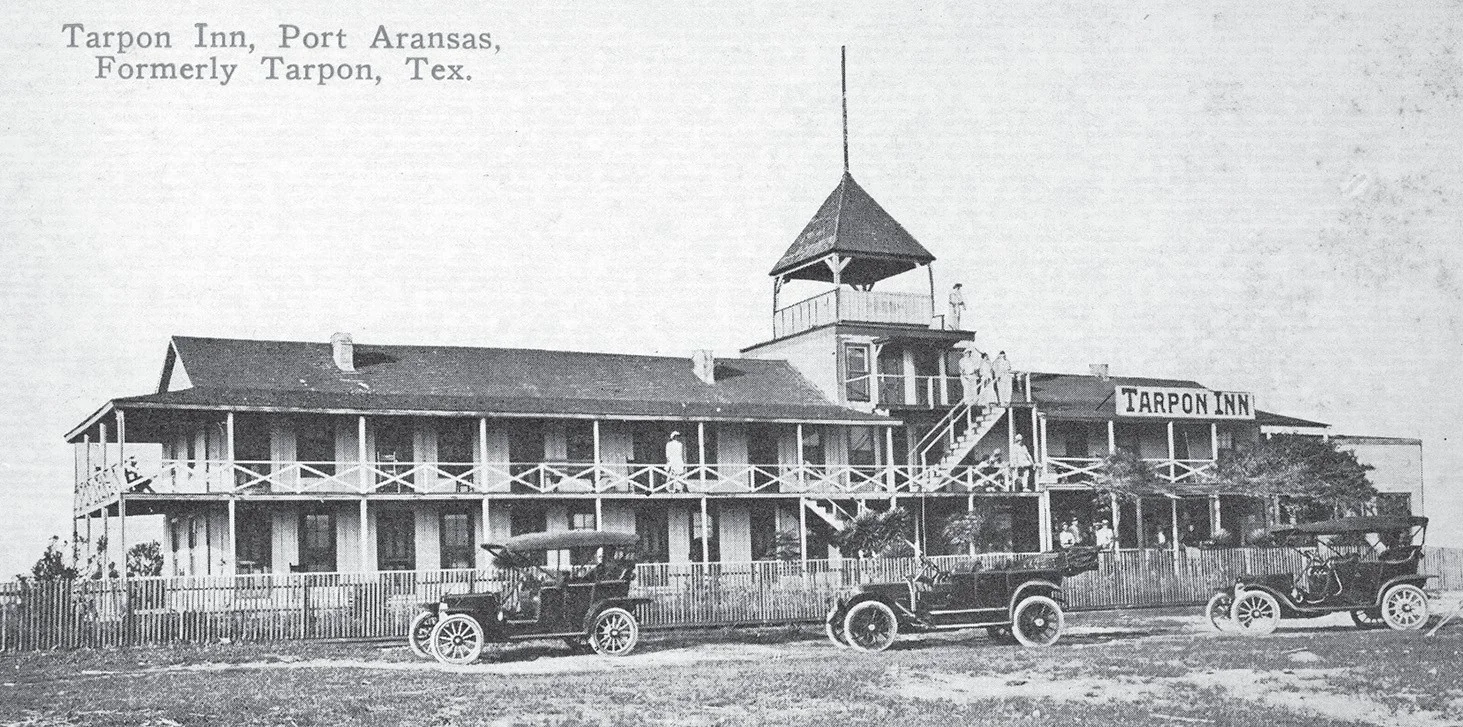
The Tarpon Inn in Port Aransas has close to 2,700 silver fish scales mounted on its walls, each one signed by the angler who caught it. Port Aransas used to be called Tarpon, Texas — the fish was the whole identity of the town. The dates on those scales run strong through the 1940s and then, quietly, mostly stop.
Sawfish — the ray with the long toothed bill, once common enough on this coast to be a nuisance to fishermen — haven’t had a confirmed Texas sighting in decades. Overharvest and the loss of the shallow nursery water young fish need did what DDT did to the pelicans, just to a species nobody organized a recovery program around in time.
I’m not going to pretend I know the exact mechanism for every piece of that collapse. I don’t, and neither does anyone else with full certainty. What I know is what’s true of the whole coast: some of what we did at scale, we can undo. Some of it, we can’t. Both of those are worth sitting with.
Some of it isn’t even history. It’s this morning. I run the same coastline where whooping cranes are wintering and Kemp’s Ridleys nest, and most days I pass beer cans, fishing line, plastic bags snagged in the same marsh grass the cranes feed in. That’s not a decades-old chemical decision made by a federal agency. That’s somebody who was here yesterday and didn’t carry their trash back out. Small scale, same principle.
The One That’s Still Being Decided
Oyster reefs are the one I watch happen in real time, right now, not in a history book.
The Chesapeake Bay’s oyster reefs were harvested essentially to death — filter-feeding populations collapsed, and the water clarity and the whole ecosystem that depended on them went down with it. Texas managed its oyster harvest more carefully and avoided that full collapse, but it’s not a museum piece here either. In 1993, oystermen working Aransas Bay could pull ninety sacks in a single day. Nobody pulls ninety sacks a day anymore. I’ve watched, from my own dock, industrial-scale oyster boats working our reefs hard enough that local fishermen are furious about what it’s doing to the fish that depend on that structure to live. Oysters are also the thing that filters this water clean in the first place — lose the reef, and you don’t just lose oysters.
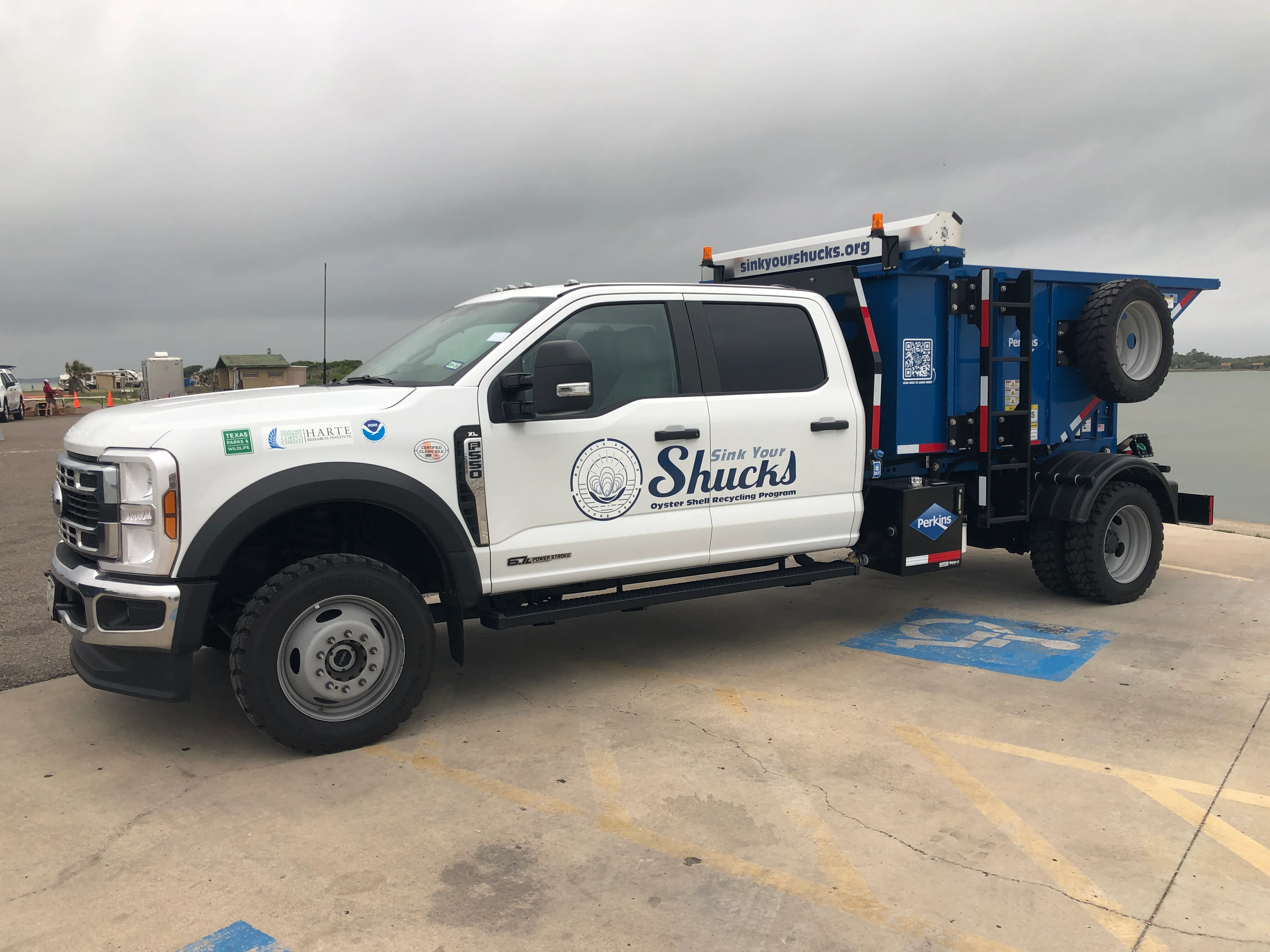
Here’s the piece I didn’t fully appreciate until I looked closer: there’s a real answer already underway, a few miles from my house. At Goose Island State Park, a program called Sink Your Shucks — run by the Harte Research Institute at Texas A&M Corpus Christi, with Texas Parks & Wildlife and NOAA — collects discarded shell from local restaurants and returns it to Aransas Bay. Baby oysters need hard surface to attach to and grow. No old shell on the bay floor means nothing for them to settle on, which means no reef at all. Since 2009, this one program has recycled more than three million pounds of shell and restored over forty-five acres of reef. It’s not a finished story. Nobody knows how this one ends. But it’s the rare case where I get to watch the choice being made instead of just reading about a choice someone else already made, decades ago.
With Spears and Rocks, None of This Would Be a Question
Here’s the part I keep coming back to. None of this — not the crane’s fifteen birds, not the pelican’s crushed eggs, not the empty water where tarpon used to run — was possible with the tools people had for most of human history. You don’t erase a species with a spear. You don’t thin an eggshell continent-wide with a rock. It took real technological reach to do this kind of damage, and it’s taking real deliberate effort to undo the parts of it we’ve managed to undo.
That cuts both ways, and I think that’s the actual point. The same reach that can crush an eggshell population-wide is the reach that turned a fifteen-bird flock into five hundred, that trucks recycled shell back into the bay instead of letting the reef go bare. Scale is the danger and scale is also, sometimes, the fix. It depends entirely on whether anyone’s paying attention while it’s happening.
So what does that mean for me, specifically, on an ordinary Tuesday run? I’m not going to pretend I’m out there hauling trash bags for three miles — some of what I pass isn’t something you pick up bare-handed, and I’m not interested in performing outrage about it either. What I actually do is simpler than that: I live by the same rule out here that I live by on every trail, KISS — I don’t create the problem in the first place, I pack out what’s mine, no exceptions. I show up for the organized cleanup days and the community events where picking this stuff up safely is actually the point. And I write. Getting ten people to think twice about what they leave behind does more for this coastline than anything my own two hands could carry. Most people go home and watch TV. I’m out here, watching this instead — and telling you about it is the actual job.
I don’t have a tidy conclusion here, and I’m not trying to build one. I just know that when I stop and actually look at what’s standing in the shallows near my house, or gliding along Lamar Beach Road, or nesting on the beach the state fought to protect, I’m looking at proof — not a theory, not a projection, proof — that noticing and acting on what you notice changes what survives.
I never run past the good stuff. Some mornings, the good stuff is a bird that was fifteen individuals from gone.
More on paying attention to what’s right in front of you: The Reason I Never Run Past the Good Stuff. More on this same stretch of coast: The 1554 Spanish Galleons of Padre Island, Jean Lafitte on the Lamar Peninsula, and 40,000 Nests to 300: the Kemp’s Ridley Comeback. If any of this pulled you in, rockportbirdinghq.com/podcast has a whole library of eco-tourism and coastal history episodes worth a listen.