The Day Everything in the Water Wanted to Look at Us
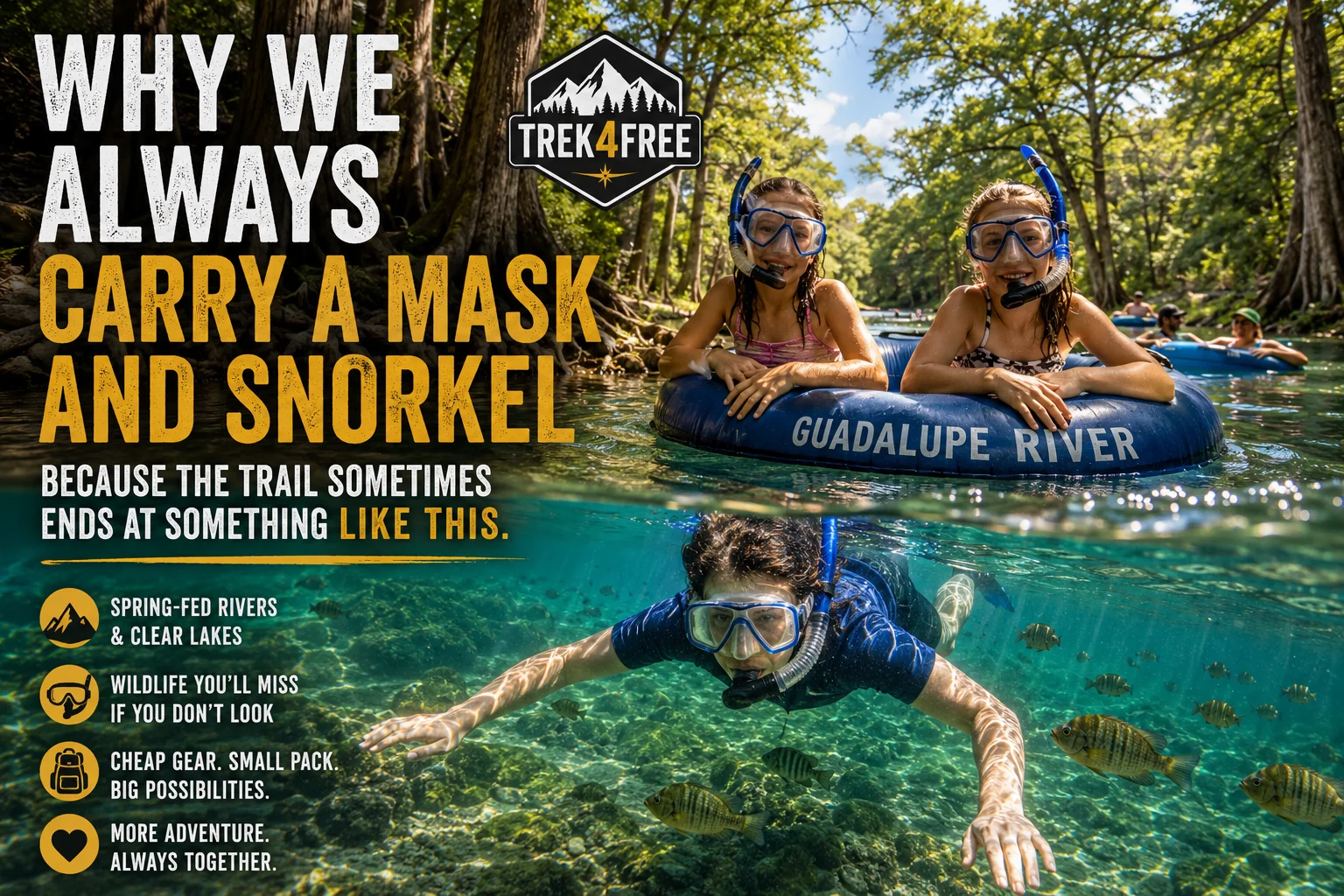
We’re trail runners who carry a mask and snorkel everywhere we go. Most of the time that means quiet mountain lakes and spring-fed rivers — the kind of snorkeling with no adrenaline in it at all.
Key West was not that kind of day.
The Buoy System
We rented a boat from a marina in Key West, took a quick orientation class, and headed out to the reef inside the national marine sanctuary. Before we left, they explained the rule: don’t drop anchor on the reef. Clip onto one of the pre-set mooring buoys instead.
That system is a real, deliberate piece of conservation infrastructure, not just a courtesy. A sanctuary biologist named John Halas designed and installed the first reef mooring buoys in the Florida Keys back in 1981, starting at French Reef. The idea was simple: an anchor dragged across coral does real, lasting damage, but a boat clipped to a fixed buoy does none. It worked well enough that the Keys now maintain more than 800 mooring buoys across the sanctuary, and the concept spread to reef systems worldwide. When we hooked onto our buoy that morning, we were using a fifty-year-old idea that’s still the standard for how you responsibly visit a reef by boat.
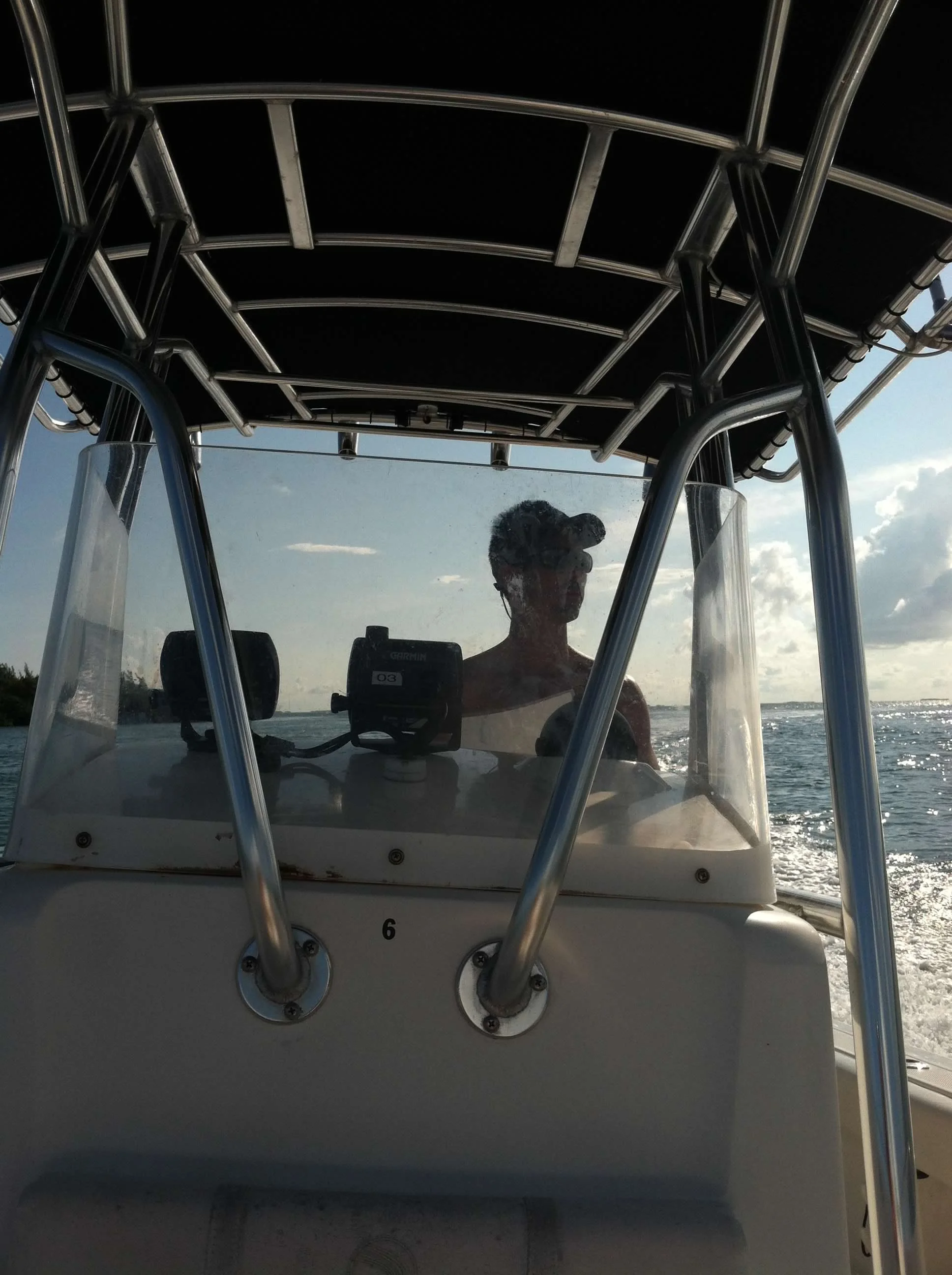
We are not boat people. This was already out of our comfort zone before anything happened.
The Bait Ball
At the buoy, there was a tour boat already anchored nearby with what looked like fifty-plus tourists snorkeling around it. That made the decision to jump in easy — safety in numbers, and if we got turned around, we had a crowd to orient off of.
It wasn’t long before that boat packed up and left.
We kept swimming — Polly and Tortuga, holding hands, working our way around the reef, pointing out angelfish, in no hurry. Genuinely one of the more romantic things we’ve done together, just the two of us in the middle of the ocean.
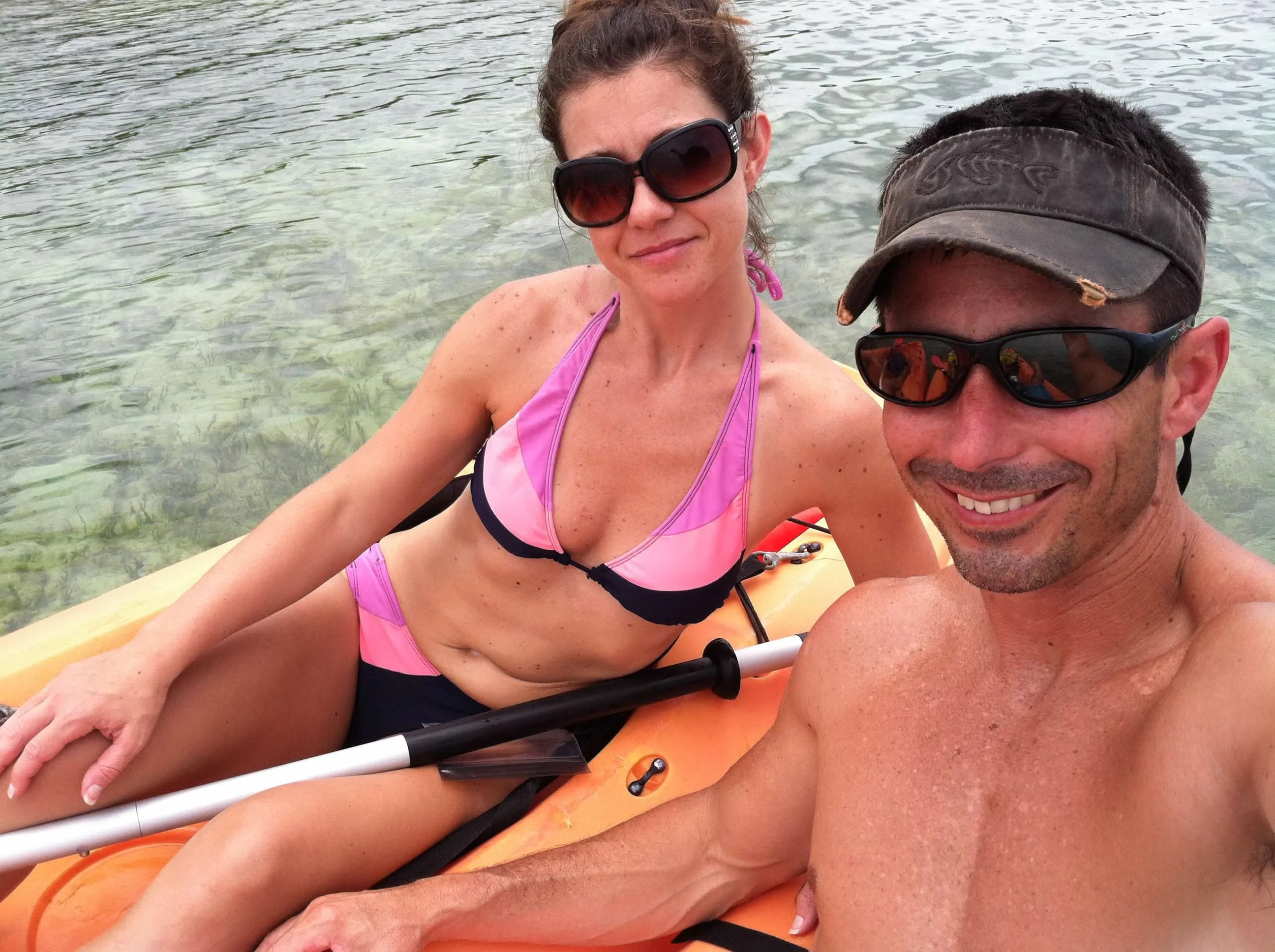
Then a school of fish caught our attention — a tight, synchronized bait ball, moving left and right as one shape. We stopped to watch it.
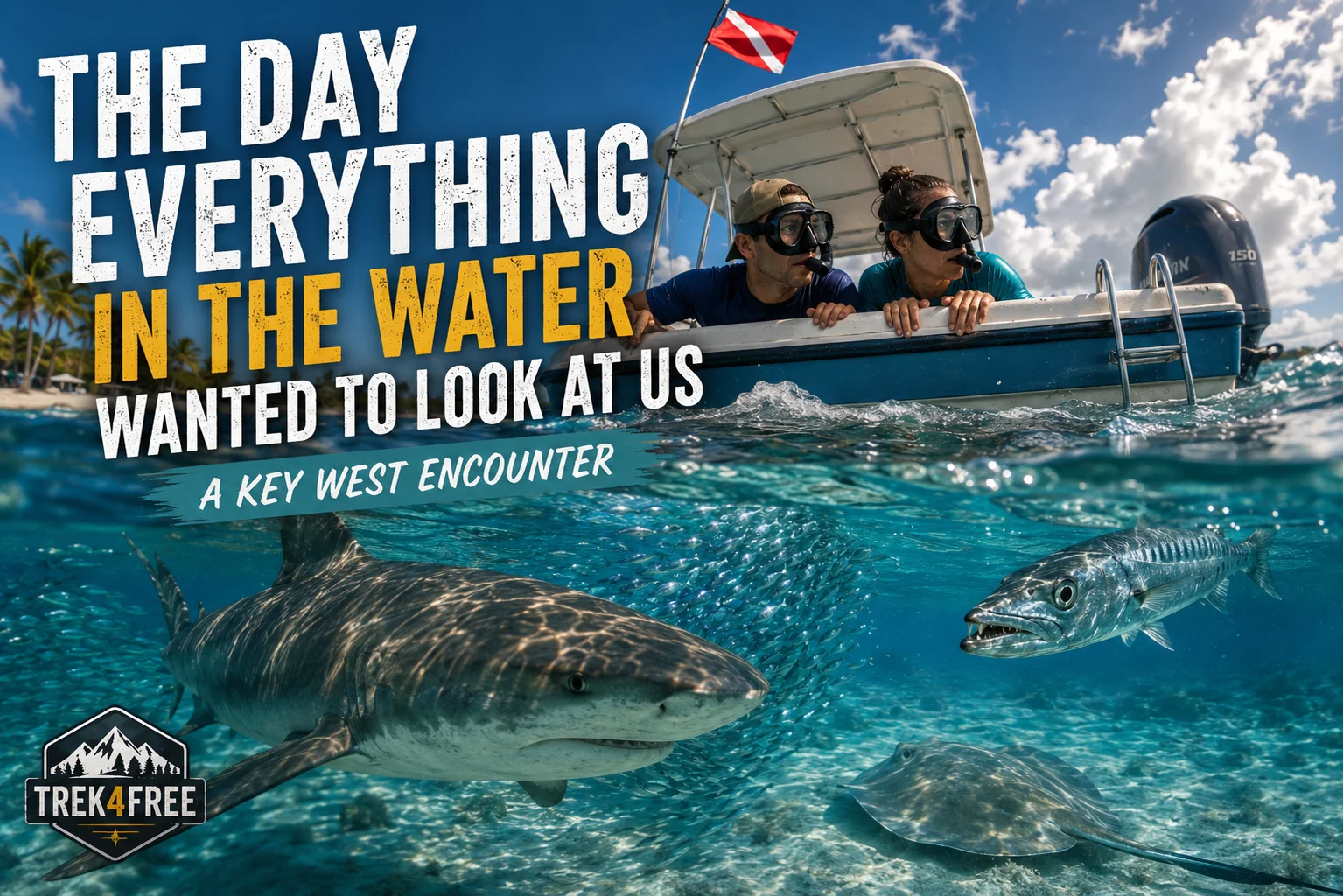
The ball split. Straight down the middle, like a beach ball cut in half — like the Red Sea parting. And through the gap, aimed directly at us, was a shark. A big one. I don’t know the species. It was just a shark, and it was coming our way.
My body started shaking. Polly felt it. She never turned to look at it — she just started swimming for the boat, pulling Tortuga with her. Tortuga faced the shark the whole way back, on guard, as if there was anything useful he could actually do about it. Polly got us both to the boat. We climbed out unscathed, adrenaline running, and looked around at just how alone we were out there — no other boats, no land in sight.
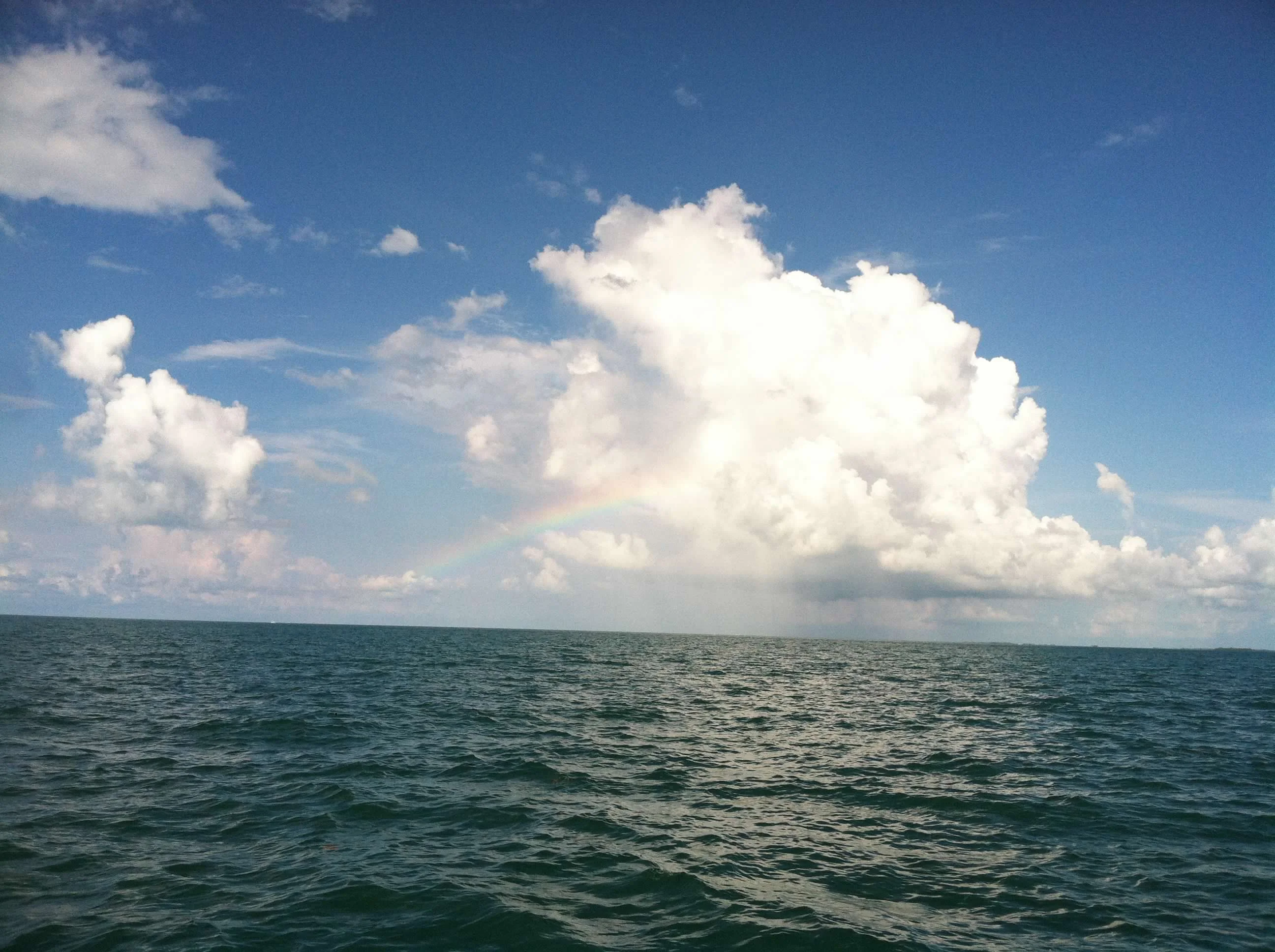
That alone should have been enough for one day.
What Was Actually in the Water
It wasn’t.
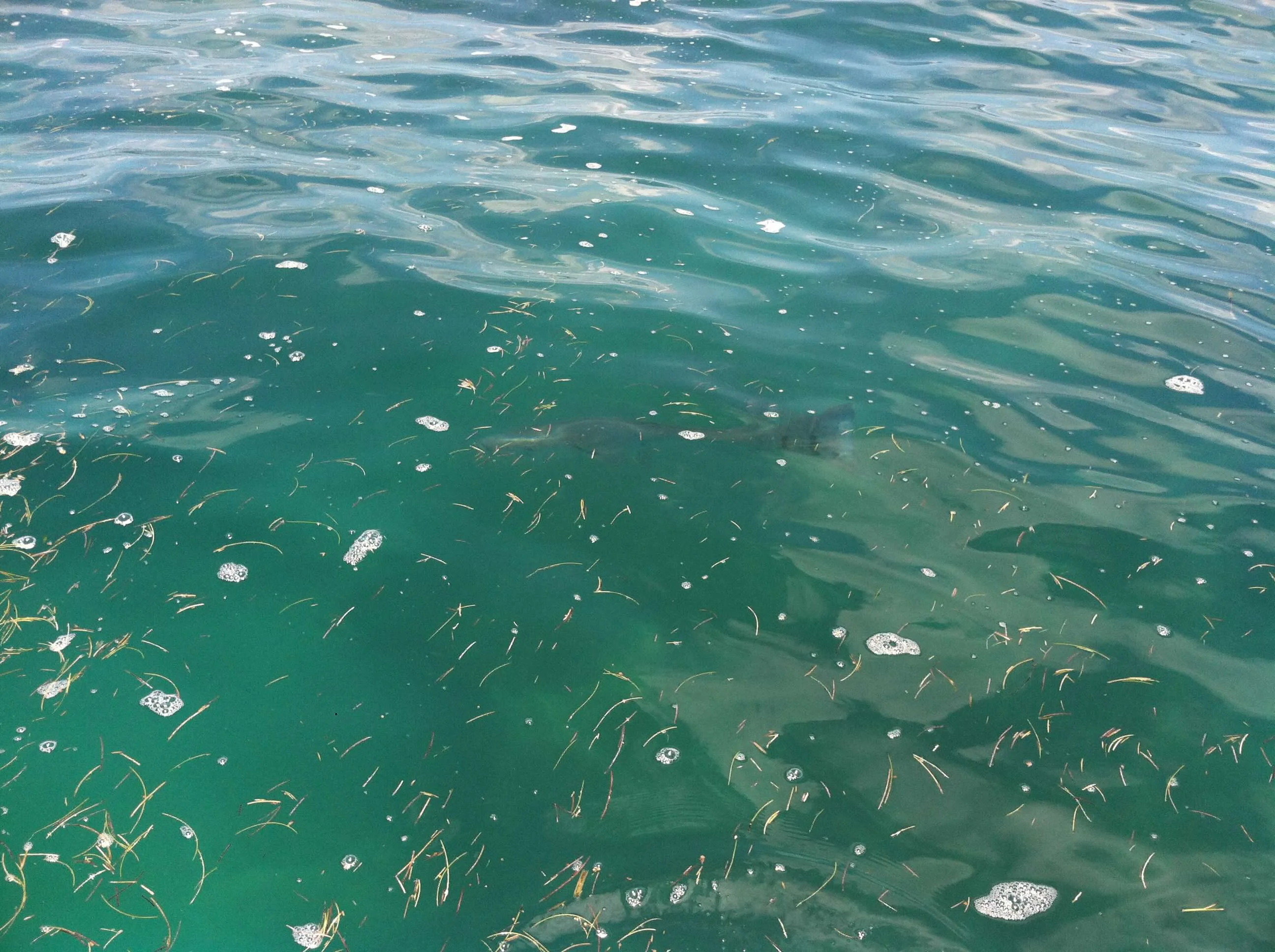
Right after we climbed in, I looked down and saw a huge fish circling the boat — eight feet, easily. Before we’d left the marina, a local had pointed out tarpon in the water, so I assumed that’s what this was. Tarpon really do grow four to eight feet and really do hang around structure like boats and pilings near the reef, so the assumption wasn’t unreasonable.
In one last effort to see it properly, I stuck my head in the water — body still in the boat, like an ostrich with its head in the sand — looking for the tarpon.
Not even a foot from my face was a barracuda. Eyeball to eyeball. Drool coming off its teeth.
I pulled my head out immediately. That was it — I wasn’t getting back in. Everything out there was trying to eat me, even though, realistically, none of it was. Barracuda are genuinely common on the Key West reef and genuinely harmless to people — they’re curious, and they will absolutely swim in close to check you out, which is exactly what happened. It’s an entirely normal encounter. It just doesn’t feel that way with one a foot from your mask.
Then we looked straight down. Thirty feet below the boat, on the sandy bottom, in water so clear we could see every detail from the surface, was a stingray bigger than a person — spread flat, “making angels” on the ocean floor. Southern stingrays are common on this reef and usually rest half-buried in the sand, exactly like that.
We counted our nine lives, packed up, and went home.
None of It Was Unusual — That’s the Part That Gets You
Every single animal in that story is a completely normal Key West reef sighting. Nurse sharks are the most common shark on this reef, generally docile and often seen resting motionless on the sand — but reef and even occasional lemon sharks turn up too, and a fast-moving shark breaking through a bait ball is a real, documented predation behavior, not something we imagined. Barracuda are famously curious and famously harmless, and get close to snorkelers constantly. Tarpon really do school near boats and structure. Southern stingrays really do rest flat on sandy bottoms in exactly the pose we saw.
None of it was rare. All of it was terrifying in the moment, because we were a couple of trail runners a long way from shore, completely out of our element, for about an hour.
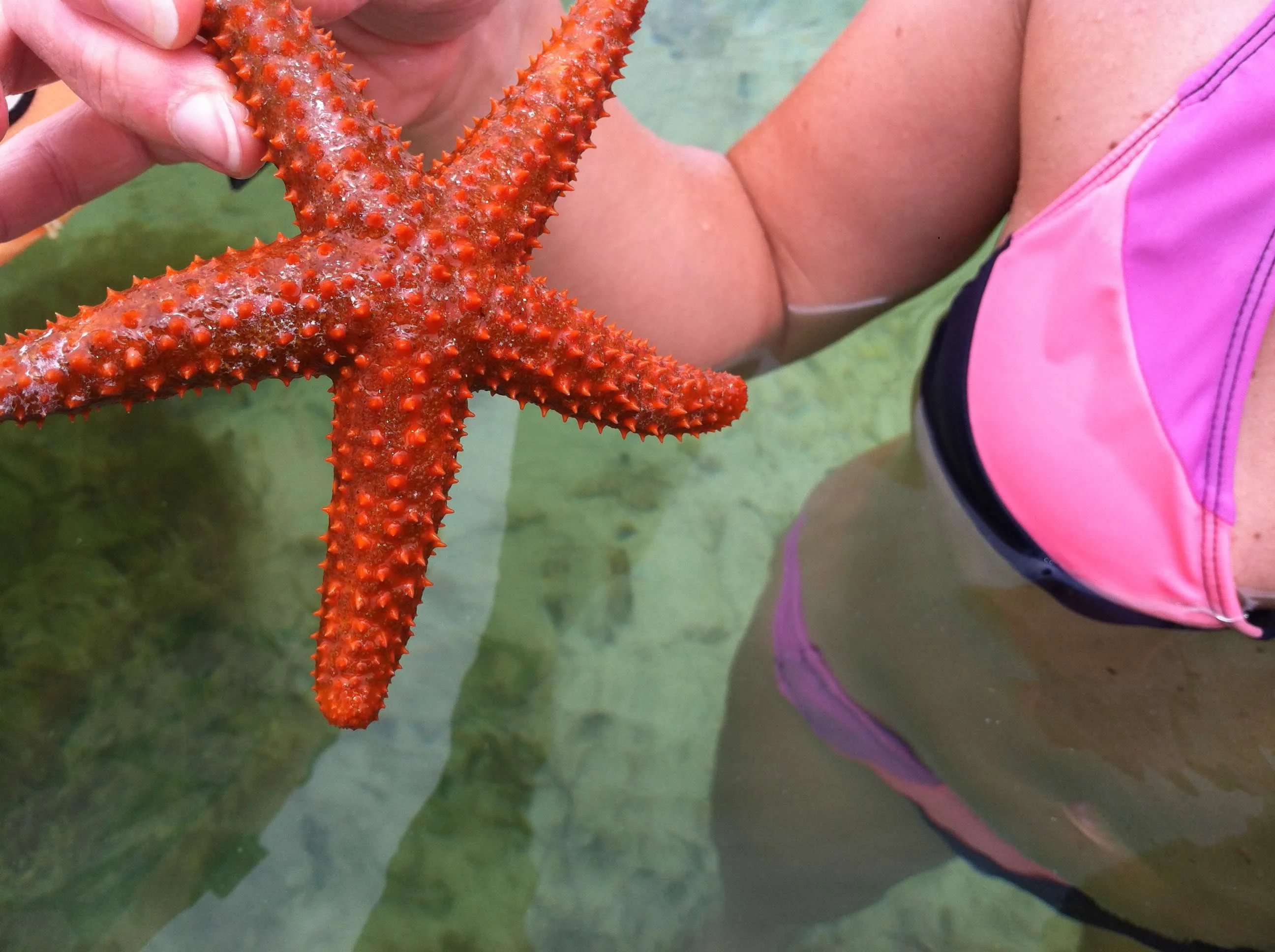
Not everything we found was terrifying, though — plenty of the reef is just this. Bright, slow, and strange in a good way.
The Ankle-Deep Shark
We came back to Key West on a different trip with CaCaw, van parked at a campsite, water no more than waist-high at the shoreline. We were about to go snorkel right off the beach.
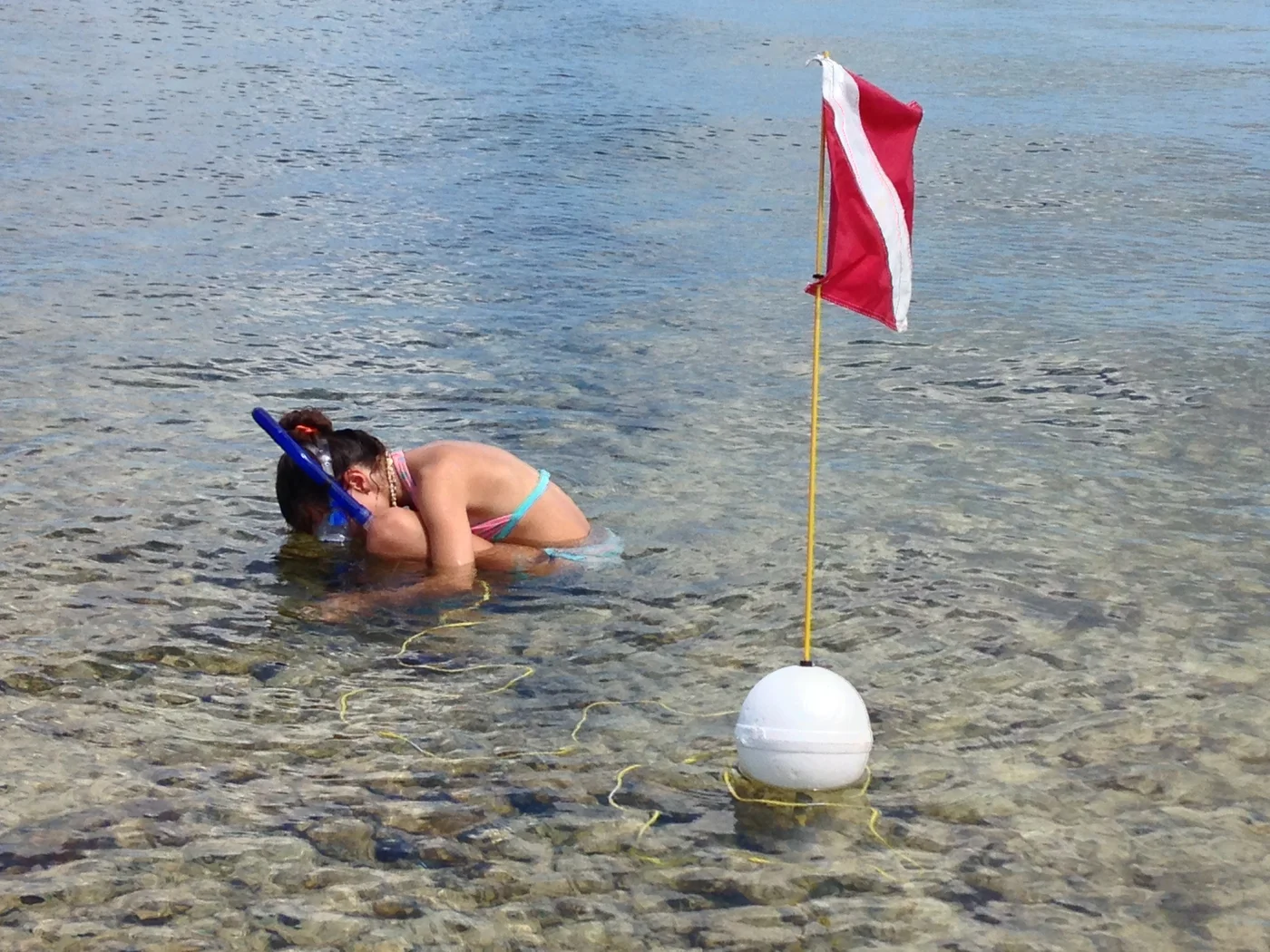
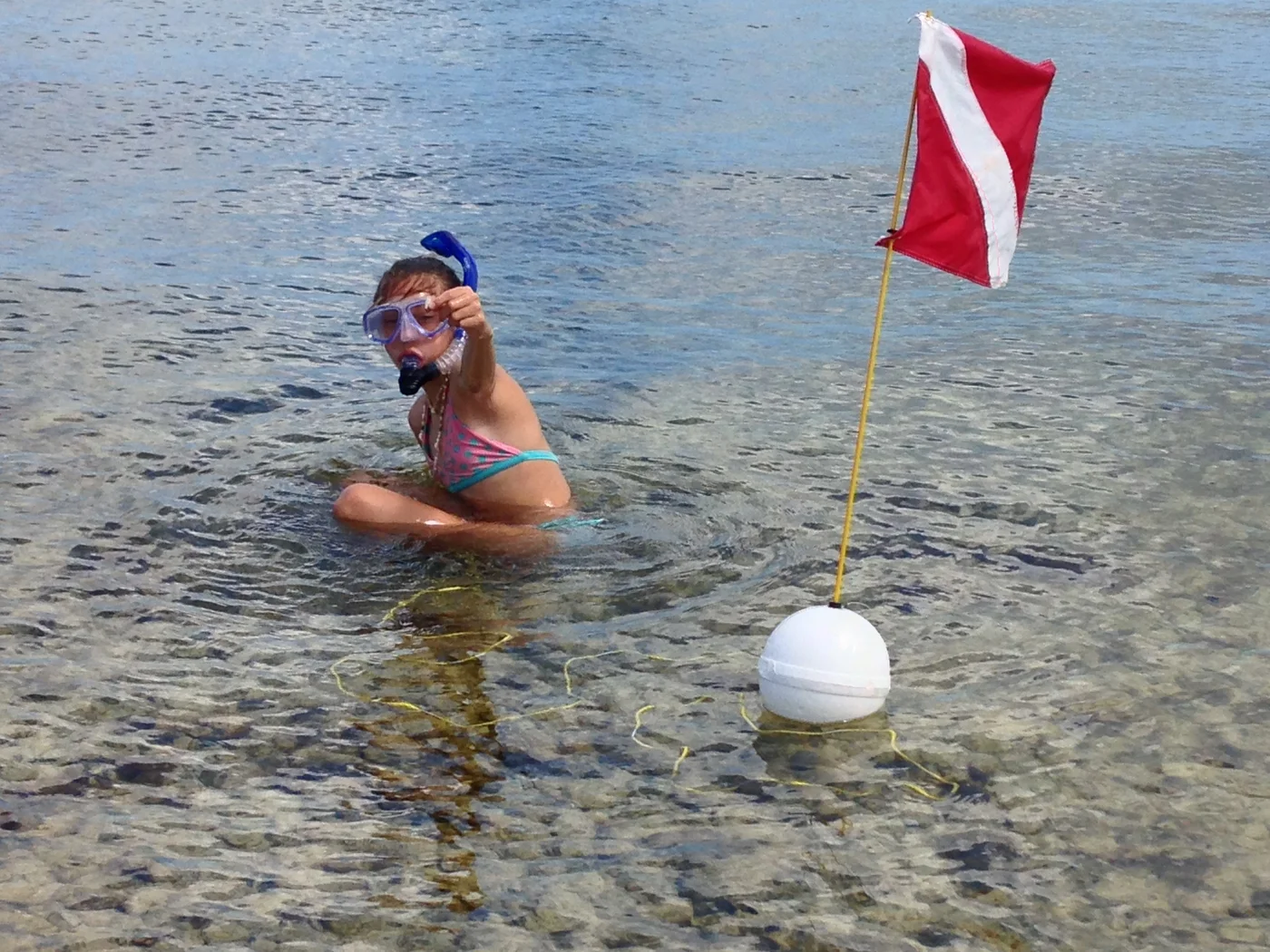
From a little rise above the beach, we had a good vantage point looking down at the water — and there was a shark cruising down the shoreline, right through that ankle-deep water.
CaCaw looked at it, looked at us, and matter-of-factly said she would not be getting in that water with that shark in it. We couldn’t blame her. A shark that can swim through water that shallow was never going to be our problem to argue with.
The Adventure Was Already Too Much
We started this series talking about carrying a cheap mask and snorkel everywhere, just in case a swimming hole is worth a look. Key West is the reminder that “just in case” can escalate fast. A rented boat, a fifty-year-old buoy system, a bait ball splitting in half, a barracuda a foot from your face, a stingray the size of a person — all in about an hour, all completely normal for that reef, and all a very long way from a quiet lake in Virginia.
We’re trail runners. That day, we were reminded exactly why.
The reef off Key West is part of the Florida Keys National Marine Sanctuary, managed by NOAA — use a mooring buoy, never an anchor, on the reef. This is the third piece in our snorkeling series: start with Why We Always Carry a Mask and Snorkel for the gear philosophy and the quiet version of this hobby, or read about the calmest, most wholesome encounter of them all in Three Sisters Springs: Where Manatees Swim Out as You Swim In.