Why We Always Carry a Mask and Snorkel
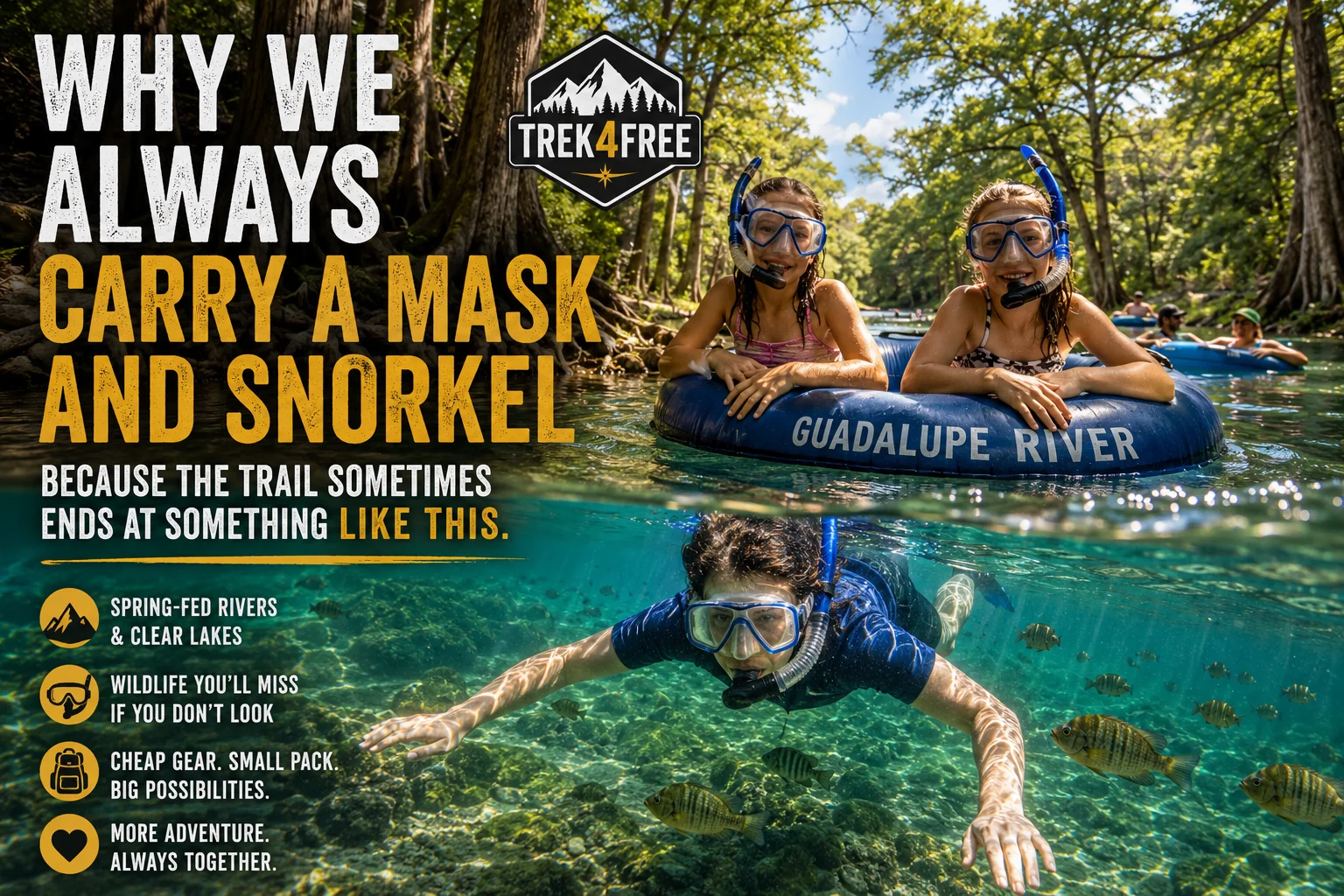
We’re trail runners. That’s the whole identity — miles, dirt, elevation. Snorkeling was never supposed to be part of the story.
But somewhere along the way, a cheap mask and snorkel became permanent cargo in the van. Nothing fancy. The kind you can buy for less than a trail meal. They just live there now, because we kept running into water worth looking down into, and kept being glad we had them.
That’s really the whole idea behind this one: snorkeling doesn’t have to be a destination. It can be the thing you’re carrying just in case.
The Gear Philosophy
A mask and snorkel take up almost no space. They’re not expensive. They don’t need a trip planned around them. What they need is a swimming hole, a spring-fed river, or a quarry lake — and suddenly a hike that was just a hike has a second act.
We’ve pulled them out at city swimming holes, mountain lakes, and slow rivers all over the country. Most of the time it’s five or ten minutes of floating face-down, watching whatever’s living under the surface. Sometimes it turns into the best part of the day.
Two places made us realize this was worth writing about.
Lake Phoenix, Virginia
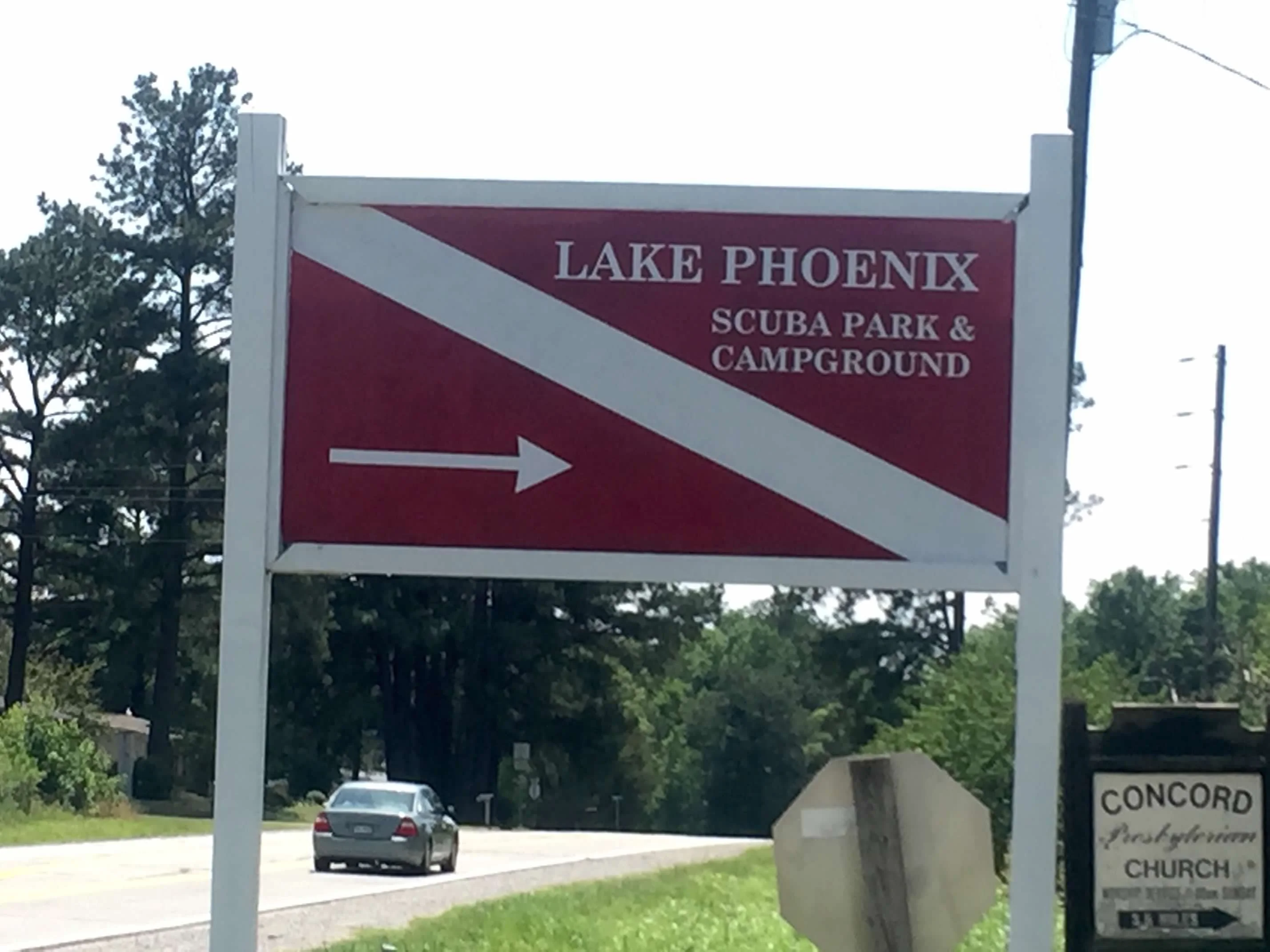
Lake Phoenix is an old mining quarry that’s been turned into a dedicated scuba park and campground. The water is deep and remarkably clear for an inland lake — clear enough that you don’t need to be a certified diver to get something out of it. You just need a mask.
The history is more interesting than “old quarry.” Bryan Rock & Sand Co., and later Southern Materials Co., mined this site for granite starting around 1953. It grew into a serious operation — roughly 90 feet deep, 900 feet across, 27 workers — and at its peak supplied about 1.7 million tons of stone for the Chesapeake Bay Bridge-Tunnel project. Mining continued into the 1960s for Virginia highway construction before the quarry was worked out.
Then geology took over. A crack opened in the east wall, about 45 feet below what would become the waterline. Pumps held the water back for a while, but a tributary of the Nottoway River eventually broke through, and the quarry flooded on its own — bringing fish and building the clear-water ecosystem that’s there today. It opened as a scuba site in the 1990s, fell into disrepair, and was bought and revived by new ownership (the Tucker family) starting in 2015. It’s now known in the regional diving community as having some of the clearest water in the mid-Atlantic.
What makes it worth the trip beyond the history: divers have sunk things in there on purpose. A plane, a helicopter, vans, buses, boats, even smaller staged pieces like a “hubcap tree” — a deliberate underwater junkyard built to give divers and snorkelers something to swim toward. It’s part scuba training site, part sunken Atlantis for anyone curious enough to look.
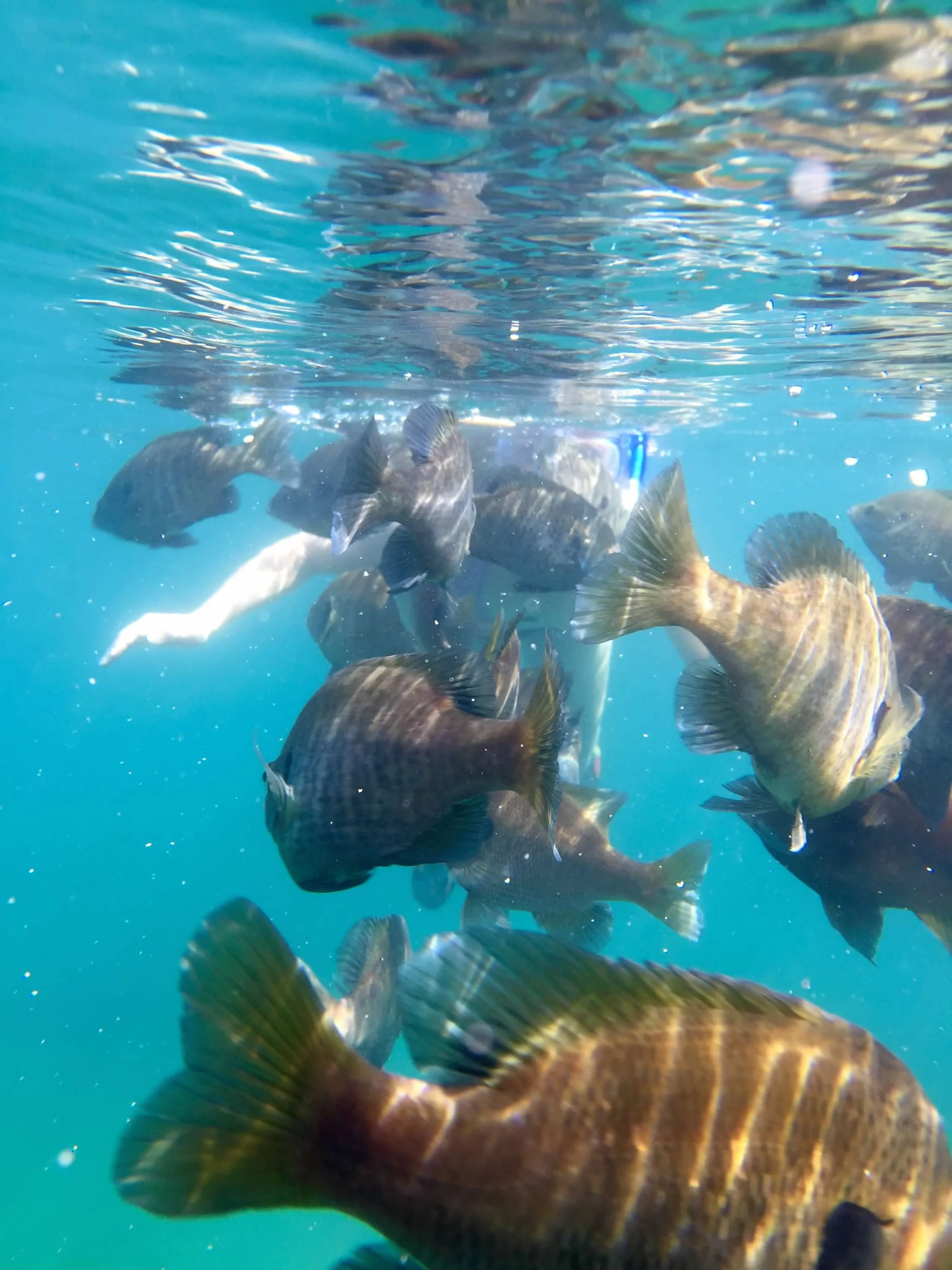
And the fish don’t hide. They’re used to people, used to being fed, and they’ll crowd right up to your mask. Our kids loved this part more than almost anything else we’ve done in the water — it’s close, it’s controlled, and there’s always something swimming past.
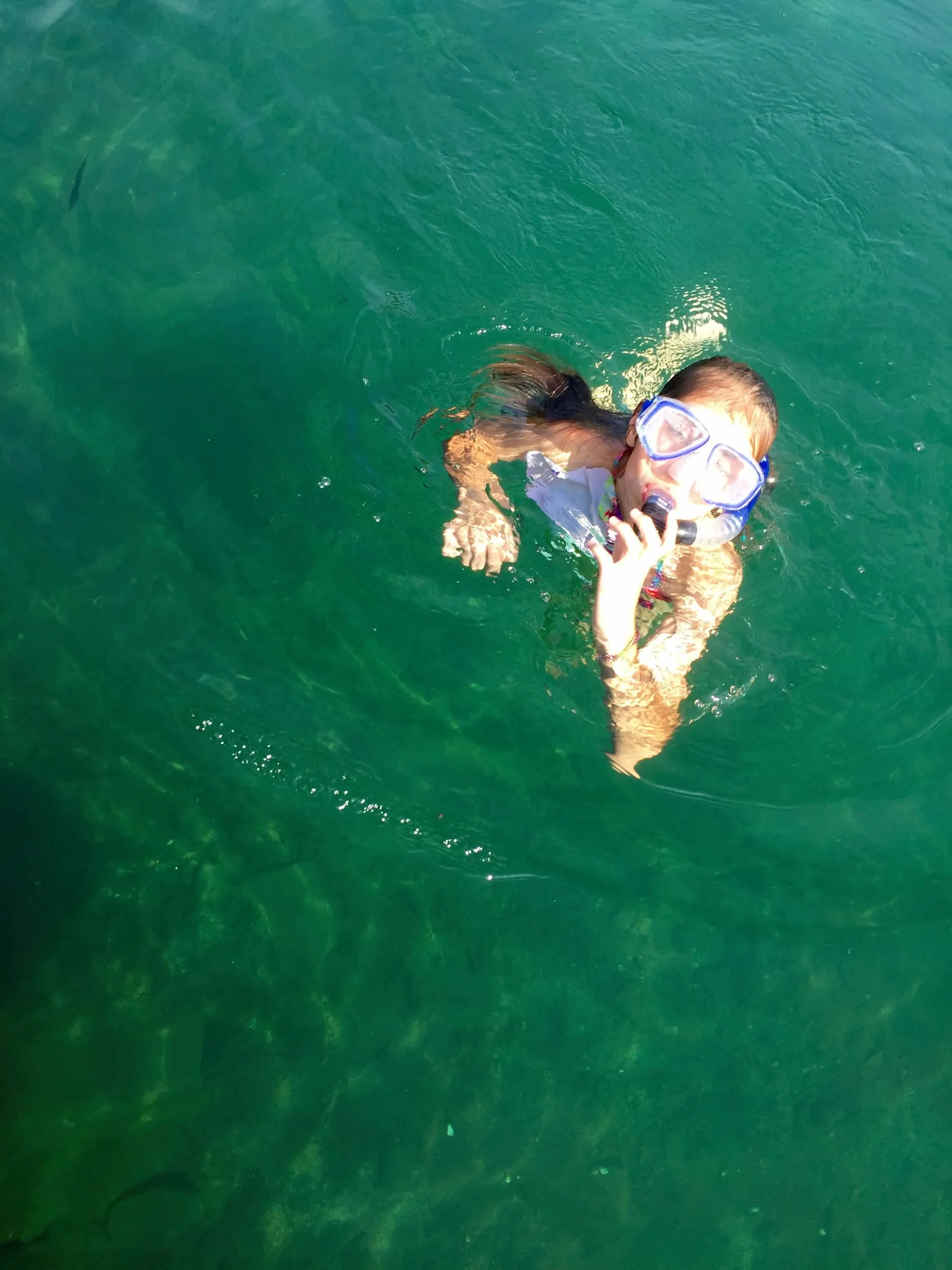
It’s a campground too, which makes it an easy overnight — set up camp, swim all afternoon, do it again the next morning. For a controlled, safe place to let kids get comfortable with a mask and snorkel for the first time, it’s about as good as it gets.
The Guadalupe River, Texas
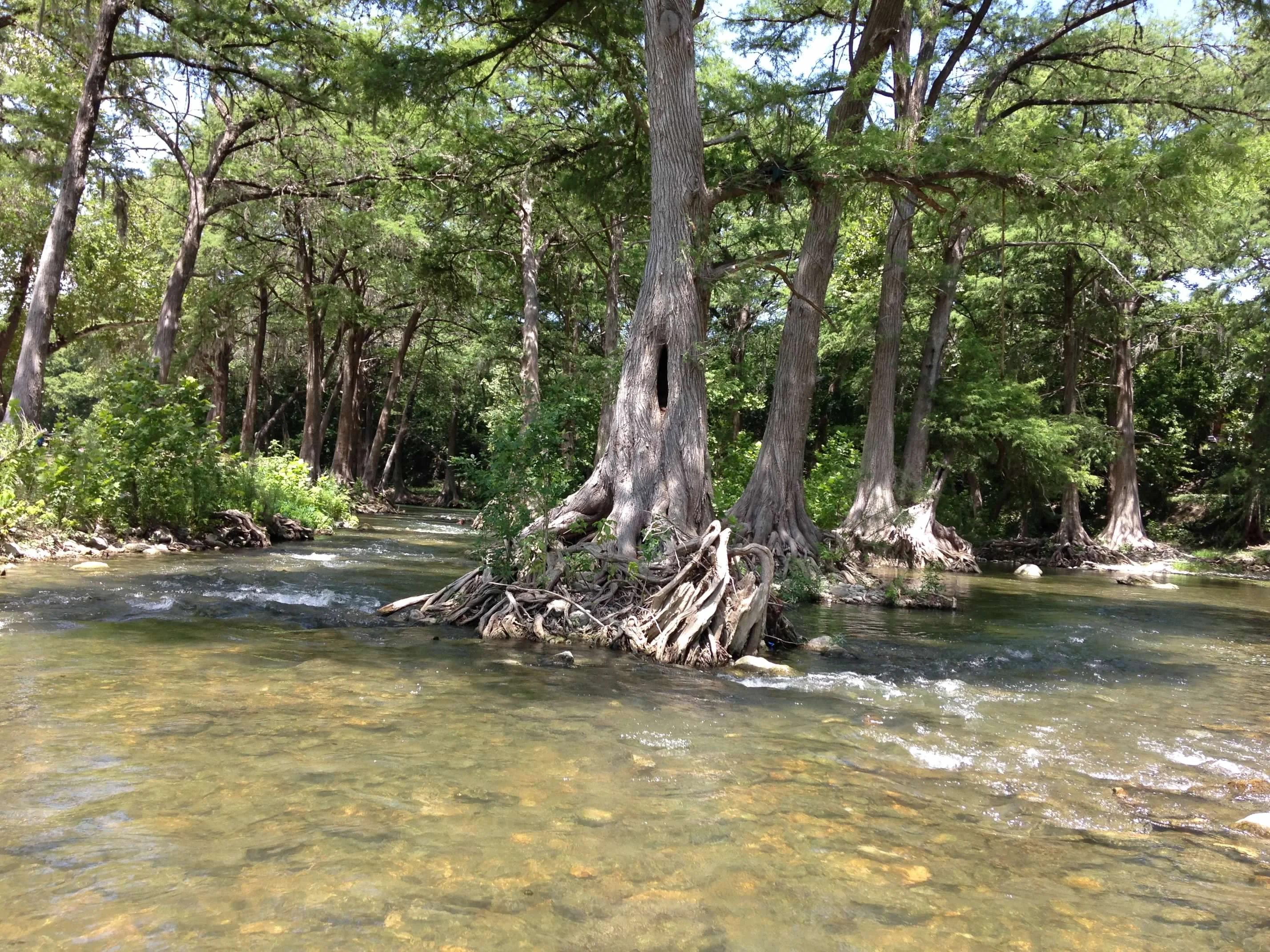
Anywhere you can find a spring-fed river in Texas Hill Country, snorkeling is basically free entertainment. The Guadalupe River around Gruene — and the San Marcos River not far away — run clear over gravel and limestone, cold even in the middle of a Texas summer, and full of small life if you’re willing to put your face in the water and look.
Little fish, freshwater shrimp, crawdads, darting minnows in the shadows along the bank — none of it is dramatic, and that’s kind of the point. It’s the kind of snorkeling you can do for free, in a river everyone else is just floating past on an inner tube.
Where the water actually comes from: the San Marcos River starts at Aquarena Springs in San Marcos, fed by the Edwards Aquifer through roughly 200 individual springs — the second-largest spring system in Texas — pooling first into Spring Lake before becoming the river. That’s why it runs so cold and so clear even in August: it’s coming straight out of the ground, not off a sun-baked surface watershed. Spanish colonists established a settlement here, San Marcos de Neve, in 1808, though hostility from the Comanche pushed them out again by 1812 — this stretch of river has been a gathering point for a very long time. The best snorkeling stretch today runs from Sewell Park down to the Rio Vista Falls dam.
One thing worth knowing before you go: the upper San Marcos River is home to Texas wild rice — a federally endangered plant that grows nowhere else on Earth outside a two-mile stretch of this exact river. It spends nearly its whole life fully underwater. More than 80,000 people recreate on this river every summer, and standing on or wading through the wild rice beds is one of the biggest threats to the species — a plant can get ripped out simply by someone standing where they shouldn’t. If you’re floating or snorkeling here: stay in open channels, don’t stand on plant beds to rest, and pack out everything you bring in. The same water that makes this snorkeling worth doing is exactly what the wild rice needs to survive.
That’s actually the best way to combine the two: rent inner tubes for the float, and bring the masks anyway. Every time the water goes still or something catches your eye below the surface, you flip off the tube, take a look, and climb back on. It costs almost nothing extra, and it turns a lazy river float into something you’re actually paying attention to.
One note on comfort: spring-fed water in Texas is cold, even in August. It’s worth it for the clarity, but don’t be surprised how fast your body wants out. A cheap wetsuit top extends how long you’ll actually want to stay in.
Look for the Same Thing Everywhere
The pattern repeats itself anywhere there’s clear, calm, fresh water: swimming holes, spring-fed rivers, old quarry lakes. You don’t need a coral reef. You just need visibility and something willing to swim past your mask.
This same gear turned into something bigger on two other trips: swimming with manatees in Florida, and a day off the coast of Key West that turned into the most out-of-our-element hour of our lives. Read those next — Three Sisters Springs: Where Manatees Swim Out as You Swim In and The Day Everything in the Water Wanted to Look at Us. But the two places above are the low-key version: no boat, no ocean, no adrenaline. Just a mask, a swimming hole, and something worth looking at.
That’s usually enough.
Before You Go
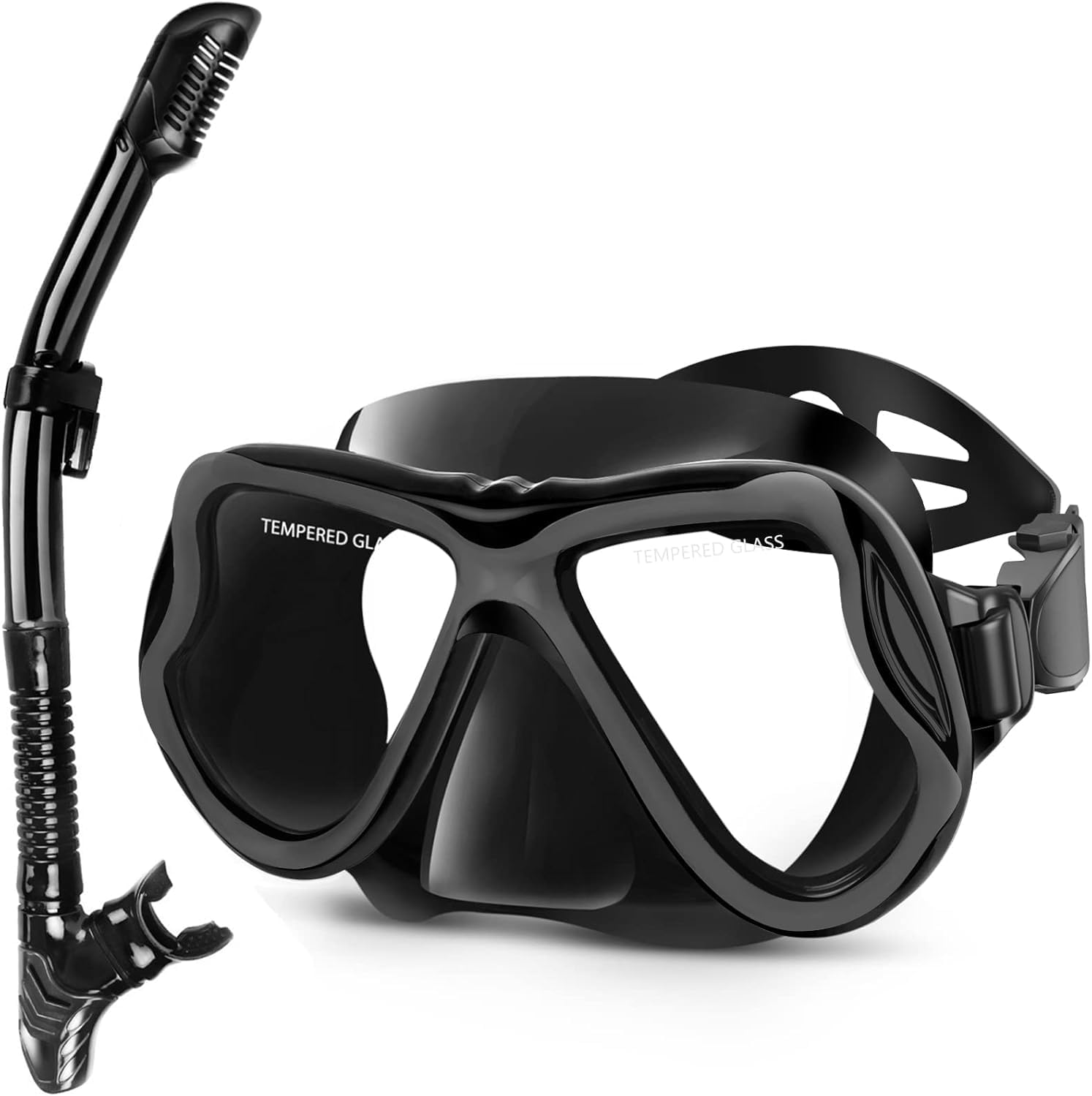 Mask & Snorkel Set
This is basically the philosophy of the whole article in one product — cheap, anti-fog, small enough to live in the van permanently so you're never caught at a swimming hole without it.
Mask & Snorkel Set
This is basically the philosophy of the whole article in one product — cheap, anti-fog, small enough to live in the van permanently so you're never caught at a swimming hole without it.
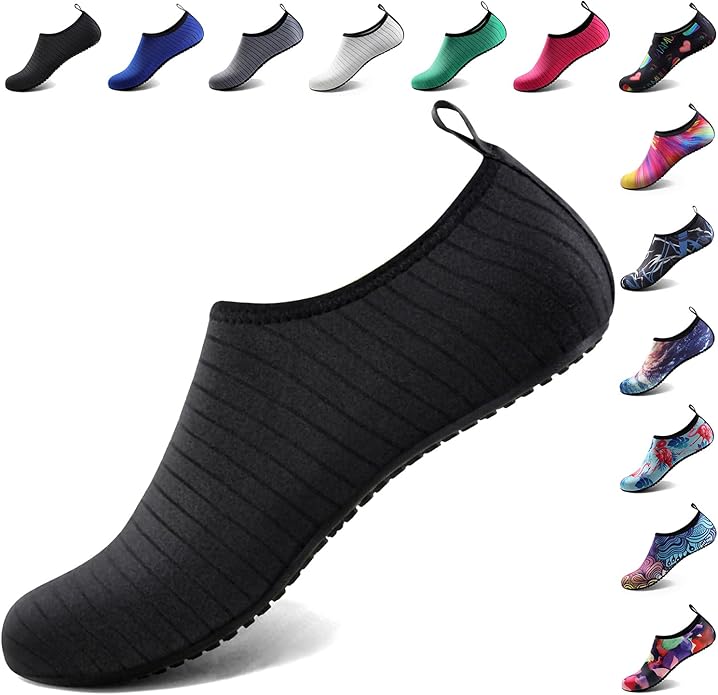 Water Shoes
The Guadalupe runs clear over gravel and limestone, and quarry entries like Lake Phoenix aren't sandy either. Bare feet on that ground gets old fast.
Water Shoes
The Guadalupe runs clear over gravel and limestone, and quarry entries like Lake Phoenix aren't sandy either. Bare feet on that ground gets old fast.
These are affiliate links — we appreciate your support, no extra cost to you.
Trek4Free’s swimming holes map covers spring-fed rivers and lakes across the country — a mask and snorkel turn any one of them into more than just a place to cool off.