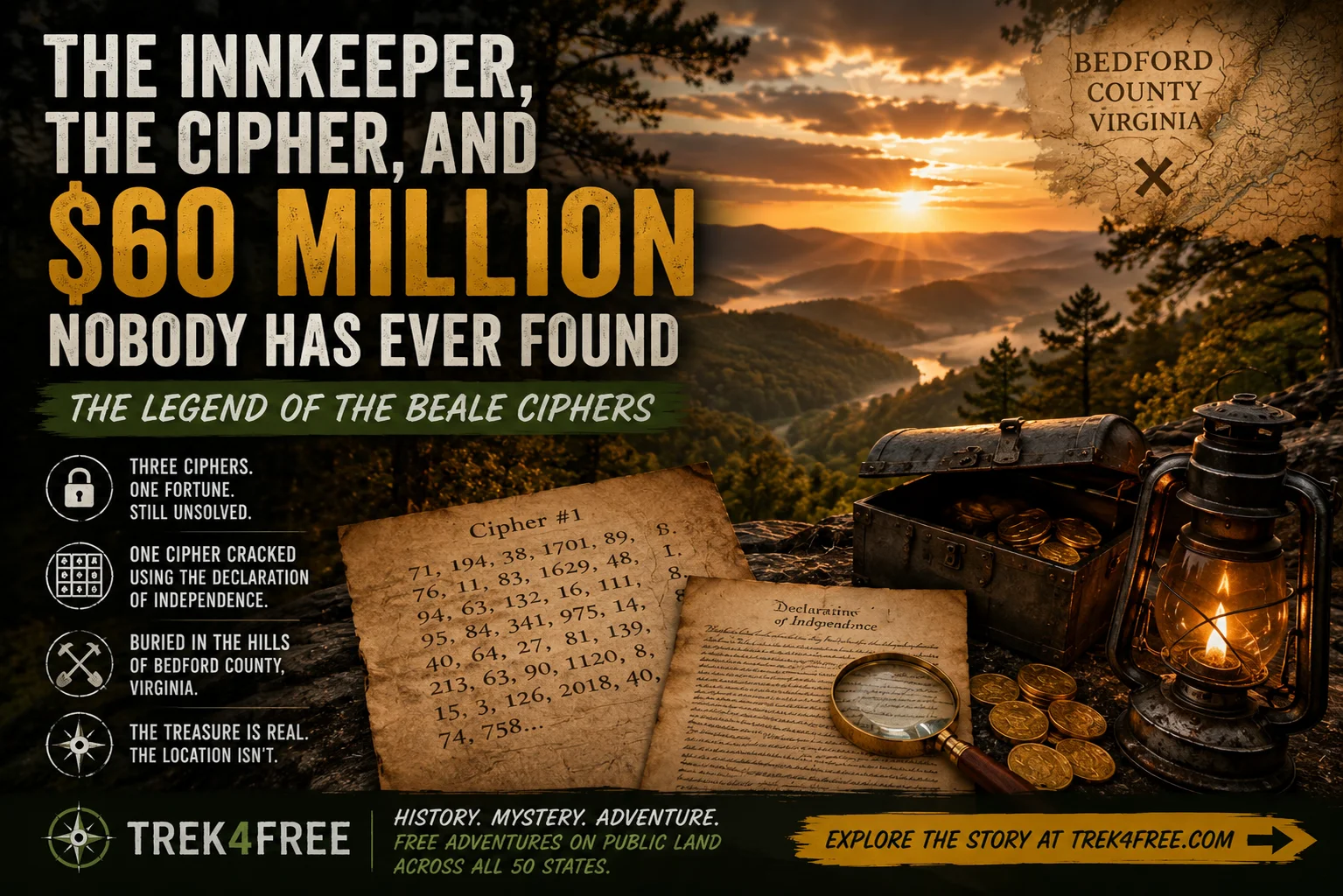
The Innkeeper, the Cipher, and $60 Million Nobody Has Ever Found
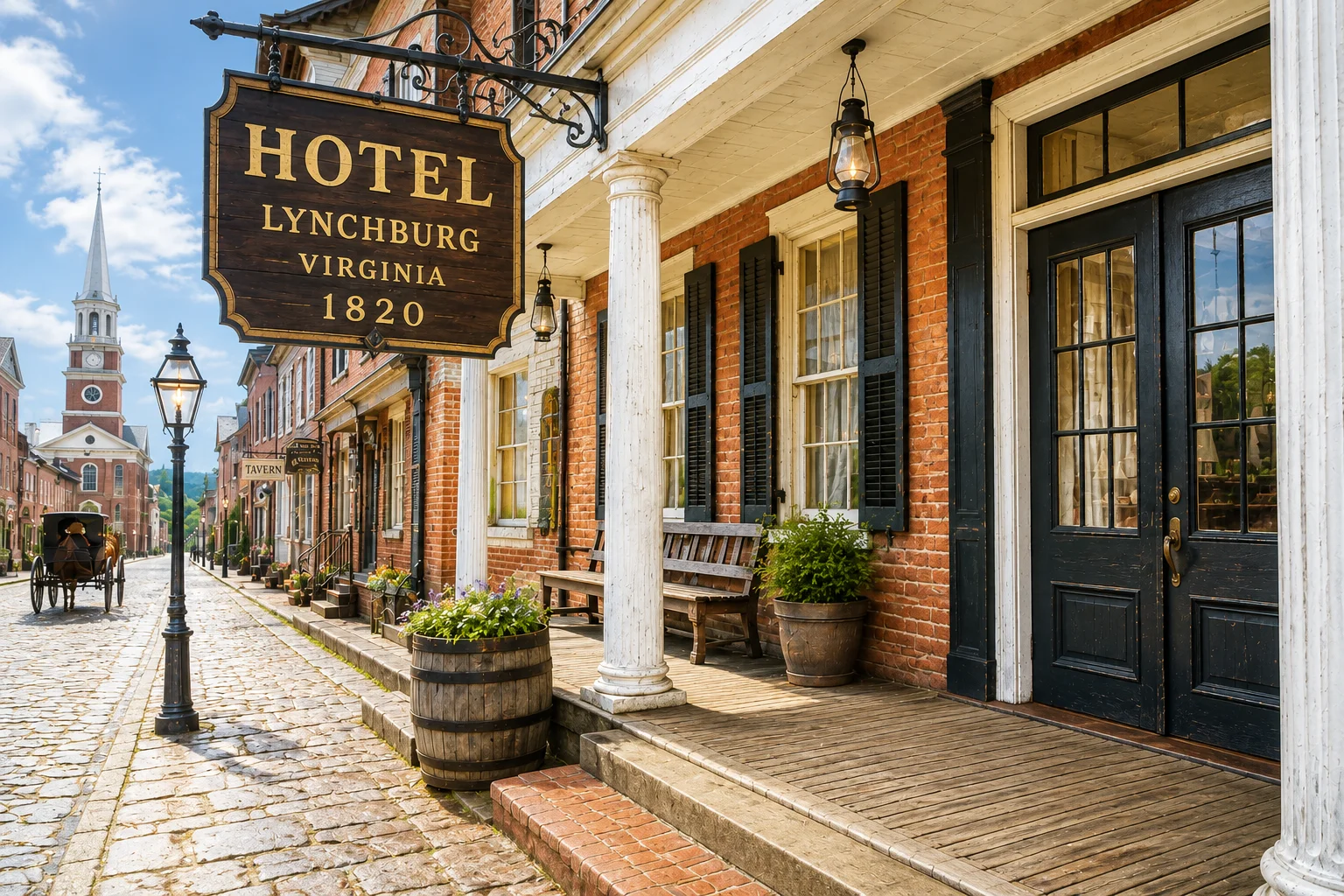
In January 1820, a man checked into a hotel in Lynchburg, Virginia.
Before he disappeared for good, he left behind a locked iron box. Inside: a handful of letters, and three sheets covered in nothing but numbers.
One of those number sheets has been cracked. It describes a fortune in gold and silver buried in the hills of Bedford County.
The other two — the ones that supposedly say exactly where — have never been solved.
Nobody has ever found the vault.
The Story
According to the account, Thomas J. Beale led a party of about thirty men out west sometime around 1817, where they struck a rich gold and silver deposit. Over roughly eighteen months, they mined it, and Beale personally hauled the fortune back east — gold, silver, and jewels — to bury it in a stone-lined vault somewhere in the hills of Bedford County, Virginia.
Paranoid about the location leaking, Beale never wrote it down in plain language. Instead, he encoded everything into three separate sheets of numbers. He locked the ciphers, along with some personal letters, in an iron box, and left the whole thing with a Lynchburg innkeeper named Robert Morriss — telling him only to open it if Beale never returned.
Beale never returned.
Morriss held the box, unopened, for decades. When he finally cracked it open, he found the letters and the three number sheets — and spent years trying to solve them before eventually handing the problem off. The whole story didn’t reach the public until 1885, when a man named James B. Ward published it all in a pamphlet.
The Actual Cipher — and How It Works
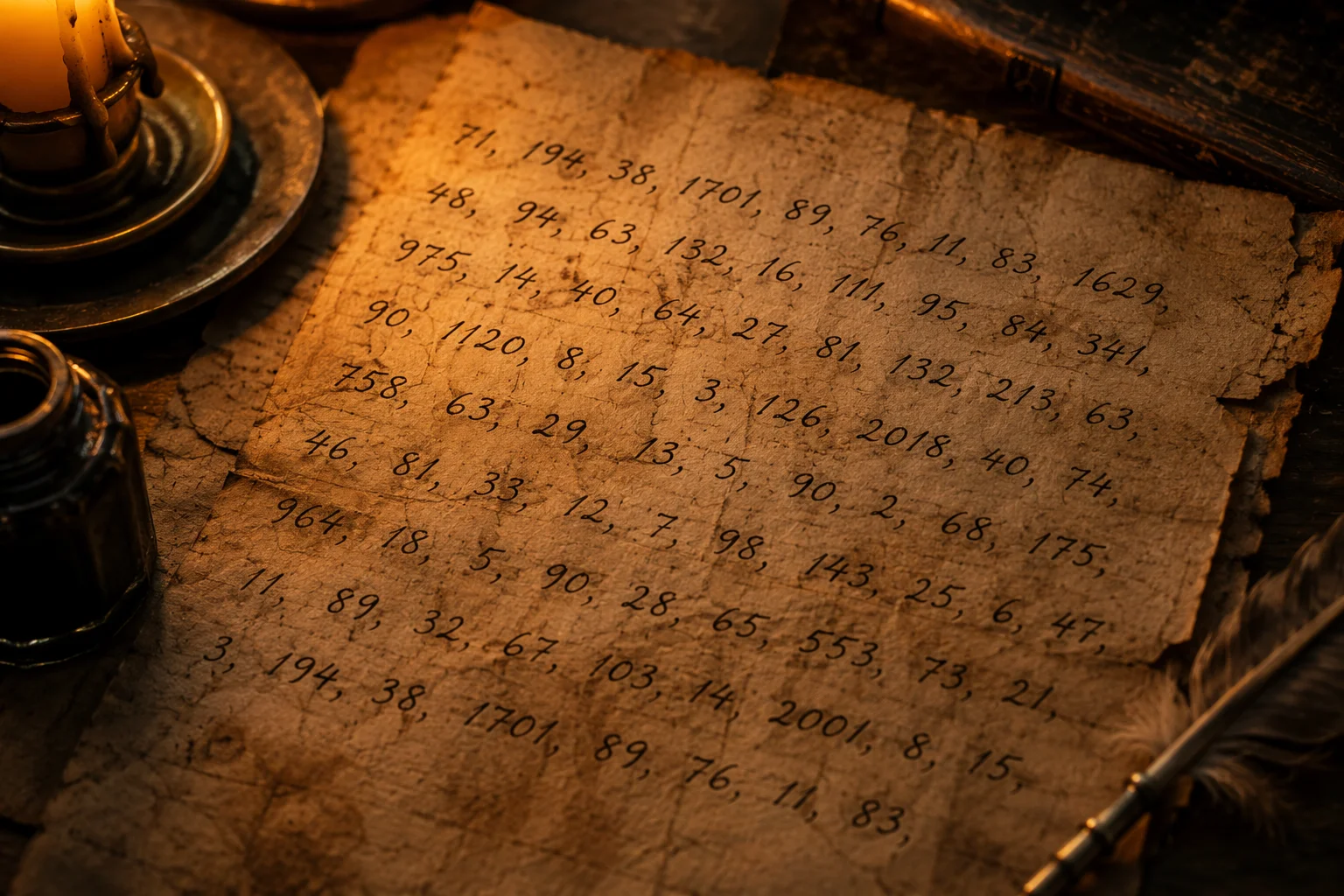
Here’s the real opening of Cipher #1 — the one that supposedly gives the vault’s exact location. This is the genuine number sequence from the 1885 pamphlet, not a recreation:
71, 194, 38, 1701, 89, 76, 11, 83, 1629, 48, 94, 63, 132, 16, 111, 95, 84, 341, 975, 14, 40, 64, 27, 81, 139, 213, 63, 90, 1120, 8, 15, 3, 126, 2018, 40, 74, 758…
That’s a book cipher. Here’s how it works: pick any text everyone can get a copy of, and number every word in it in order — word 1, word 2, word 3, and so on. Beale used the Declaration of Independence as the key for cipher #2. To encode a letter, you find any word in the key text that starts with that letter, and write down that word’s number instead. To decode, you reverse it: look up each number’s word in the key document, and take its first letter.
A quick illustration with a short stand-in key, just to show the mechanism (not the real Declaration numbering):
Key text: “A quick brown fox jumps over.” → word 1 = A, word 2 = quick, word 3 = brown, word 4 = fox, word 5 = jumps, word 6 = over.
To encode the letter F, you could write 4 (fox starts with F). To encode A, you’d write 1. String enough numbers together against a long enough key text, and you’ve built a cipher that’s genuinely unbreakable — unless someone already knows which book you used.
That’s exactly the wall everyone’s hit for 140 years. Cipher #2 got solved because someone guessed Beale’s middle name was “Jefferson” and gambled that the key might be the document Thomas Jefferson helped write. It worked. Nobody has ever guessed correctly for ciphers #1 or #3.
What Cipher #2 Actually Says
This part is real and independently reproducible by anyone with a copy of the Declaration of Independence. Decoded, it opens:
“I have deposited in the county of Bedford, about four miles from Buford’s, in an excavation or vault, six feet below the surface of the ground, the following articles, belonging jointly to the parties whose names are given in number three, herewith: The first deposit consisted of ten hundred and fourteen pounds of gold, and thirty-eight hundred and twelve pounds of silver, deposited Nov…”
That’s the entire hook. It’s specific. It’s confident. It names an amount. And it’s completely useless without cipher #1 telling you exactly where “the county of Bedford” actually means on the ground.
The Case That It’s a Hoax
Here’s the honest version, and it deserves to be told straight.
No historical record of a real Thomas J. Beale has ever surfaced — no birth record, no land deed, nothing tying him to Bedford County or anywhere else. Researcher Joe Nickell’s 1982 analysis found the “1820s” letters use words like stampede and improvise — terms that weren’t in common use until the 1840s, decades after they were supposedly written. Cryptographer Jim Gillogly reached similar conclusions in 1980. The leading theory: James B. Ward, the man who published the pamphlet in 1885, fabricated the whole story to sell copies — solving cipher #2 himself as proof of concept, while leaving ciphers #1 and #3 permanently, deliberately unsolvable.
Modern cryptanalysis backs this up further. A 2024 paper on the IACR (International Association for Cryptologic Research) preprint server — titled, bluntly, “Beale Cipher 1 and Cipher 3: Numbers With No Messages” — ran statistical analysis on the unsolved ciphers and concluded they may never have encoded real messages at all. A separate 2024–2025 computational project tested more than 70 historical documents — founding documents, period texts, everything researchers could think of — as possible keys for ciphers #1 and #3. None of them worked.
So: almost certainly fiction. Almost certainly written to sell pamphlets. And still, 140 years later, nobody has stopped trying.
140 Years of People Who Couldn’t Let It Go
The search has never really stopped, and it’s left real marks on real ground.
- 1970s–1996 — The Beale Cypher Association was a real organization: public membership, $25 a year, a quarterly newsletter, seminars and symposiums. It ran for nearly two decades before folding when its founder retired.
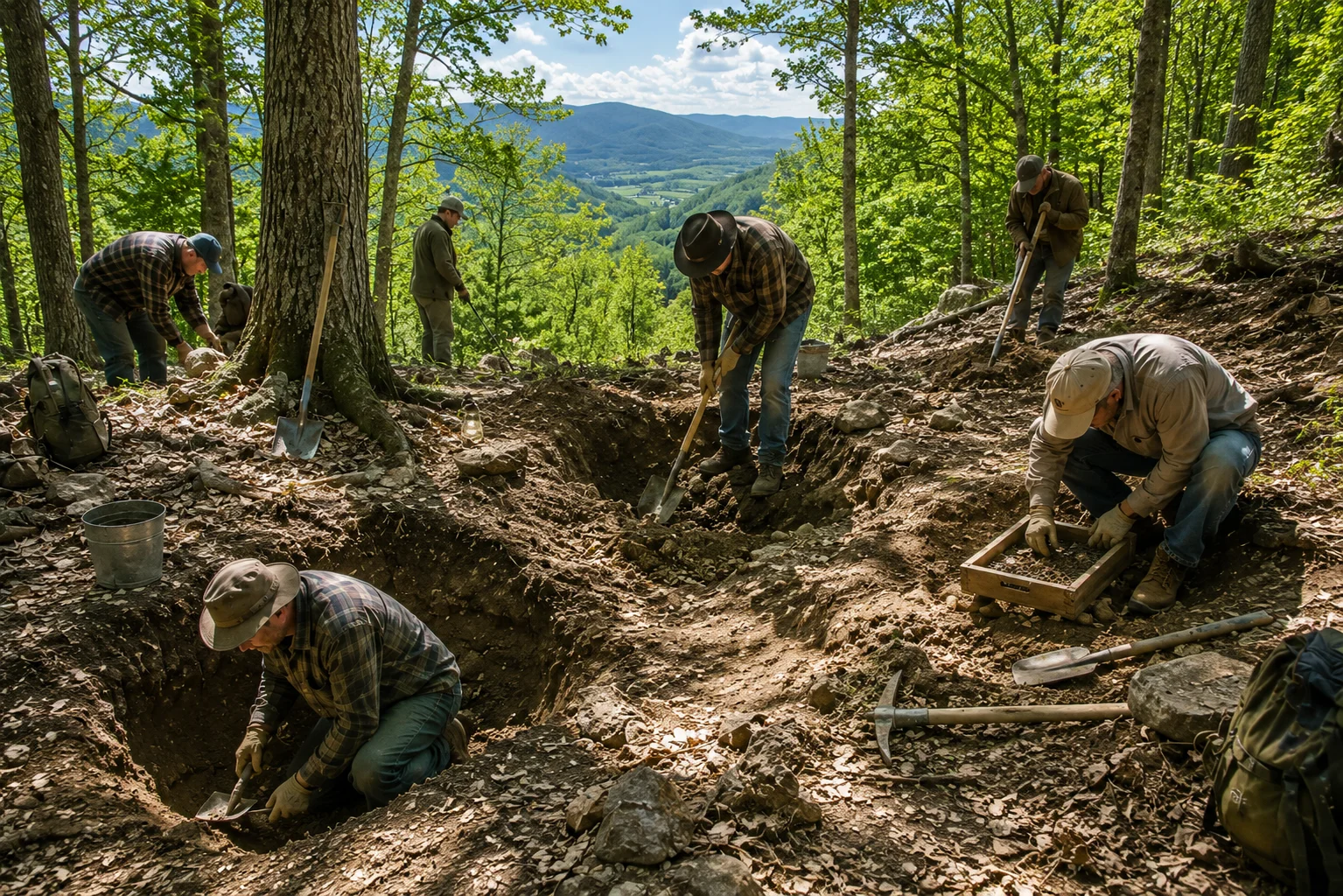
- 1972 — Treasure fever got bad enough in Bedford County that landowners were firing warning shots at strangers digging on their property. Holes left behind by searchers were bad enough that cattle broke their legs stepping in them.
- Early 1990s — A Pennsylvania church group snuck into Jefferson National Forest to dig on federal holidays, gambling that rangers wouldn’t be watching. They got caught and were forced to refill their own pits.
- 2024 — Popular Mechanics profiled cryptographers still actively working the case, and a peer-reviewed-style computational paper ran the most systematic modern search yet for the missing keys. Even AI and machine learning have been thrown at it in the last couple of years. Nothing.
TreasureNet.com still runs an active “Beale Codes” forum section today. People are still posting theories this year.
What’s There Today
The search area sits right where the Blue Ridge Parkway and the Appalachian Trail pass through the Peaks of Otter, inside Jefferson National Forest — real, free, public land that hikers already walk every year, not a fenced-off mystery site.
This is the same stretch of Virginia mountains as Trek4Free’s own Roanoke-area Appalachian Trail content — McAfee Knob, Dragon’s Tooth, Tinker Cliffs are all close by. If you’ve hiked that section, you’ve already been in Beale’s alleged backyard.

Digging on National Forest land without authorization is illegal — ask the church group who got caught doing it. But hiking the same ridgelines Beale’s party supposedly walked, with the whole story in your head, costs nothing and needs no permission at all.
Find It on the Map
We put it on our own Explore map, filed under Historic Mines:
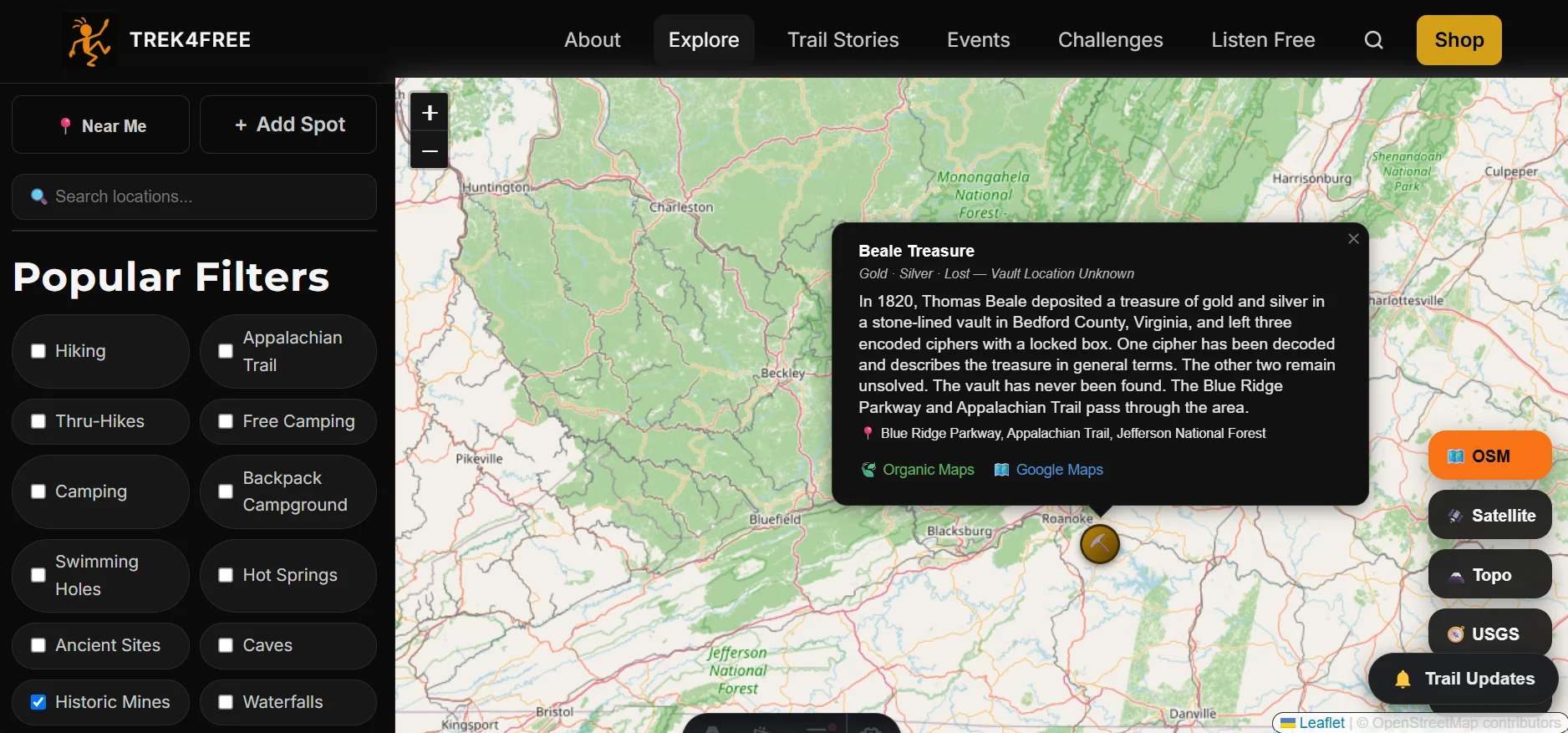
Gold · Silver · Lost — Vault Location Unknown. In 1820, Thomas Beale deposited a treasure of gold and silver in a stone-lined vault in Bedford County, Virginia, and left three encoded ciphers with a locked box. One cipher has been decoded and describes the treasure in general terms. The other two remain unsolved. The vault has never been found. The Blue Ridge Parkway and Appalachian Trail pass through the area.
Take the Roanoke Triple Crown Challenge
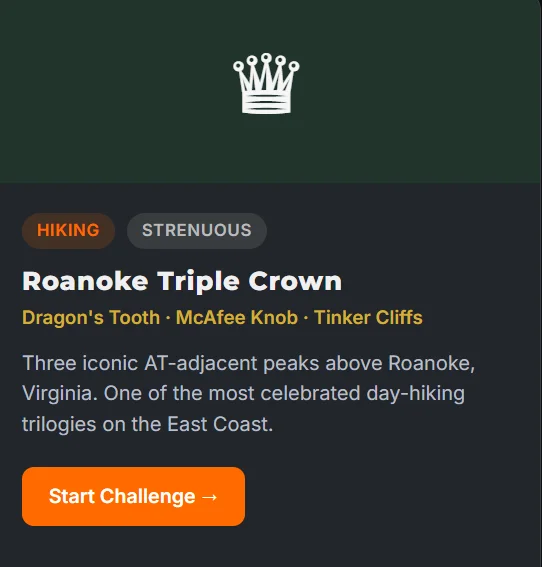
If Beale’s story has you wanting an excuse to hike this exact stretch of Virginia, we’ve already got one: the Roanoke Triple Crown — McAfee Knob, Dragon’s Tooth, and Tinker Cliffs, three of the most photographed overlooks on the entire Appalachian Trail, all within a short drive of Roanoke. It’s one of Trek4Free’s free hiking challenges, and it puts you on the same ridgelines this legend has haunted for 140 years — treasure or not, the views alone are worth the trip.
The Adventure Is Already Here
Almost certainly, nobody buried gold in these hills in 1820. Almost certainly, a man trying to sell pamphlets in 1885 invented a treasure, solved one cipher to make it believable, and left two more that may never have meant anything at all.
And 140 years later, cryptographers are still running the numbers. Landowners once fired warning shots over it. A church group once got caught digging federal land on a holiday because of it. People are posting new theories about it this year.
You don’t need to believe the gold is real to understand why nobody can walk away from it.
You just have to go look.
Before You Go
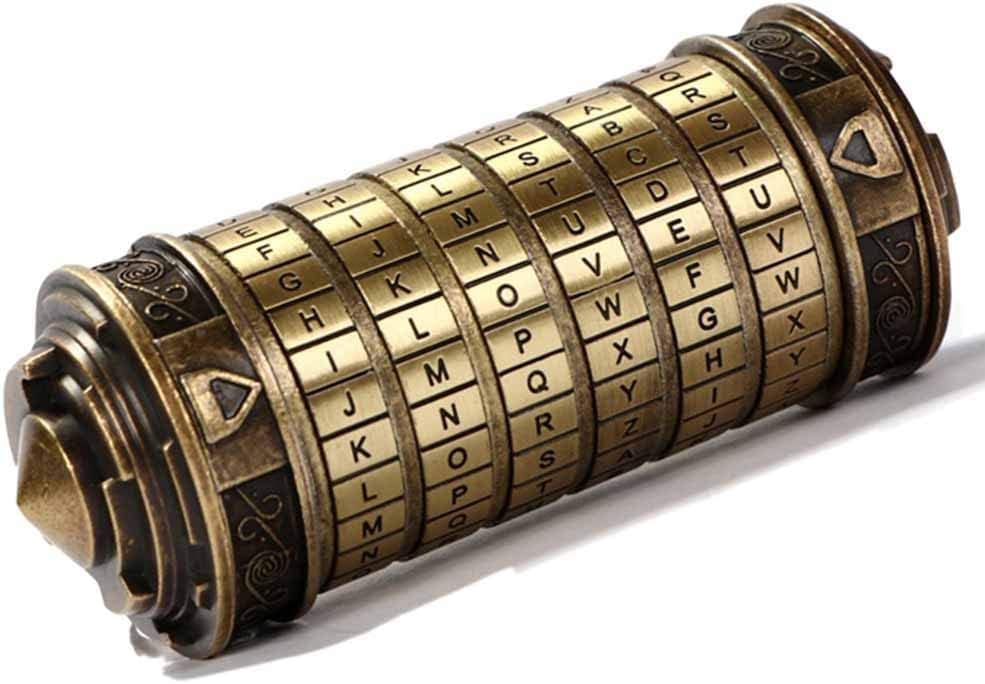 Cryptex Puzzle Box
Beale's whole story turns on a locked box that only opens with the right information. This brass cryptex is the same idea in miniature — six dials, one combination, no code, no opening.
Cryptex Puzzle Box
Beale's whole story turns on a locked box that only opens with the right information. This brass cryptex is the same idea in miniature — six dials, one combination, no code, no opening.
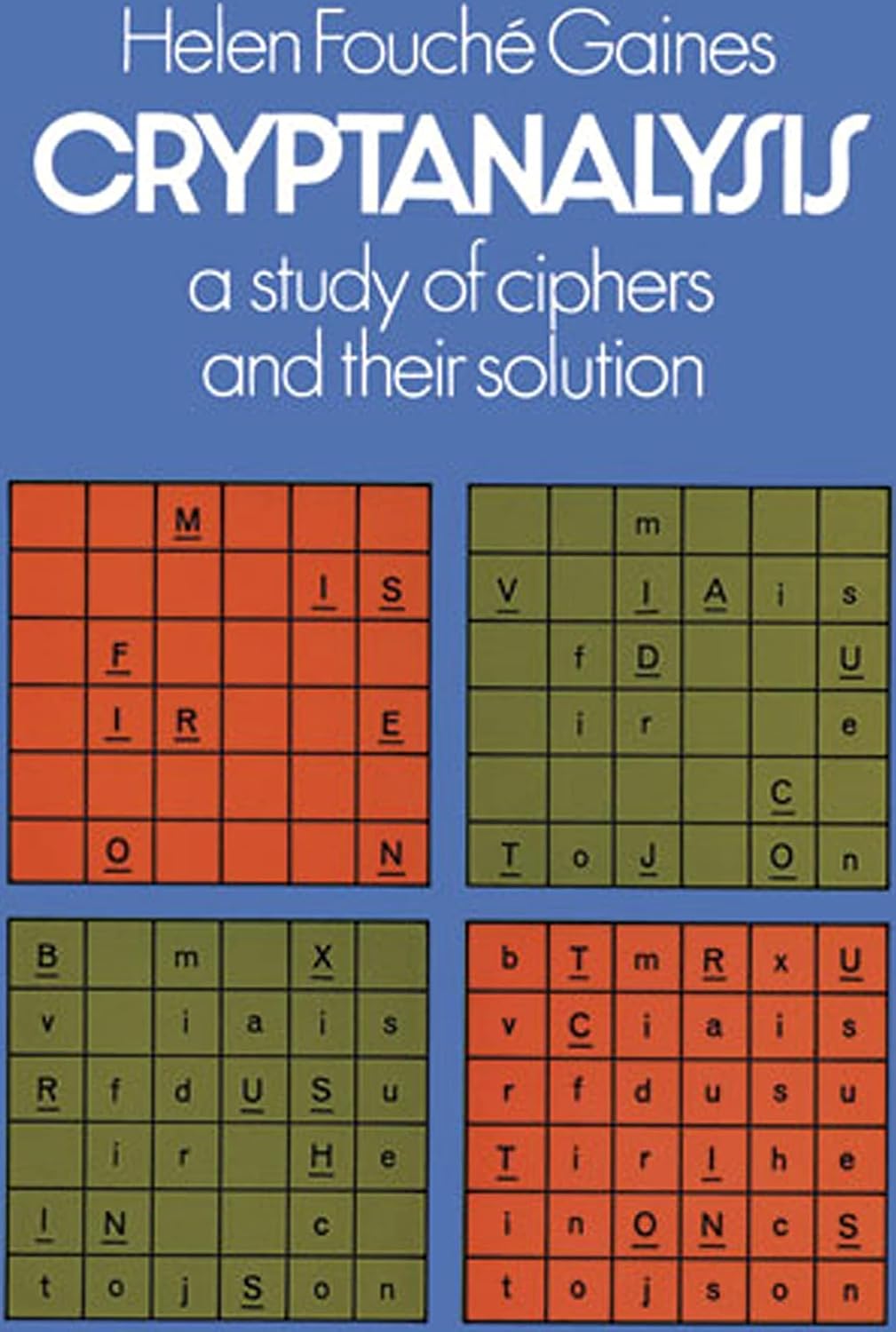 Cryptanalysis — Helen F. Gaines
The book-cipher mechanic behind Cipher #2 is real cryptography, not movie magic. This is the classic reference on actually breaking codes like it by hand.
Cryptanalysis — Helen F. Gaines
The book-cipher mechanic behind Cipher #2 is real cryptography, not movie magic. This is the classic reference on actually breaking codes like it by hand.
These are affiliate links — we appreciate your support, no extra cost to you.
The Beale search area sits within Jefferson National Forest, along the Blue Ridge Parkway and Appalachian Trail near the Peaks of Otter. For more of the Indiana Jones meets Regular Joe series: Blackbeard: The Pirate, the Pardon, and the Treasure Nobody Has Ever Found · The Trader, the Freemasons, and the Lost Silver Mine of the Appalachians · The Pirate, the Frontiersman, and the Lost Texas Silver Mine.