Trail Legends Are Real People
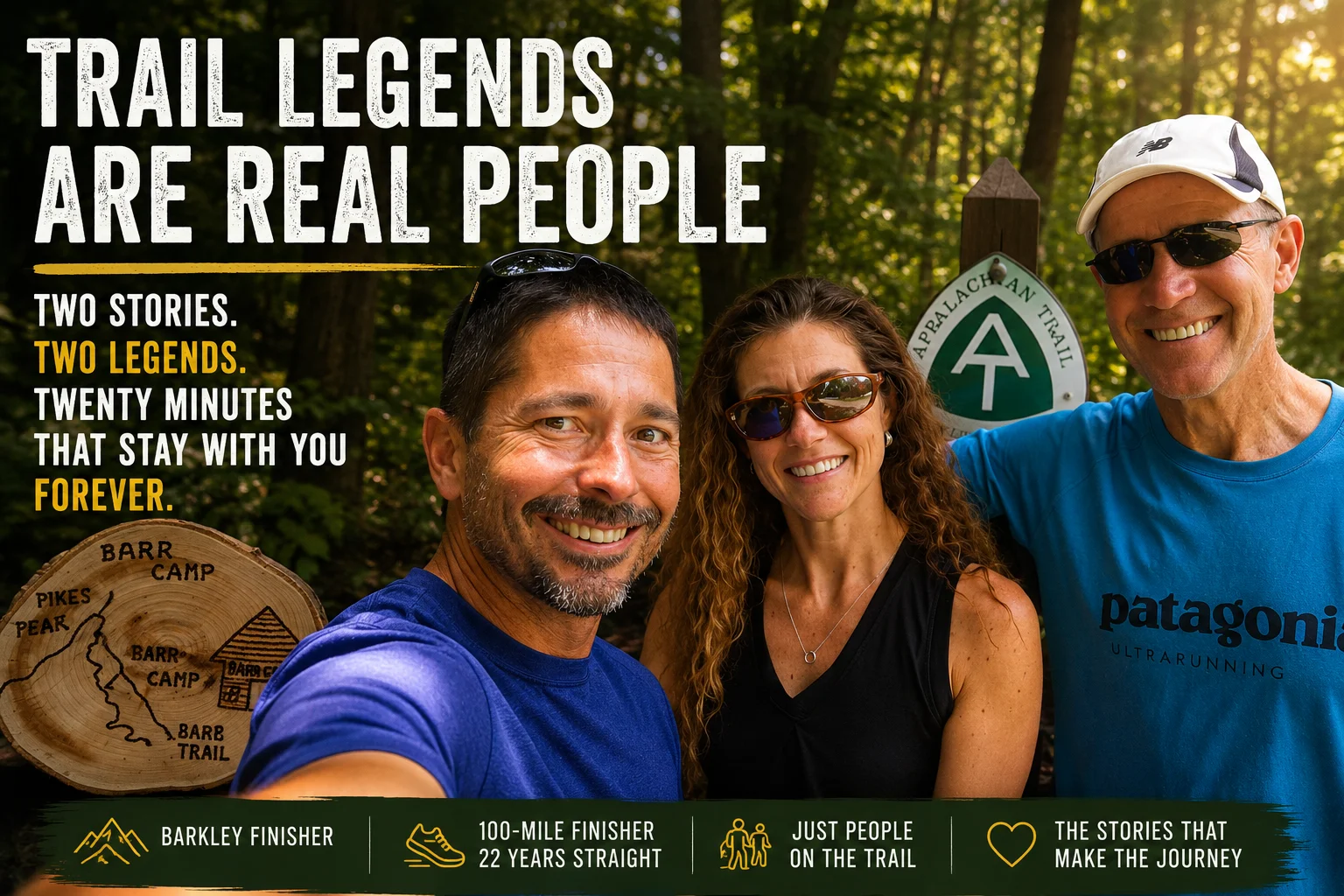
Trail Legends Are Real People
Some people you meet on a trail for twenty minutes and carry with you for a decade.
We’ve had this happen twice now. Two different mountains, two different states, two different years. The details are different. The lesson is the same: the people doing the extraordinary things are just out there, moving around, and they’re not wearing name tags.
The Man Walking Down the Forest Road
We were driving up a forest road near the Appalachian Trail in our four-by-four Toyota van — which, to be fair, might look a little sketchy to a stranger in the middle of a national forest. We were headed in to run a section of the AT. Nothing dramatic.
Coming down the other direction on foot was a man. Just walking down the road.
We offered him a ride.
He politely declined.
We mentioned that we were just out running the AT, not in a hurry, and that we could drop him near his car. After a moment, he accepted. He climbed in, we drove him down the mountain, and we talked.
For some reason — I honestly can’t explain why, it just came up — I brought up the Barkley Marathons.
The van went quiet.
He said, quietly, that he doesn’t talk about this much. But he was one of the finishers.
The Barkley Marathons is a race in the hills of Tennessee: roughly 100 miles, 60,000 feet of elevation gain, a 60-hour cutoff, five loops, start time kept secret until a conch shell blows at some point during the night. In the first 35-plus years the race existed, fewer than 20 people ever finished it out of the hundreds who attempted it. Most don’t finish a single loop. Just finishing is considered one of the most extraordinary accomplishments in ultrarunning.
This man hadn’t just finished.
He was the second person ever to finish the Barkley Marathons, and the first American. He was also a former Appalachian Trail speed record holder — 2,190 miles in roughly 52 days. A professor, a coach, a person who had spent decades in the mountains doing things most people can’t imagine attempting.
His name was David Horton.
We had absolutely no idea who he was.
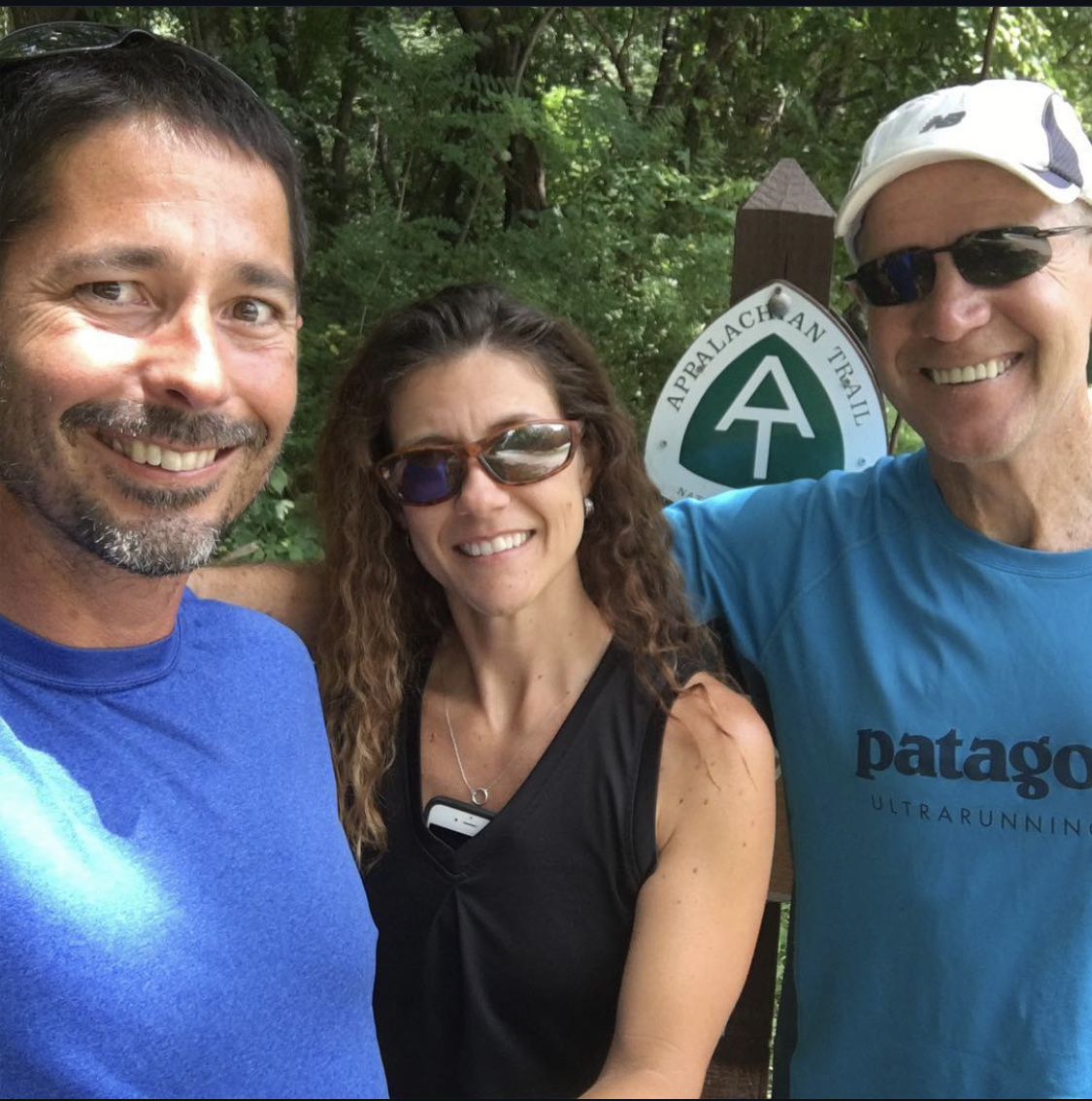
He was just a man walking down a forest road. He got in our slightly sketchy van. And then the van went quiet.
That photo is one of our favorites. It captures exactly the expression you’d have if someone said “actually I’ve been to the moon” while sitting in your passenger seat.
Two Years Later. Different Mountain. Same Lesson.
October 2016. Polly and Tortuga flew into Denver, rented a car, and drove south toward Colorado Springs. The plan, loose as it was, was to run in the area around Pikes Peak. Not necessarily to summit. Just to run at altitude and see what happened.
That qualifier — just to run in the area — was a useful fiction. Once Polly gets something in her head, she’s a bulldog. She doesn’t let go.
Manitou Springs: The Altitude Hits Immediately
We stayed at one of the hotels in Manitou Springs, the small historic town tucked at the base of the Barr Trail trailhead. Manitou Springs sits at about 6,300 feet. We live at sea level in South Texas. The walk from the parking lot to the hotel lobby felt like we were breathing through a wet blanket.
Not unusual. Not dangerous. Just a reminder that the body makes honest demands, and altitude is one of them.
The next morning, still adjusting, we walked the town.
Manitou Springs has something most American towns don’t: eight public mineral springs scattered throughout downtown. Free to drink from, open to anyone, fed by underground mineral-rich aquifers that have been surfacing here for thousands of years. Indigenous people knew about these springs long before European settlement — the name “Manitou” itself comes from the Algonquian word for spirit or spiritual force.
Each spring tastes completely different. You need a cup.
We walked around town with borrowed cups, stopping at each spring. The Seven-Minute Spring tastes closest to regular water — a little mineral edge, perfectly drinkable. Cheyenne Spring has a natural sweetness. Twin Spring is fizzy and has that pleasant bite of natural carbonation, like a good mineral water.
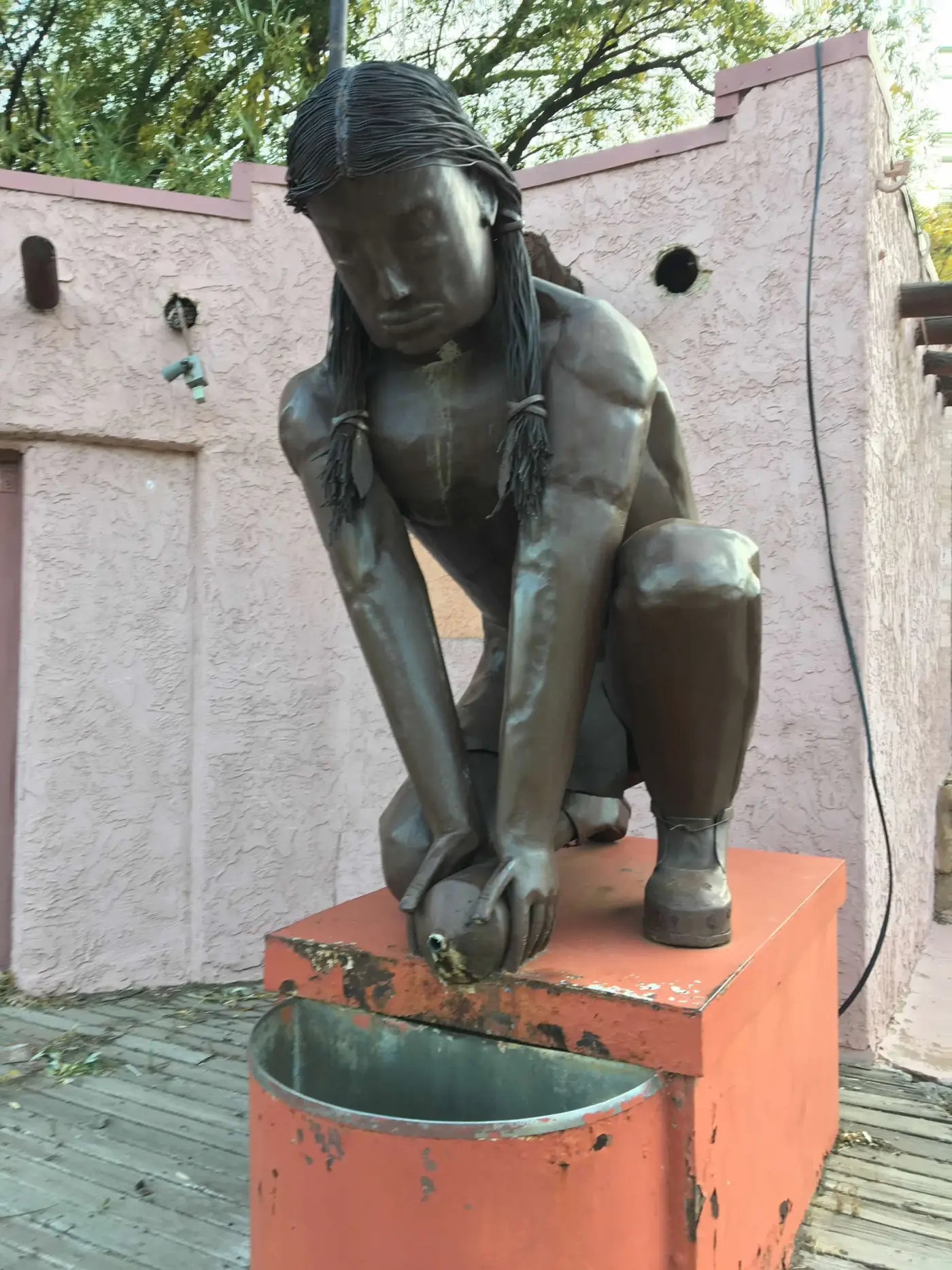
And then there’s Iron Spring.
Iron Spring tastes like sucking on a rusty nail.
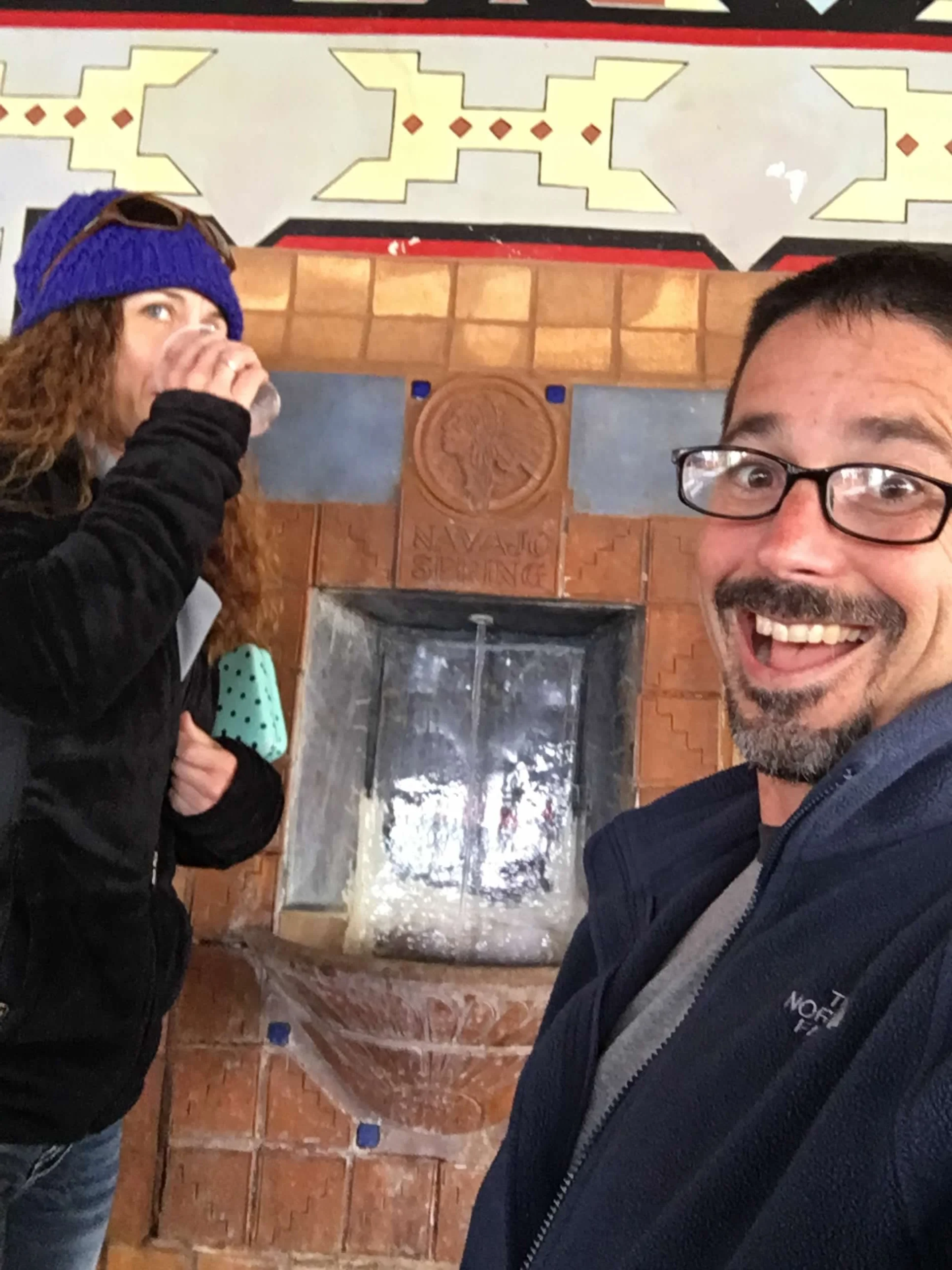
I’m not being uncharitable — it’s named Iron Spring for a reason. The high ferrous mineral content gives it a sharp metallic character that made both of us make the same face simultaneously. We laughed. Polly still finished hers.
If you go to Manitou Springs, do the spring tour. It’s free, it’s strange, and it’s the kind of experience you don’t find on any map.
The Run
The next day: Barr Trail.
Barr Trail starts in Manitou Springs, near the base of the Pikes Peak Cog Railway station, and runs 13 miles to the summit of Pikes Peak at 14,115 feet. It gains about 7,500 feet of elevation along the way — starting in ponderosa pine and aspen, climbing through spruce-fir forest, breaking above treeline, and finishing across the tundra to the summit.
Fred Barr built the trail in the early 1900s, initially for his burro operation ferrying tourists up the mountain. It became the main human-powered route to the summit and now hosts two major races annually: the Pikes Peak Ascent (one-way to the summit) and the Pikes Peak Marathon (summit and back).
We started running.
It was a warm October day. The aspens were turning and the light through the forest had that autumn quality — golden, slightly dusty, a little melancholy in the best way. The trail was well-maintained and the grade was manageable. We felt good.
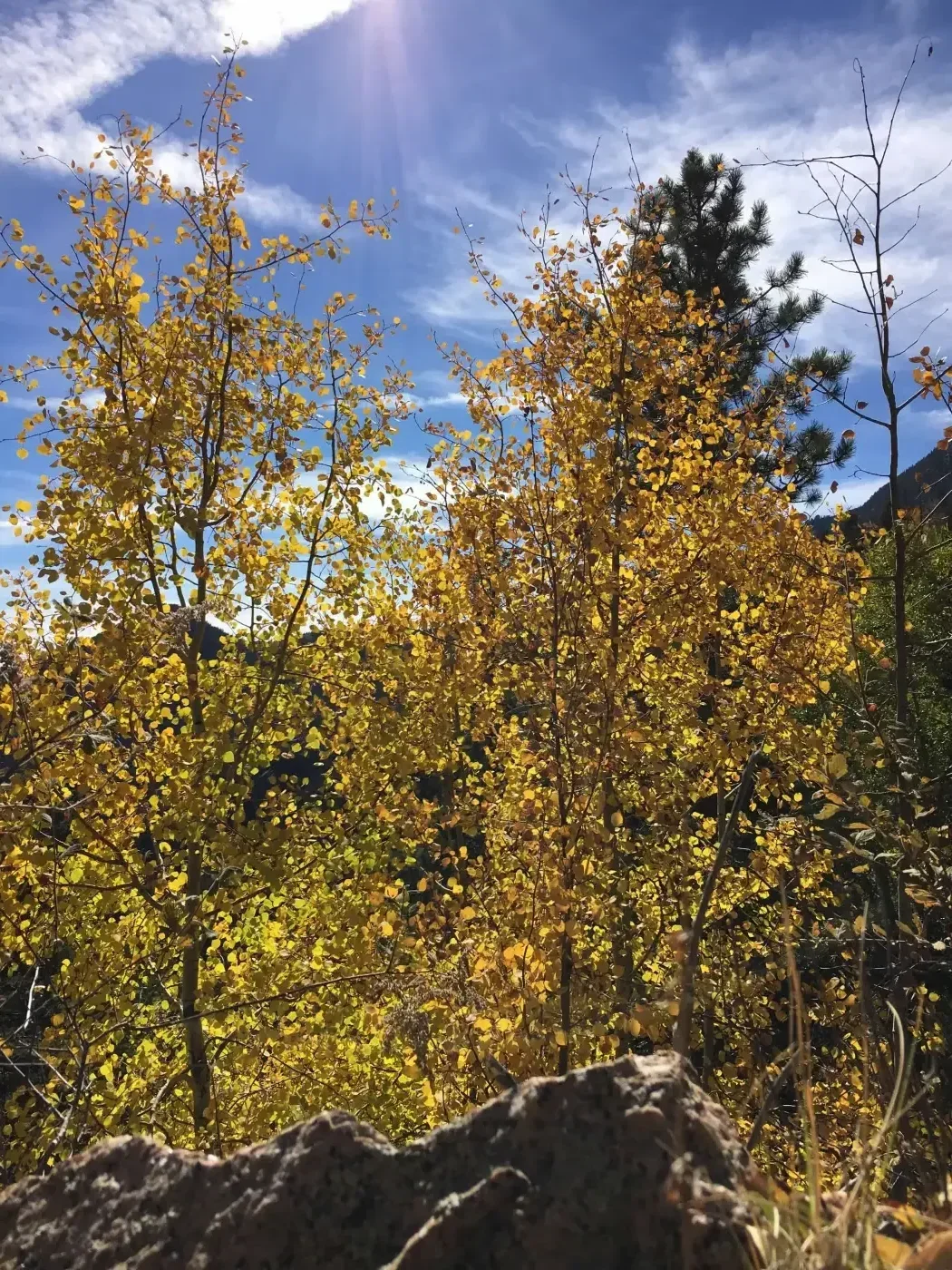
Six and a half miles in, at roughly the halfway point in elevation gain, we reached Barr Camp.
The Halfway House
Barr Camp sits at about 10,200 feet. It’s a volunteer-run backcountry shelter — a small cabin with a wood stove, a bunkroom, a host who maintains the place year-round. Thru-runners and summit-bound hikers stop here to eat, rest, or sleep over. The views of the Pikes Peak massif above and the Front Range below are enough reason to stop even if you’re not tired.
We weren’t tired. That was the problem.
We felt strong. Legs were good. The altitude was doing something — not debilitating, just the slight buzz of less oxygen than usual — but we felt like we had more in the tank. We’d run six and a half miles and climbed nearly 4,000 feet to Barr Camp at 10,200 feet, and we were looking at the trail ahead thinking: we’re already halfway. What’s six and a half more?
Polly, bulldog that she is, was already doing the math.
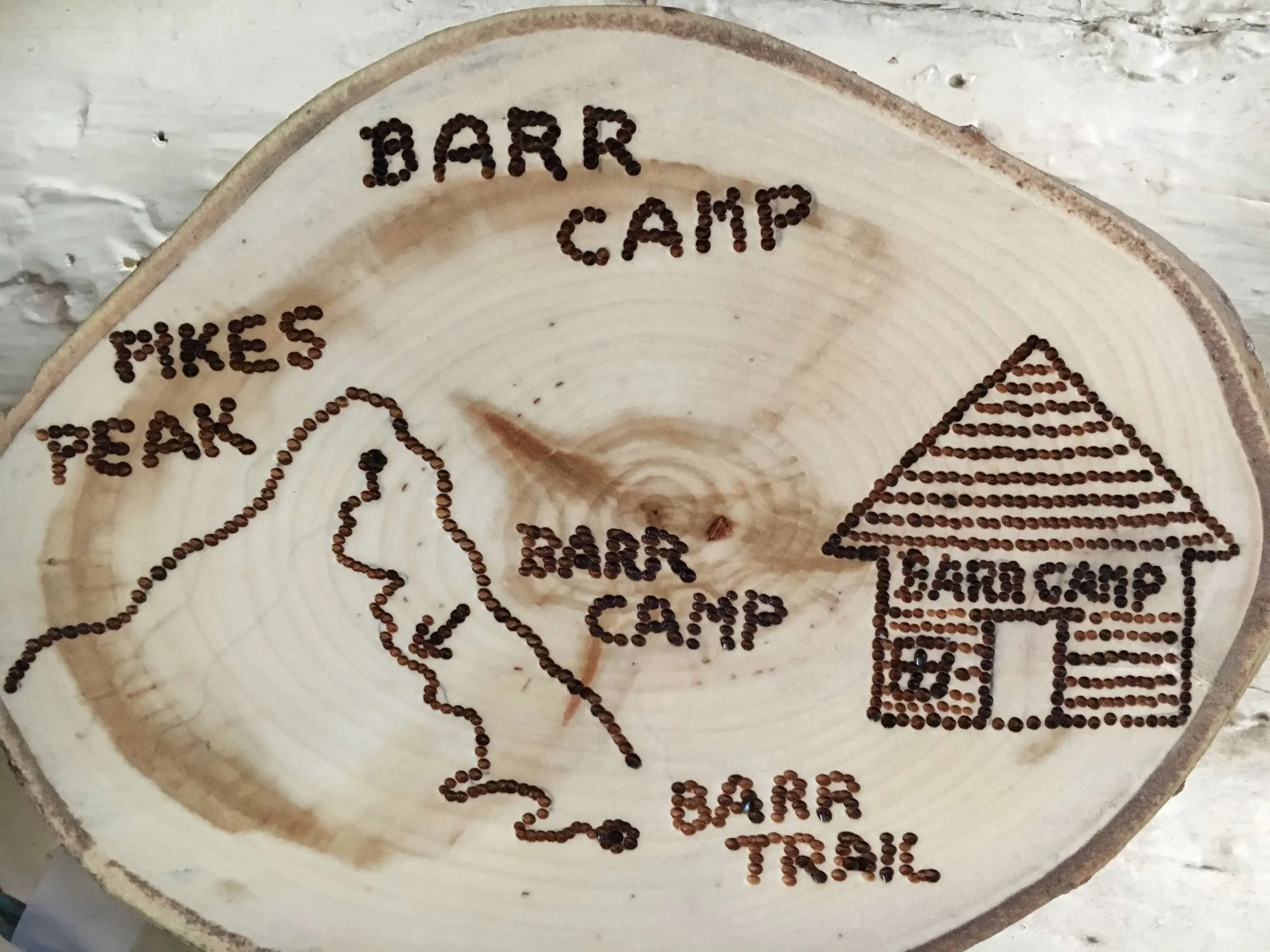
The Regular Wasn’t There
The regular caretaker of Barr Camp that day was not at Barr Camp. He was getting married. Nathan Josephs — the caretaker who knew this mountain as well as anyone — was at his wedding with Ashley Miller.
A friend was covering for him.
And that friend changed our trip.
He was standing outside the cabin when we arrived. Compact, clearly fit, the kind of person whose resting state looks like they just finished a run. We started talking — as you do at Barr Camp, because Barr Camp is the kind of place where people talk — and he mentioned, almost offhandedly, his history with 100-mile races.
Not that he had run one. That he had completed 100-mile races for 22 consecutive years.
Twenty-two years. Every year for twenty-two years, he had toed the line of a 100-mile race and crossed the finish line. He’d set records. He’d been a caretaker at Barr Camp himself, earlier in his career. He knew this mountain from every angle, in every season, in conditions most people never experience.
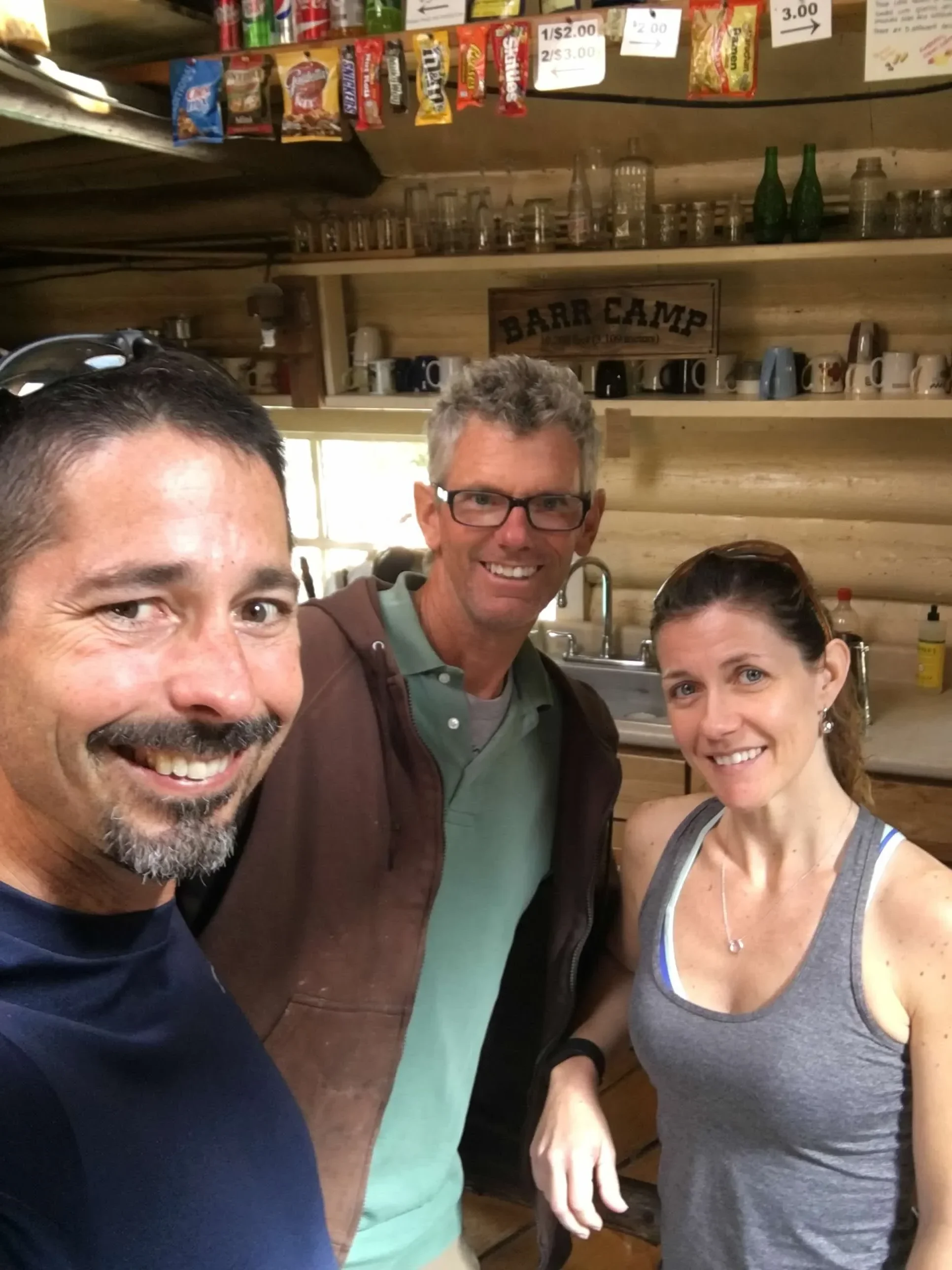
We didn’t catch his name. In the way that conversations on trails sometimes go, we got so absorbed in the stories — his race history, the mountain, the culture of endurance running — that the normal social mechanics dissolved. By the time we left, we realized we’d never asked.
The Advice We Almost Ignored
He didn’t lecture us about summit decisions. He just told us what he knew.
Above treeline — still a long way above where we stood — the weather on Pikes Peak becomes a different entity. October afternoons especially. The temperature drops dramatically and quickly. The wind accelerates across the exposed tundra with nothing to stop it. The oxygen, already thin at 10,200 feet, continues to drop to levels that the body processes differently than it expects.
“The second half of this mountain is not the same mountain as the first half,” he said, roughly.
Polly, predictably, was not fully convinced.
We sat at Barr Camp for a while — longer than planned, because the conversation was that good. Trail running stories, endurance culture, the particular madness of choosing to run 100 miles. He was generous with his time and his knowledge in the way that genuine trail legends tend to be. No ego. Just experience.
Eventually, we headed back down. We did not continue to the summit.
The Next Day: The Cog Train
Polly woke up the next morning still not quite willing to accept that she couldn’t have made it.
So we took the Pikes Peak Cog Railway.
The Cog Railway runs from Manitou Springs to the summit — a steep, beautiful, completely mechanically improbable journey that has been making the trip since 1891. At the summit, there’s a gift shop, a visitor center, and the famous high-altitude donuts and fudge. The air at 14,115 feet is genuinely thin. The fudge, for reasons that are probably related to blood sugar and altitude, is genuinely helpful.
On the way up, the conductor pointed out something off the tracks that I’ve thought about ever since.
Near the upper mountain — not quite at the summit — there are grave markers. Two Texas hikers who died on Pikes Peak after deciding they could make it to the top. They didn’t. The mountain kept them.
The conductor delivered this information with the casual tone of someone who has said it many times on many trips and still means every word.
Polly stepped off the train at the summit and immediately understood what the caretaker had been telling us.
It was cold. Not “wear a jacket” cold. A different category of cold. The wind at 14,115 feet in October has particular intentions. Within sixty seconds she had completely revised her assessment of what the previous day’s conditions would have been if we’d continued.
We had fudge. It helped. Sugar at altitude does something physiologically interesting — at least that’s what we told ourselves while eating as much of it as possible.
We made it back down in one piece.
The Mystery
I’ve tried to find out who we met at Barr Camp that day.
The regular caretaker was Nathan Josephs — he was getting married to Ashley Miller, which is why his friend was covering. I’ve emailed the Pikes Peak group asking about the man who was there in his place, the one with 22 consecutive 100-mile finishes. I’ve waited. Haven’t heard back yet.
But here’s what I know for certain: that person saved us from going above treeline on a warm October afternoon that was rapidly running out of warm. From experience on this mountain, I know that he knew exactly what he was talking about. The conditions above Barr Camp in October are not the same as the conditions below it. We would have found that out the hard way.
He is, in our minds, a genuine trail legend — not because of the records, though those are extraordinary, but because he took twenty minutes with two strangers who were about to make a bad decision and gave them something more useful than encouragement.
He gave us the truth.
Track Town. One More.
The third time was in Eugene, Oregon.
If you know anything about American track and field, you know Eugene. It’s called Track Town USA for a reason — the University of Oregon, the Prefontaine Classic, a running culture that goes back generations. We were there and ended up in a conversation with an older gentleman — maybe in his 70s, shorter, and wearing what could only be described as an Olympic-style jumpsuit covered in pins. The kind of suit and the kind of pins that you earn, not buy.
He mentioned, almost as an aside, that he held five world records in running.
We didn’t catch his name.
Three encounters. Horton on the AT forest road. An unnamed man at Barr Camp. A decorated champion in Eugene. Not one name caught in the moment.
Why This Keeps Happening
We are not elite runners. Let’s be clear about that. We enjoy being outside. We enjoy the solitude and the camaraderie of moving through the woods with your partner, with the dogs, with nobody telling you what to do or where to go. That’s the whole thing.
We don’t compete. We’re not chasing PRs or podiums. We run because being outside in motion feels better than being inside sitting still, and the trail has a way of making the rest of the noise quiet down.
And somehow — accidentally, repeatedly — we’ve stumbled into conversations with people who are doing things we can barely comprehend.
David Horton in our van. An unnamed man at Barr Camp who had completed 100-mile races for 22 consecutive years. Both times, they didn’t announce themselves. Both times, the conversation found its own way there.
What strikes us, every time, is how normal they are. How ordinary the context. A man walking down a road. A man standing outside a mountain cabin. No fanfare. No announcement. Just people who had gone and done something extraordinary and then kept going — kept being out there, on the trail, still moving.
The trail is generous that way. It doesn’t ask who you are. It doesn’t know your race results or your records or your reputation. It just gives everyone the same switchbacks, the same elevation, the same weather.
You meet people out there. Some of them are legends.
Most of the time, you don’t find out until the van goes quiet.
If You Know Who This Is
If you’re part of the Barr Camp community, the Pikes Peak racing community, or the Front Range ultra scene, and you have any idea who was covering at Barr Camp the day Nathan Josephs got married in October 2016 — the man with 22 straight years of 100-mile race finishes who had also been a Barr Camp caretaker — I’d love to thank them properly.
You can reach us at trek4free.com or through the contact link below. A real story deserves a real name.
And if you haven’t been to Barr Camp: go. Run up, or hike up, or just go in the summer when the trail is dry and the aspens are green. Stop at the halfway house. Talk to whoever is there. The people you meet on a mountain at 10,200 feet, just before the world gets harder, tend to be worth knowing.
See free camping near Colorado Springs →
Find trails near Pikes Peak on Trek4Free →
If You’re Running Barr Trail
These are affiliate links — we appreciate your support, no extra cost to you.