We Didn't Plan to Become Rock Climbers. Pisgah Had Other Ideas.
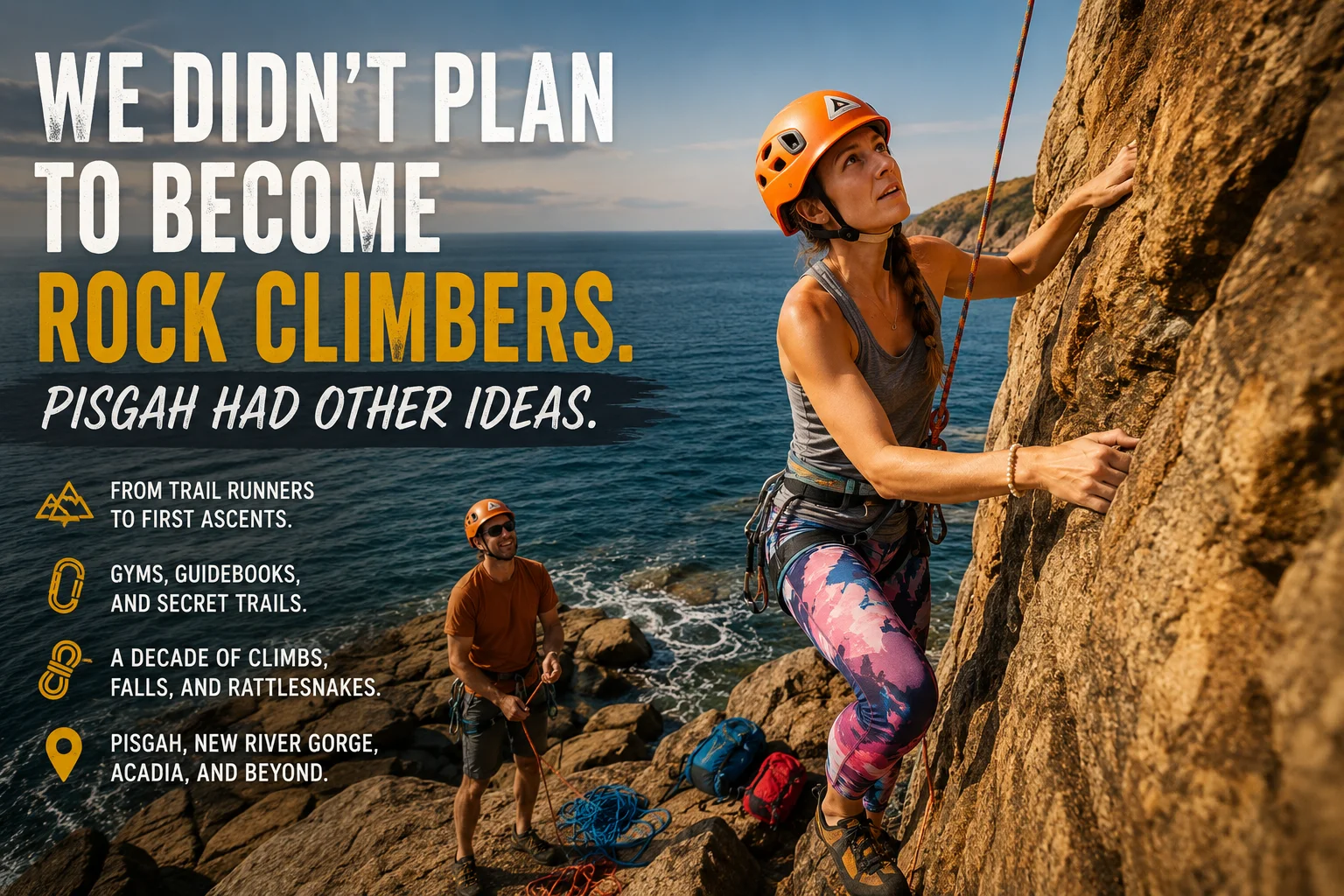
We Didn’t Plan to Become Rock Climbers. Pisgah Had Other Ideas.
Here is the honest version of how this started:
We were trail runners. That was the whole identity. Tortuga and Polly, van in the parking lot, dogs in the back, running somewhere in a national forest before anybody else got there. We’d been running trails for years. We’d driven down forest roads in the middle of nowhere. We’d slept in the van outside trailheads in states we’d never been to before. We were not looking for a new sport.
Around this time we were also, in the back of our heads, thinking about starting a guide business. We’d been kicking around an idea — outdoor adventures, showing people what we already knew, somewhere between trail guiding and showing someone the real version of a place. We’d even made shirts for it. The business was going to be called Billy Goat Gruff.
The shirts were great. The business never happened. What happened instead was we stopped to watch a rock climber, and that changed the trajectory of the next decade.
Pisgah National Forest: We Were Just Watching
We were in Pisgah National Forest in western North Carolina — one of the places we kept returning to for trail running — when we saw someone climbing.
Not at a gym. Not at a guidebook crag with a parking lot full of climbers. Just a person on a rock face in the middle of the woods, doing something that looked completely impossible from where we were standing.
We stopped.
We watched for a long time. Long enough that the climber probably noticed. Long enough to go from that’s interesting to that’s something I want to understand. The movement was different from anything we’d seen — each hold deliberate, the whole body engaged, solving a problem that was both physical and geometric. It looked like nothing else we’d ever tried to do.
We kept running that day. But the conversation in the van on the way back was about climbing.
.webp)
The Richmond Gym: CrossFit Meets Sandstone
Back in Richmond, Virginia, we found a climbing gym and signed up for classes.
Here’s what we didn’t expect: we were natural at it.
We’d been doing CrossFit for years. CrossFit builds a particular kind of functional strength — pulling strength, grip, coordination, body awareness. All of those things transfer directly to rock climbing in ways that no amount of running does. When the instructor showed us the basics, the movement made immediate sense. We could hold positions other beginners struggled with. The first day on a bouldering wall, we went higher than we had any business going.
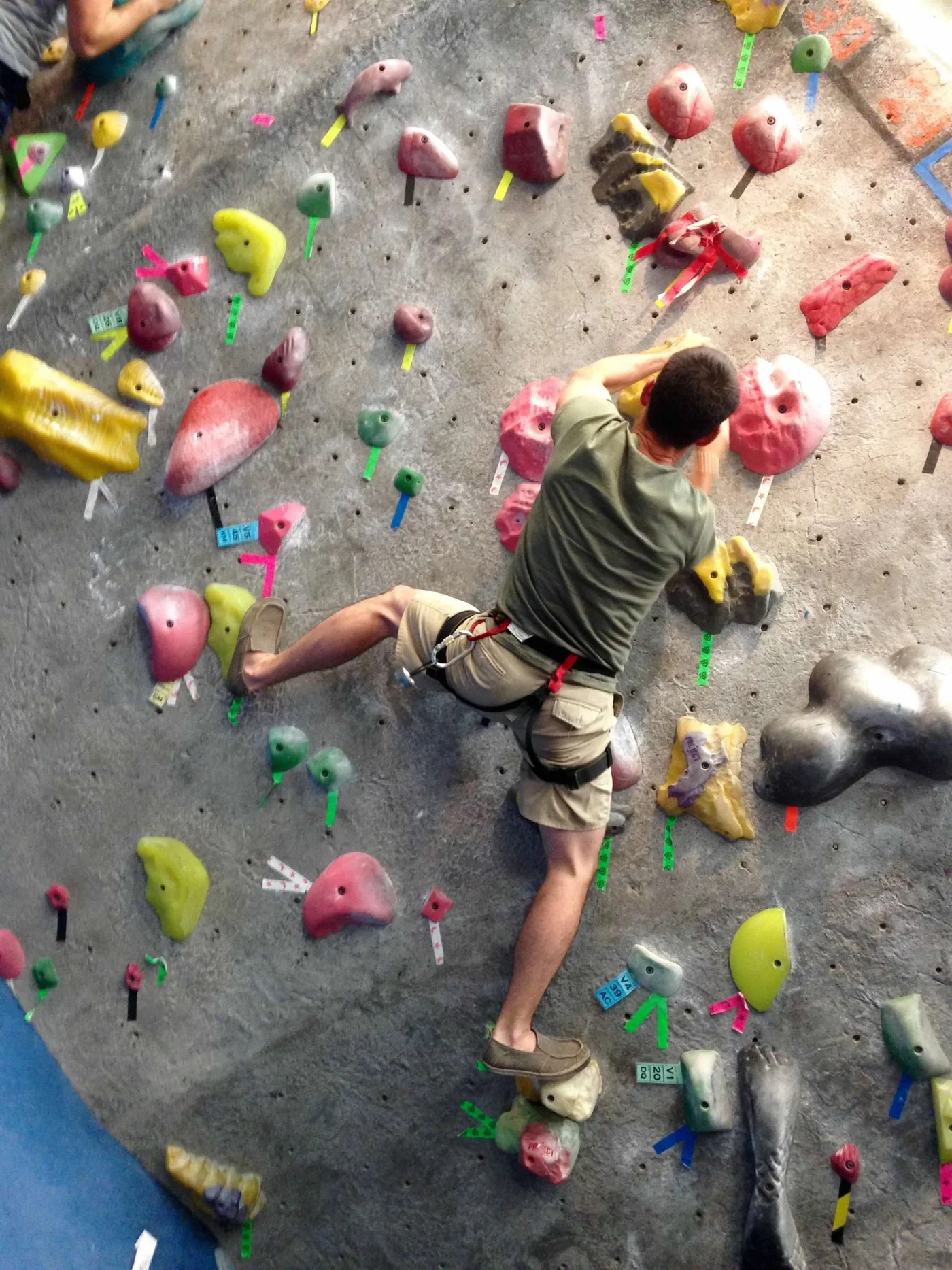
The gym became a regular thing. We went multiple times a week. We learned to belay each other. We started reading about climbing technique — footwork, flagging, body positioning, the geometry of reading a route before you touch the wall.
And then we started buying guidebooks.
The Guidebooks. The Secret Trails. The Ancient Structures.
Climbing guidebooks are not like hiking guidebooks.
A hiking guidebook says: here’s a trail, here’s how long it is, here’s where to park. A climbing guidebook is something different — it describes a rock face in precise, almost poetic language. It names the holds. It tells you where the crux is. It rates the whole thing on a scale that only makes sense once you’ve climbed for a while.
There was one problem: we could not always afford to buy every guidebook we wanted.
So we would find a guidebook in a shop and photograph the pages.
We were not proud of this. We did it anyway. Every time we found a guidebook with a route we wanted to try, we’d stand there in the shop and photograph the relevant pages with our phones. The route descriptions, the topo maps, the access notes for the approach trails.
The approach trails turned out to be the best part.
Climbing approach trails — the paths that lead from the trailhead to the base of a crag — are not on hiking maps. They’re not on Google. They’re not maintained by anyone. They exist because climbers made them, and climbers know where they go, and climbers don’t put that information anywhere that civilians can find it. The guidebook was the only key.
We found things on those approach trails that had nothing to do with climbing. Rock formations that were too regular to be accidental. Structures carved into cliff faces. Alignments that looked deliberate. We’d show up expecting a crack climb and find ourselves standing in front of something that looked like it was built, not formed.
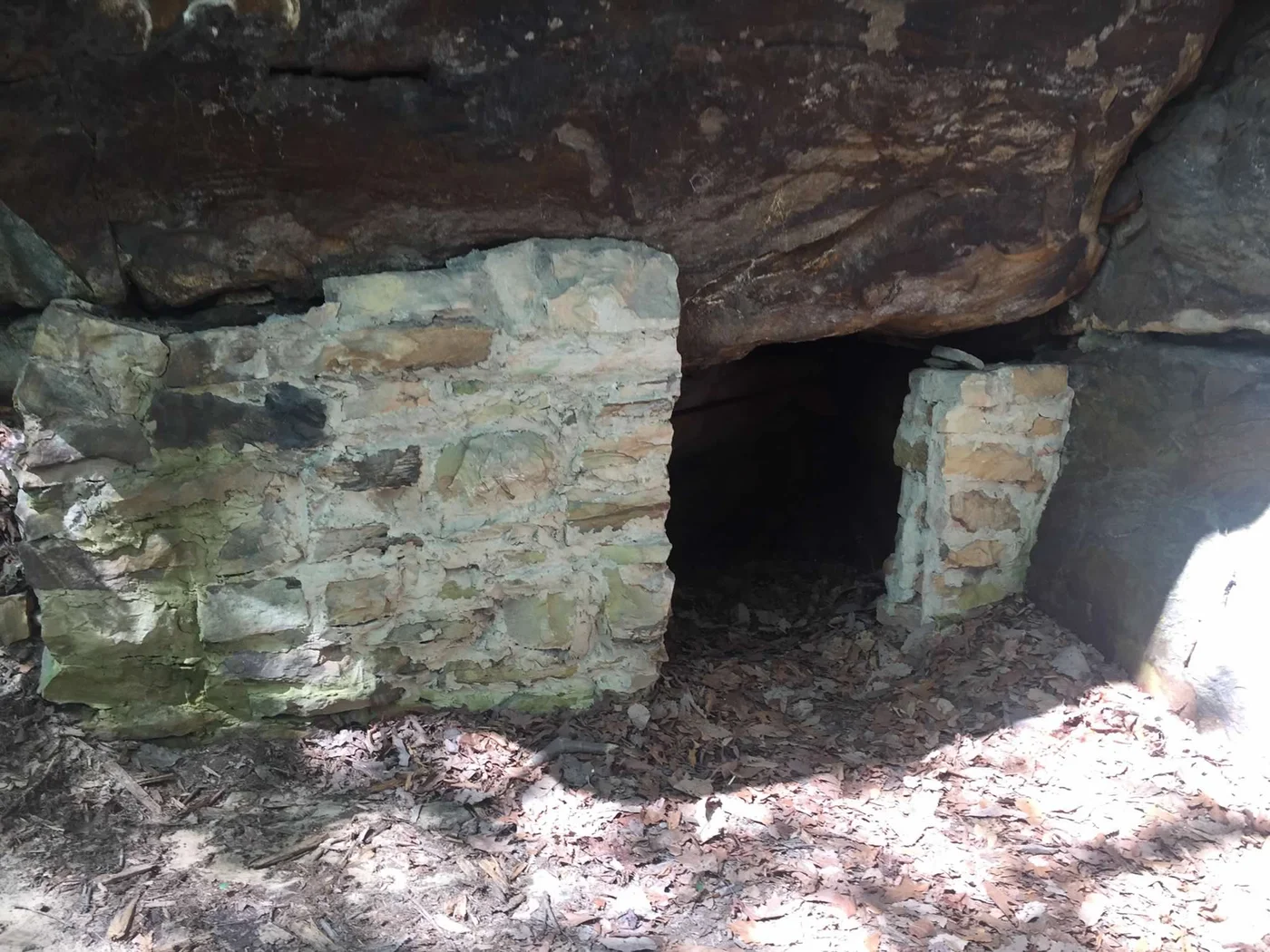
We have never fully explained those encounters. We just know they’re there — off trail, past the parking areas, visible only to people who took the approach trail for a different reason.
The Manchester Wall: Taking It Outside
The transition from gym to outdoors happened at the Manchester Wall in Richmond — and the wall itself has a story that sounds like something out of a history book.
What you’re climbing is the surviving granite abutment of the Richmond and Petersburg Railroad Bridge. The Virginia General Assembly chartered it in 1836. It was completed in 1838. In April of 1865, as the Union closed in on Richmond, Confederate soldiers burned it intentionally during the evacuation. The bridge was rebuilt in 1866, burned again in 1882 — this time by sparks from a passing locomotive — rebuilt again in 1902, and finally decommissioned in 1970. By the time the railroad was done with it, the bridge was gone and only the granite pillars remained.
Then the kudzu moved in.
In 1983, a climber named Rob Carter was scaling a trestle bridge on the north side of the James River when he spotted something through the vines. Hidden under a thick overgrowth of kudzu was the old abutment structure — 60-foot granite pillars sitting quietly on the south bank of the river in the middle of the city. He and his friends cleaned it, drilled hardware into it, and built the climbing area that generations of Richmond climbers have trained on ever since.
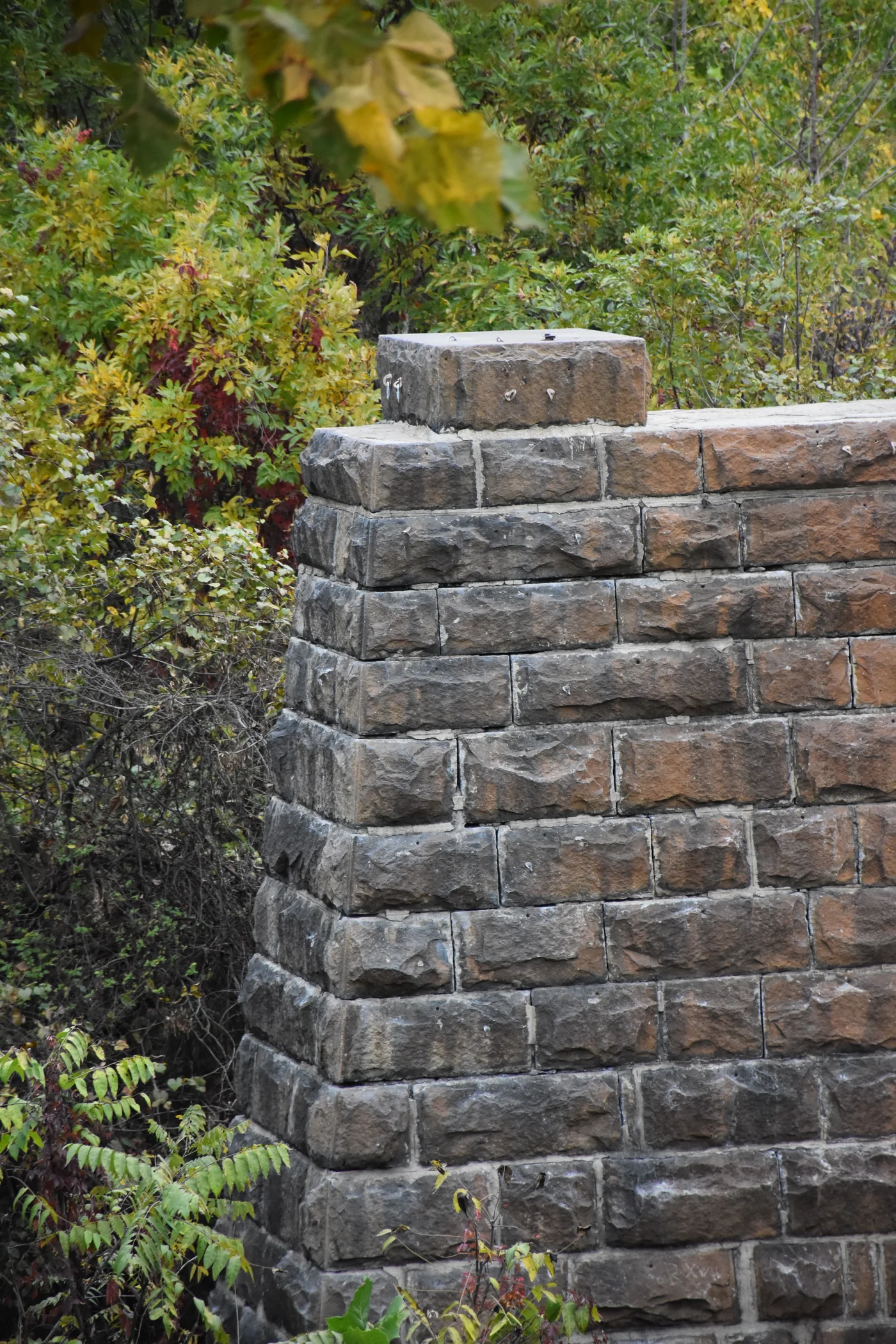
As a beginner wall it is nearly perfect. The logistics alone set it apart from most outdoor climbing: it’s inside James River Park, accessible from the T. Tyler Potterfield Memorial Bridge and Brown’s Island, and the top of the structure has stairs. Setting up a top rope at a real outdoor crag normally means leading the route first, or rappelling in from above, or scrambling up sketchy terrain with your anchor gear — none of which you can do when you’re just starting out. At Manchester Wall you walk up the stairs, walk out to your anchor point, rig the rope, and walk back down. Then you climb.
43 routes, 5.4 to 5.11a, most clustering around 5.9. The easiest route is called Potty Training. The wall teaches you what gym holds were built to approximate — edges, seams, and cracks that exist because of how granite was cut and placed in 1838, not because someone designed a climbing problem. You learn to read what’s actually there instead of following the color-coded tape.
We got hooked.
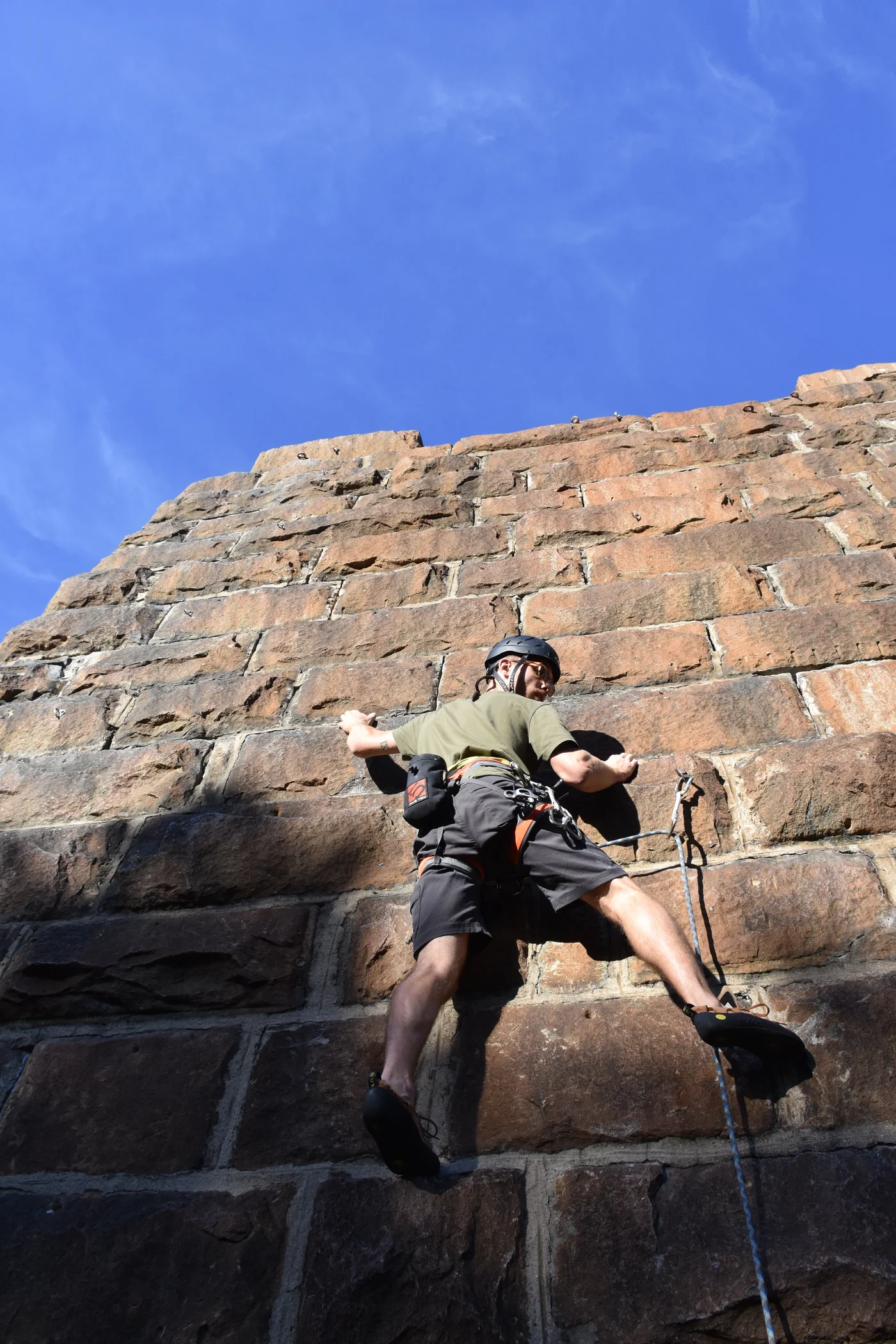
We climbed Manchester Wall every chance we got. We brought people there. We worked routes that were too hard for us and slowly made them not too hard.
The Injury: Polly’s Surgery
Polly’s back gave out.
We won’t go into the full medical history, but the short version is: there was a surgery, there was a wheelchair, and there was a period of time where the question hanging over everything was whether she was going to walk again the way she had before.
Here is what nobody told us when Polly came home in a wheelchair:
She was still going on trail runs.
We built a system. Tortuga pushed the wheelchair on the trails while he ran. The trails near Richmond were not all wheelchair-friendly, which turned out to be irrelevant because the goal was movement and being outside, not convenience. Lacy — the German Shorthaired Pointer — ran alongside, occasionally convinced that her job was to guide the chair, which it was not.
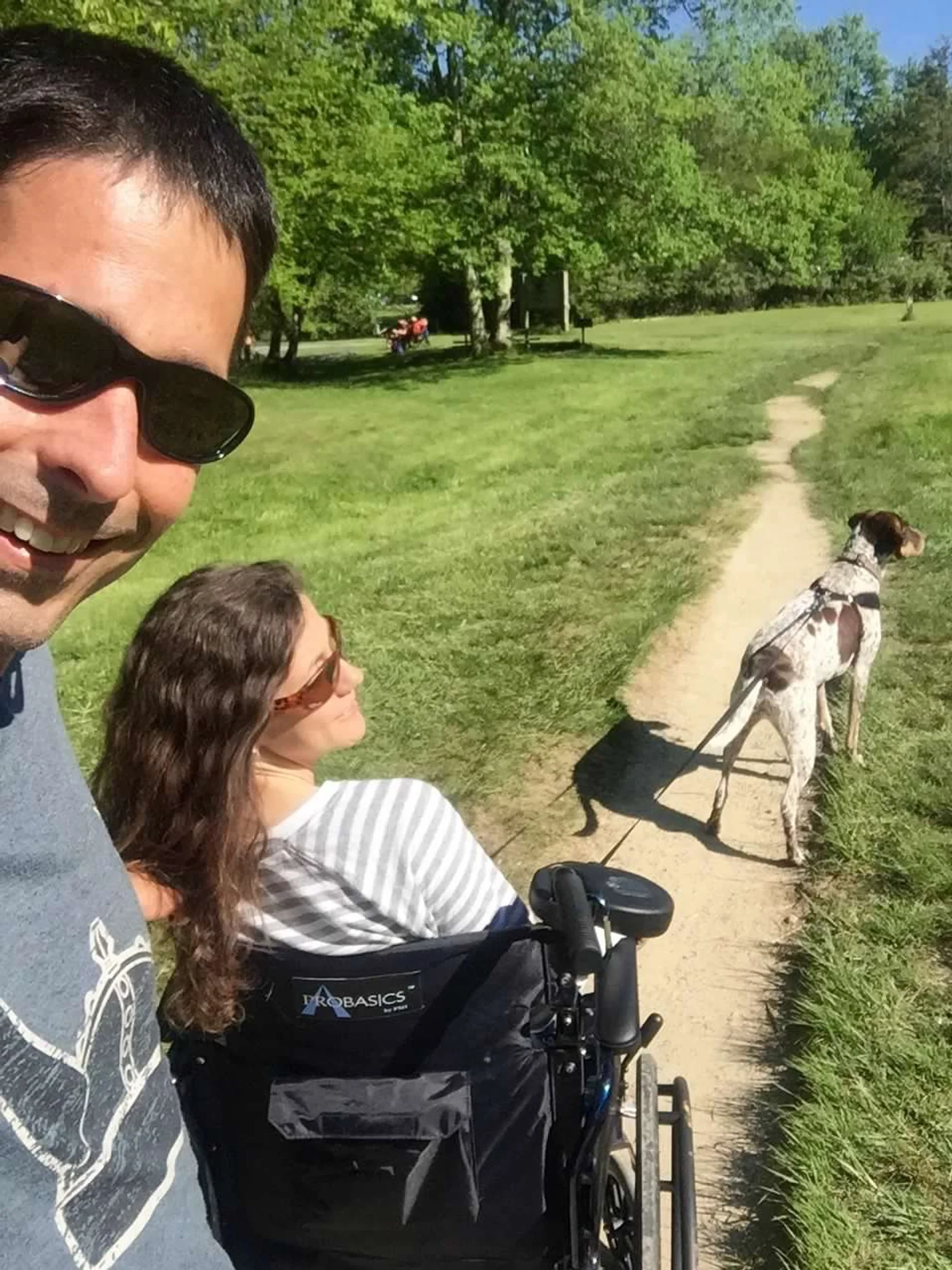
One afternoon on a trail, the chair hit a rhododendron thicket.
The rhododendrons in the Virginia mountains grow in dense, interlocking tunnels — so thick you sometimes have to get on your knees to push through them. A wheelchair does not go through a rhododendron tunnel. The chair went in. The chair got stuck.
Polly was stuck in a rhododendron tree.
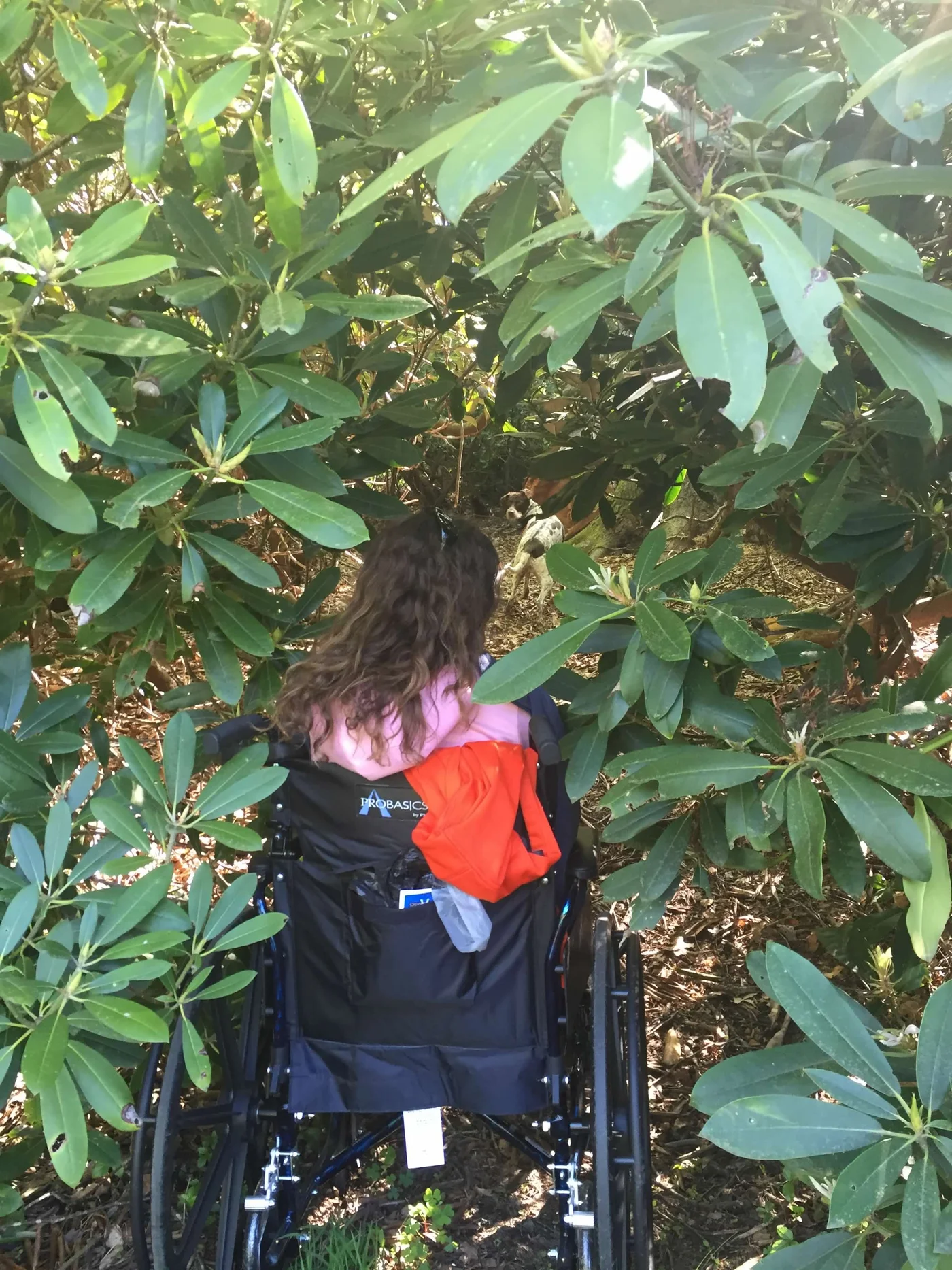
They laughed about it. Tortuga got her out. They kept going.
There is no time to feel sorry for yourself in this house.
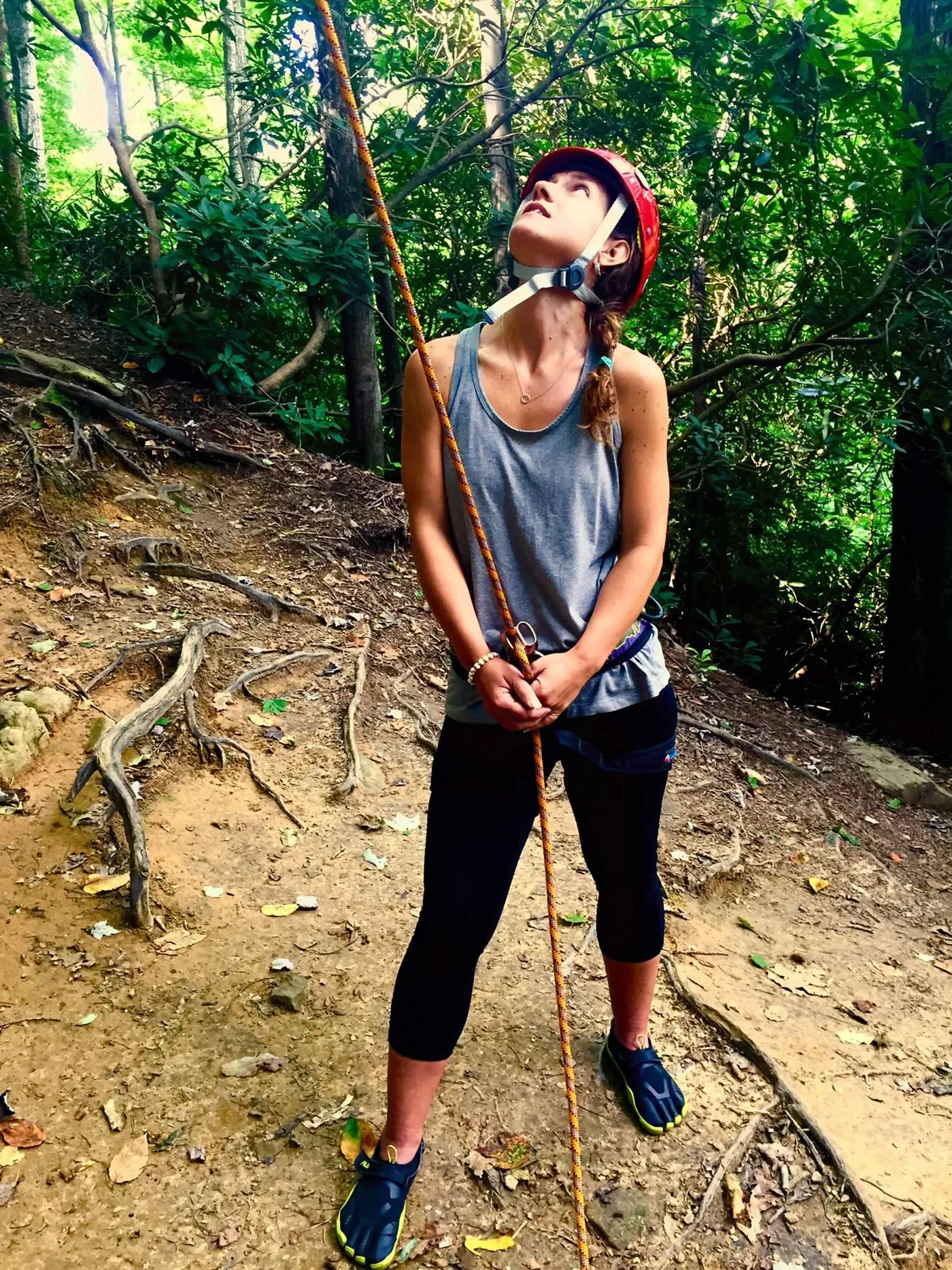
During the recovery, Polly also learned to belay from the wheelchair.
This is not a metaphor. She sat in the wheelchair at the base of Manchester Wall routes and managed the rope while Tortuga climbed. She had to re-learn the mechanics of the brake hand from a sitting position, had to develop different anchor body positions, had to trust that she could arrest a fall without standing up. She did it. She learned it. And when her recovery was far enough along to climb herself, she understood the full system from every position in it.
New River Gorge: Under the Bridge
The next level came when we found the New River Gorge.
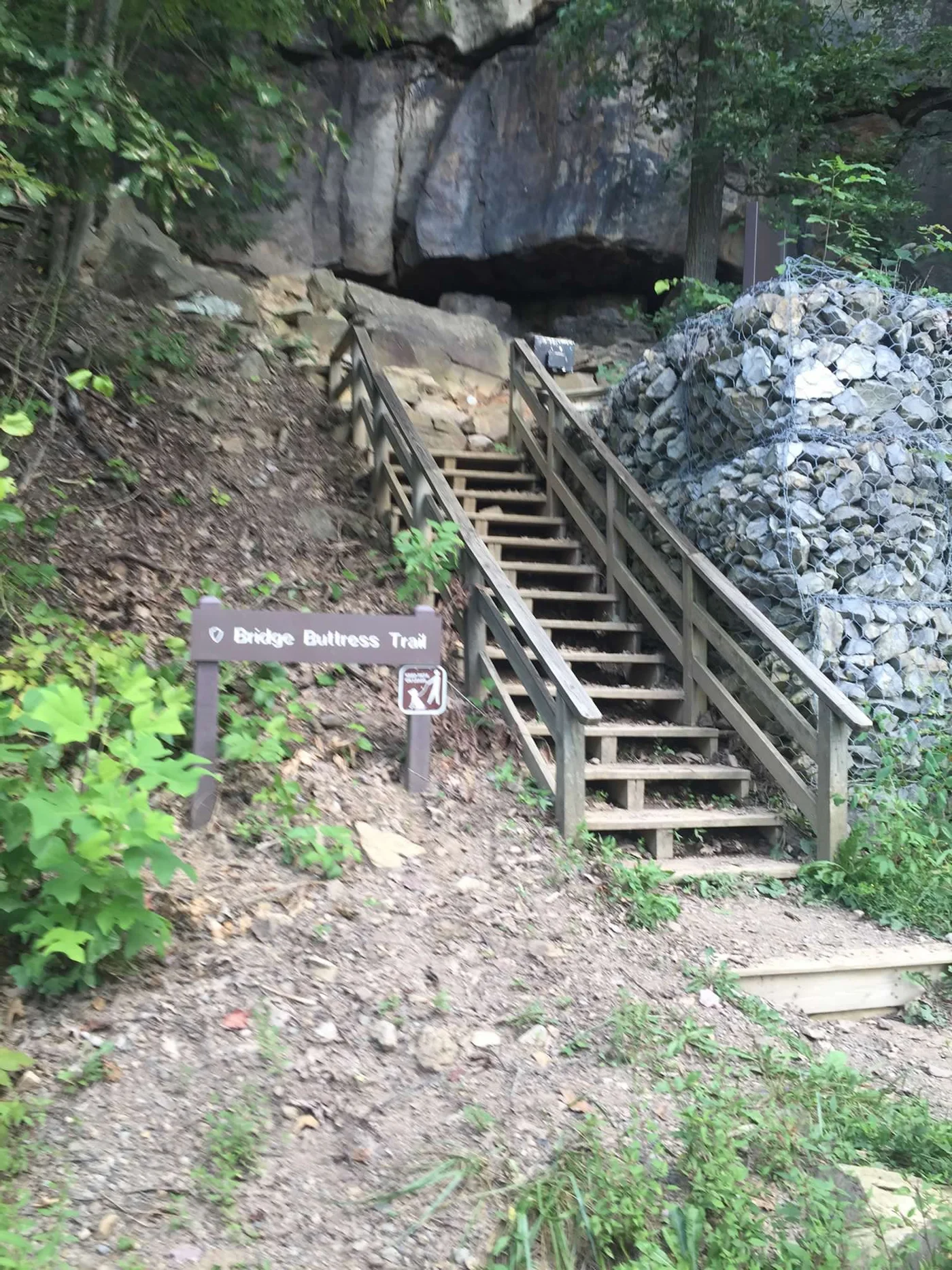
We’d been going to Beckley, West Virginia for a while — the free camping, the trail running through old coal towns — but the climbing in the gorge was different from anything we’d done at Manchester Wall. Over a thousand walls. Three thousand established routes on Nuttall Sandstone that climbers will tell you is harder than Yosemite granite. Routes from 5.9 to 5.14b, ranging from 30 to 120 feet, nearly all bolted with fixed anchors.
And all of it underneath the New River Gorge Bridge — one of the longest single-arch steel bridges in the world, 876 feet above the river.
The Bridge Area was where we started every trip. Walking up to those walls and looking up through 800 feet of open air at the underside of the bridge while your hands are on sandstone is something that recalibrates your sense of scale in a permanent way.
On one of our Beckley trips, a friend named Shawn — a guy we’d known from West Virginia through work — came along for a day at the crags.
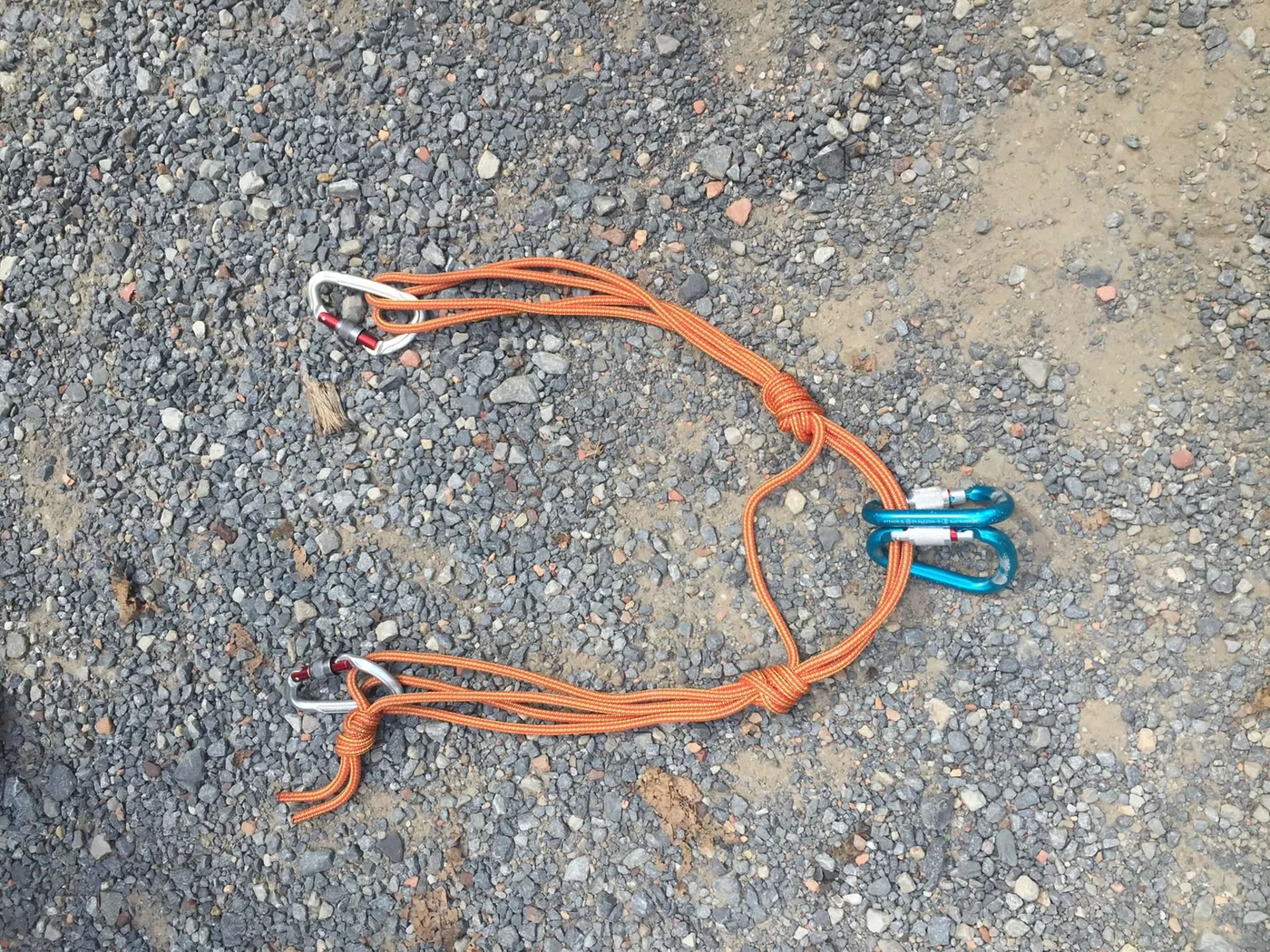
We rigged up a top rope. Tortuga climbed the route first to establish the anchor, then came back down to set up a proper rigging from the top.
Then Tortuga started climbing a harder route.
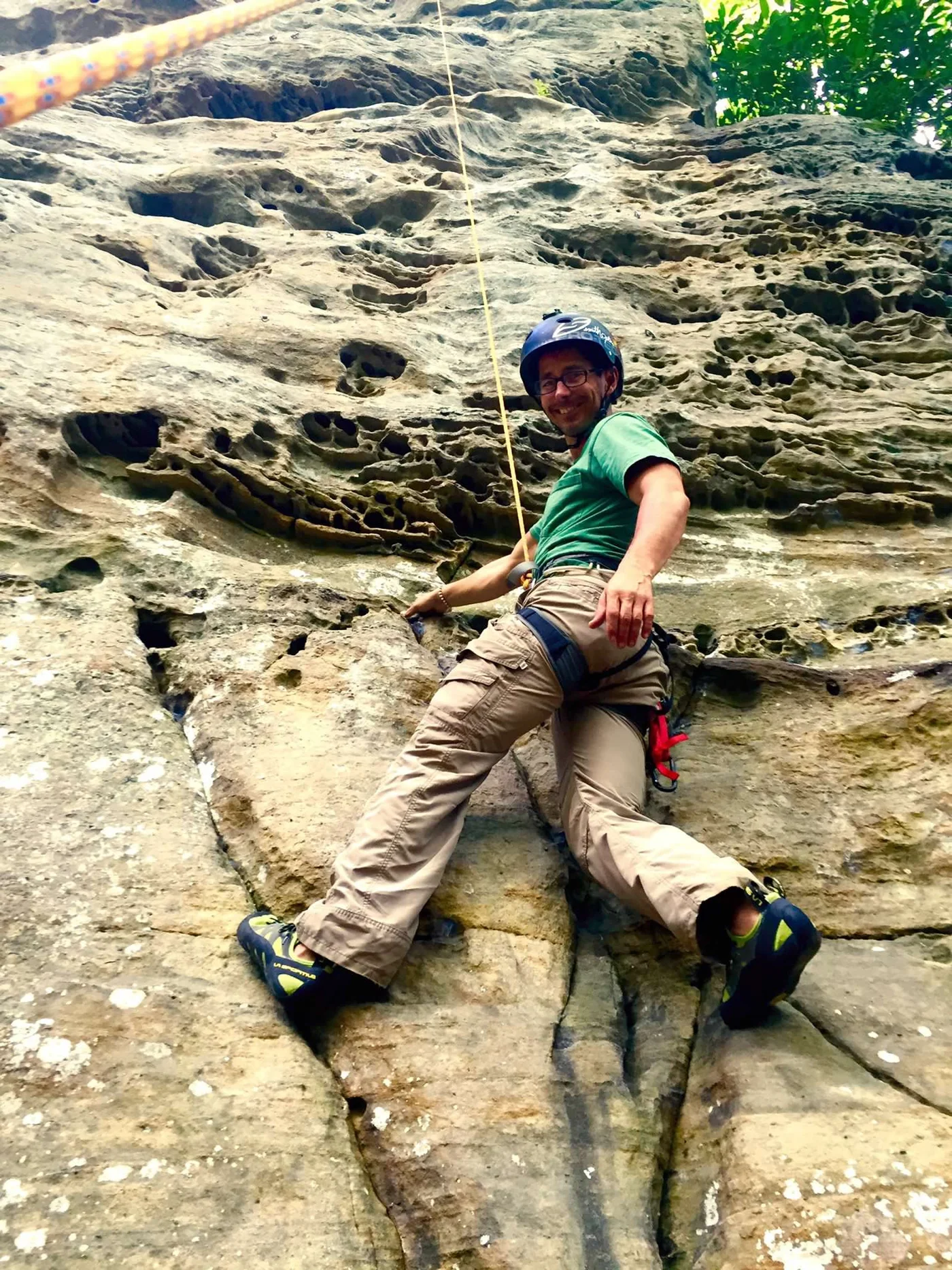
There’s a move on a certain route in the Bridge Area — a crux sequence, the hardest move on the climb — that required committing to a hold above your head and trusting your feet on something that did not look trustworthy. Tortuga was on it. He was in the crux. He was pumping out — forearms filling with lactic acid, grip starting to fail — and he called down to Polly to lower him.
Polly did not lower him.
“You’ve got it,” she said.
“I need to come down.”
“You’ve got it,” she said again.
Tortuga made the move. He finished the route. He was furious at the top and had to admit, on the way down, that she was right.
There is a kind of partnership that develops between a climber and a belayer that goes beyond the mechanical. The belayer sees things the climber can’t see — the body position, the feet, the distance to the next hold. Polly had been watching Tortuga climb for long enough to know when he was about to quit on a move he had. She held him in the air until he figured it out.
The Rattlesnake
Fifty feet up a wall in the gorge.
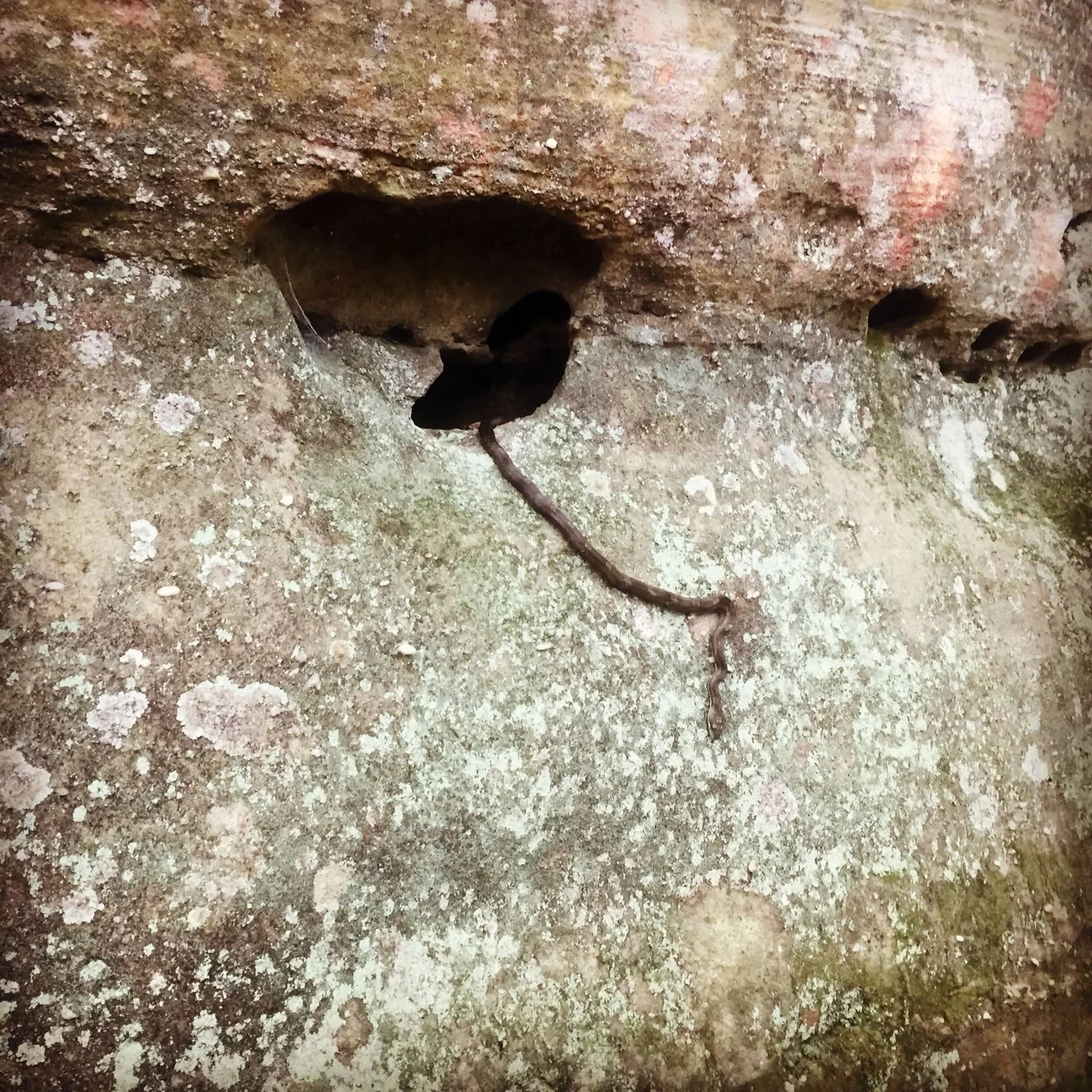
Tortuga was leading — placing his own protection, clipping the rope as he climbed, committed to the route because downclimbing a lead is harder than going up. The crux of this particular route involved a large horizontal crack. You reach into the crack and pull — a hand jam, one of the fundamental techniques of crack climbing.
He reached into the crack.
He grabbed the snake.
Timber rattlesnake. He could not see it because the crack was dark and deep. He felt it before he saw it. His hand closed on something that was not rock.
He let go.
What happened next is the part of the story that made Polly’s hands go white:
He fell.
Free fall for long enough to feel it — before the rope caught him and snapped him into the wall. He swung. He came to rest against the sandstone, heart going, fifty feet off the ground, with the snake still in the crack above him.
The snake had not struck him. Whether it was too cold, too startled, or too confused by the whole situation, it did not bite. It just sat in the crack while a human fell away from it and swung around on a rope.
Tortuga looked up at the crack. He looked down at Polly. He decided he was done with that particular route that particular day.
He still talks about that fall as the honest proof that the gear works. The rope catches you. The anchor holds. The whole system that you put so much attention into rigging is not theoretical — it’s the reason you’re alive on the ground telling the story.
Taking It to the Ocean: Acadia
Eventually we started taking others climbing with us.
The thing about learning a real skill over several years is that at some point you realize you have something to give. We’d been gym climbers, then Manchester Wall climbers, then New River Gorge climbers. We’d figured out the system from the beginning. We could show someone the whole thing from the first move.
Bar Harbor, Maine. Acadia National Park. Ocean path.
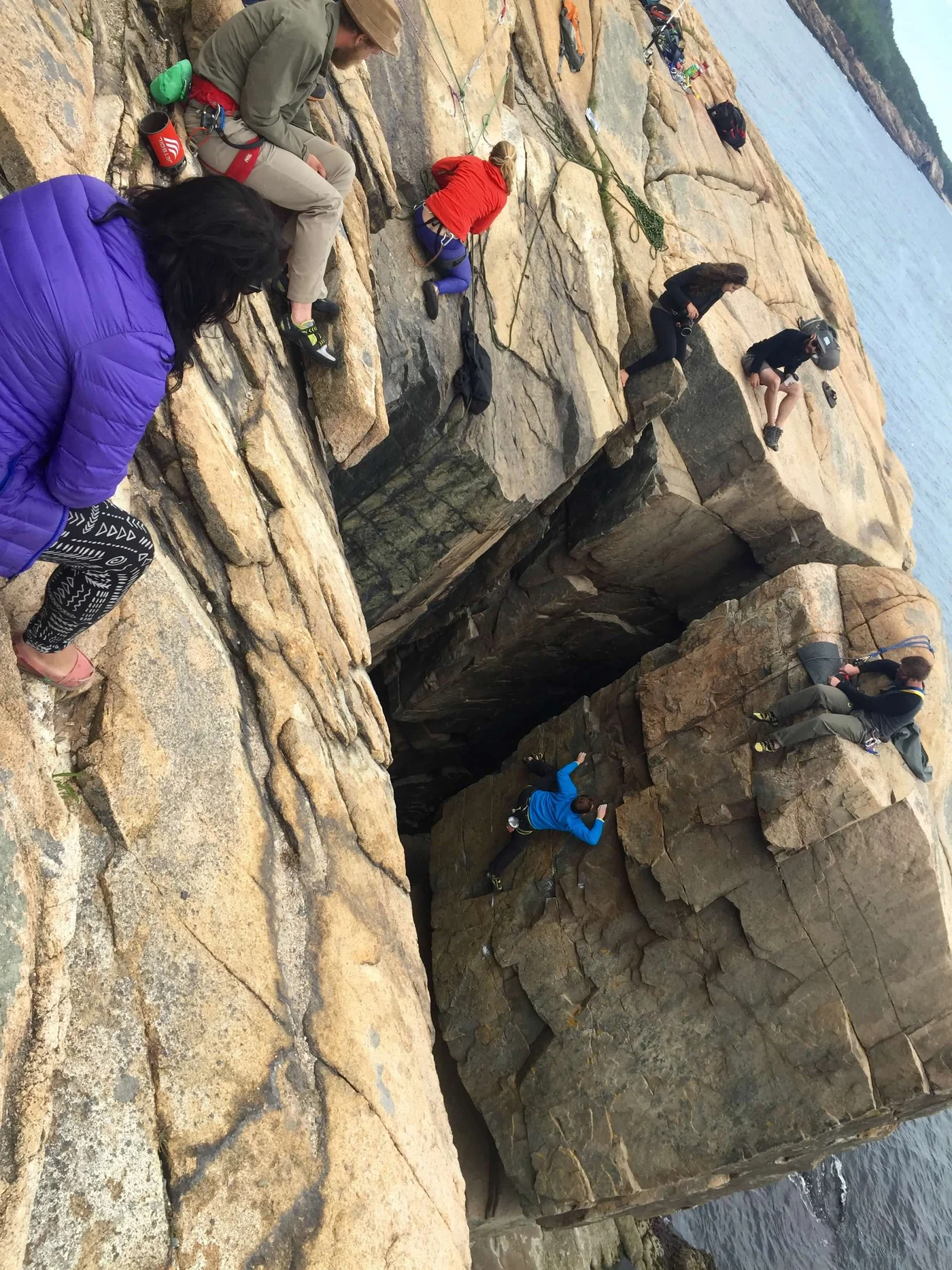
The coastal climbing in Acadia is a completely different experience from anything inland. The rock is pink Acadian granite. The sea is below you instead of forest floor. The spray comes up on certain routes, and the scale of the Atlantic beneath you changes what 50 feet means in a way that nothing else quite does.
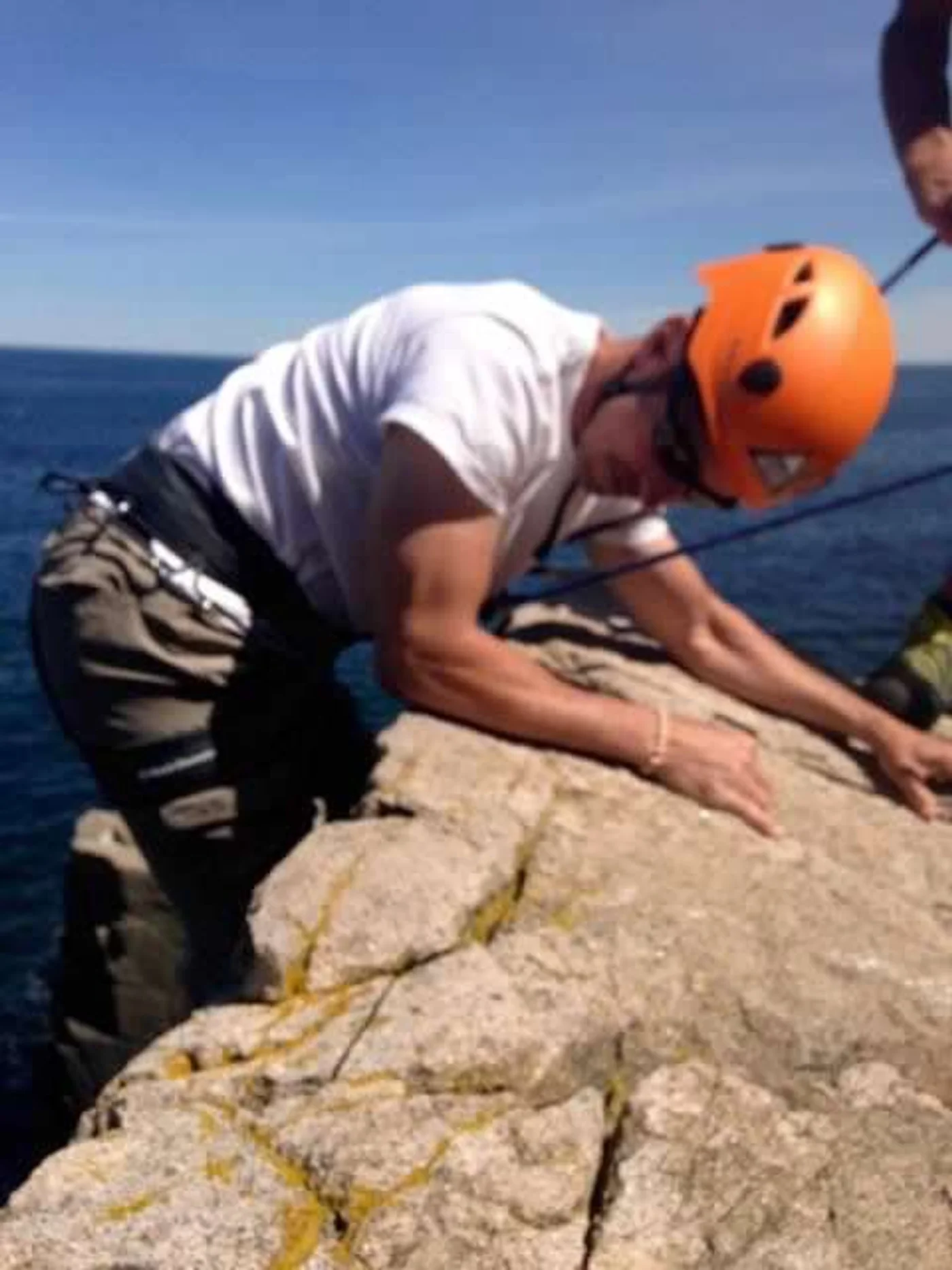
We went with a guide for the ocean section — the tides and the exposure make coastal climbing something you learn with someone who knows those specific walls. The rappel from the cliff face down to the ocean-level ledge, then the traverse across wave-washed rock, then the climb up the face with the water below — it’s a full experience in a way that the inland routes aren’t, even when the inland routes are technically harder.
We think about Pisgah sometimes — the trail runner version of us who stopped on a forest path and watched a stranger on a rock face and couldn’t quite explain why we couldn’t stop watching.
It turned out we were watching something we were going to spend the next decade learning to do.
Where to Start If You’re Starting
If you’re a trail runner, a CrossFit athlete, or just someone who’s been curious — the gym is the right first move. You need to learn to belay before you go outside, and the gym environment gives you that safely. It also shows you, without consequences, whether the movement makes sense to your body.
If it does — and for a lot of people who already have functional strength, it will — get outside fast. The gym teaches you the mechanics. The real rock teaches you everything else.
The New River Gorge National Park is the best beginner-to-intermediate outdoor climbing destination on the East Coast, full stop. More routes than you can climb in a season, fixed anchors throughout the Bridge Area, and a community of climbers who will point you toward the right routes for where you are.
Find free camping near New River Gorge →
Find climbing trails and trailheads in West Virginia →
We have a full Beckley, WV article with free camping spots, trail running routes, and Bridge Day details — read it here.
Before You Go
These are affiliate links — we appreciate your support, no extra cost to you.