Glacier National Park Is Only Open Half the Year — And Getting In Is the Hard Part
Glacier National Park sells itself on the views. It should probably sell itself harder on the logistics, because that’s the part that almost got us before we ever laced up a boot.
The park is only open in earnest for about five months a year — snow closes most of Going-to-the-Sun Road the rest of the time, and there’s no getting around it, no secret shoulder-season workaround. Even inside that window, we found out the hard way that Glacier doesn’t let you plan ahead the way most national parks do. This is the trip report we wish someone had written for us before we booked our flights.
The Entrance Pass Problem Nobody Warns You About
We assumed we could book our park entry the way you book everything else for a trip like this — weeks out, locked in, one less thing to think about. Glacier doesn’t work that way.
You need an entry pass to get in, and for years that meant a timed vehicle reservation you had to grab at a specific release window — sometimes the night before your visit. No advance coordination. No booking your entry alongside your flights. You wait, and you call, and you hope.
And here’s the twist that makes this genuinely difficult: there’s no cell service inside the park. So the plan-the-night-before system that the park requires is also a system you can’t execute from inside the park. We only had signal back at our VRBO in the Whitefish/Martin City area — which is exactly why that basecamp choice mattered as much as it did. If we’d stayed anywhere without reliable service, we’d have been locked out of the one mechanism the park gives you to get in.
What’s changed for 2026, and why this matters if you’re planning now: the vehicle-reservation system that shaped our trip has actually been suspended for the 2026 season — the first time in five years. In its place, the Going-to-the-Sun Road shuttle — which used to be free and unticketed — is now a paid, ticketed reservation system, and Logan Pass now enforces a 3-hour parking limit. Shuttle season runs July 1 through September 7, 2026. A small batch of tickets releases 60 days out starting May 2 at 8am MDT, but the majority drop the night before at 7:00 PM MDT starting June 30, bookable at recreation.gov or by phone — first-come, first-served. It’s a different mechanism than the one we navigated, but the underlying problem is identical: you’re planning your park day at the last minute, from wherever you can get signal, and that’s still not going to be inside the park itself. Check recreation.gov before you go — this system has already changed once and will likely keep evolving.
The Basecamp Strategy: Why We Stayed Outside the Park
We found a VRBO in the Whitefish/Martin City area rather than trying to stay inside Glacier itself, and it turned out to be the single best decision of the trip. It gave us cell service to actually pull off the reservation scramble, a real bed and kitchen after long hiking days, and a manageable drive to the west entrance.
Our first day, before we’d even secured park passes, we hiked some local lakes around Whitefish just to stay moving while we sorted out entry. Worth knowing: the wait for a pass doesn’t have to mean a wasted day.
Beating the Crowds: Our Parking and Shuttle Strategy
The main entrance area on the west side was overwhelmed with cars and people by mid-morning most days. What worked for us was driving past the worst of it to a shuttle stop further inside the park, then riding the rest of the way up.
We aimed to arrive around 9 to 10am — specifically timed to when the earliest hikers were finishing up and clearing out their parking spots. Grab a spot as someone else leaves, then catch the shuttle the rest of the way to the high-country trailheads. It’s not glamorous, but it worked every time we tried it, and it beat circling a packed lot for 45 minutes.
The Hikes Worth the Trouble
Highline Trail — Beautiful, Terrifying, and Not to Be Rushed
The Highline is the trail everyone talks about, and it earns it. It runs along a narrow shelf on the side of a cliff, with a steel cable bolted into the rock for the section where the ledge gets thinnest. It was, without exaggeration, terrifying in the best way — and it produced one of the more comical dynamics of the whole trip, watching the men in our group white-knuckle the cable while the women walked it without a flicker of concern.
We didn’t make it all the way to the Granite Park Chalet. Partway in, one of Glacier’s sudden mountain thunderstorms rolled up out of nowhere, and we made the call to turn back rather than push further out onto an exposed cliffside trail in a lightning storm. We just made it back to the shuttle stop when the bottom completely opened up — a wall of freezing rain that caught a lot of other hikers still out on the trail. Bring a poncho you can actually reach without digging through your pack. Dad had overpacked to the point of comedy, and it turned out to be exactly the right call: he ended up outfitting half the bus stop with spare gear while kids and grown adults stood there soaked and shivering. Mountain weather up there does not negotiate, and it does not give much warning.
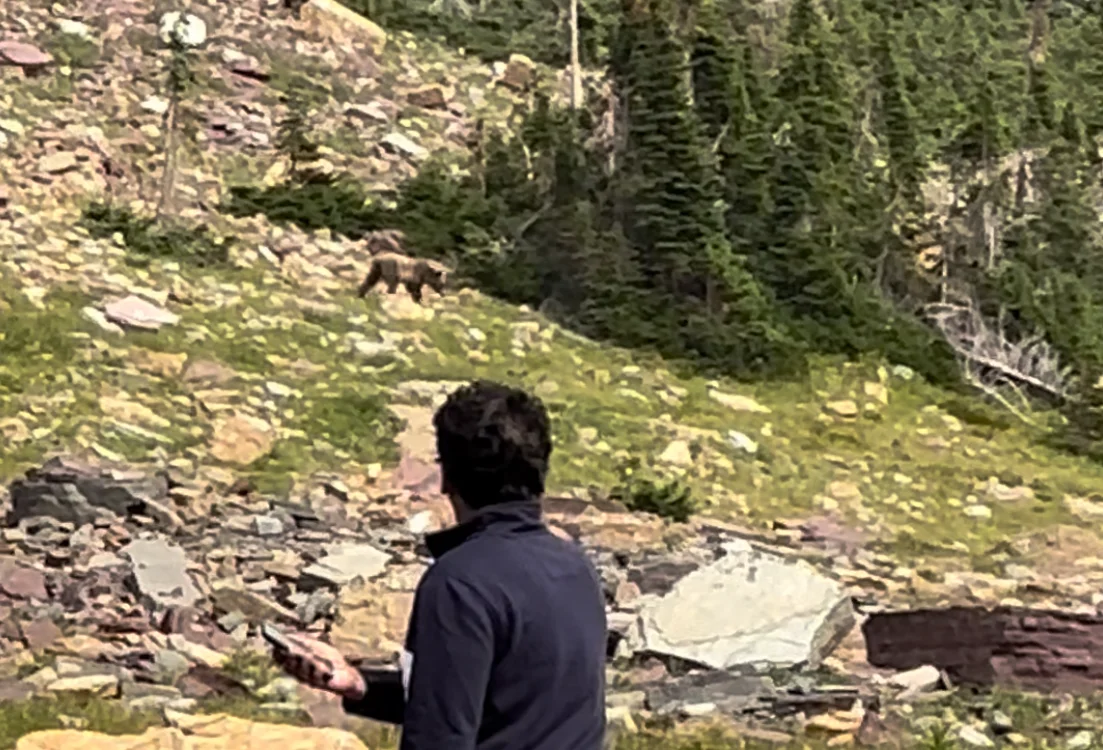
This is also the trail where we had our closest wildlife encounter of the trip — a grizzly bear that ended up standing almost exactly where my dad had been a few minutes earlier. That story gets the full telling here: Where Dad Was Standing, There Was Now a Grizzly →
For the full route breakdown, mileage, and what to bring, we’ve got a dedicated guide here: Highline Trail: The Complete Guide →
Hidden Lake Overlook — The Postcard Shot, Minus the Crowds Once You’re Past the Boardwalk
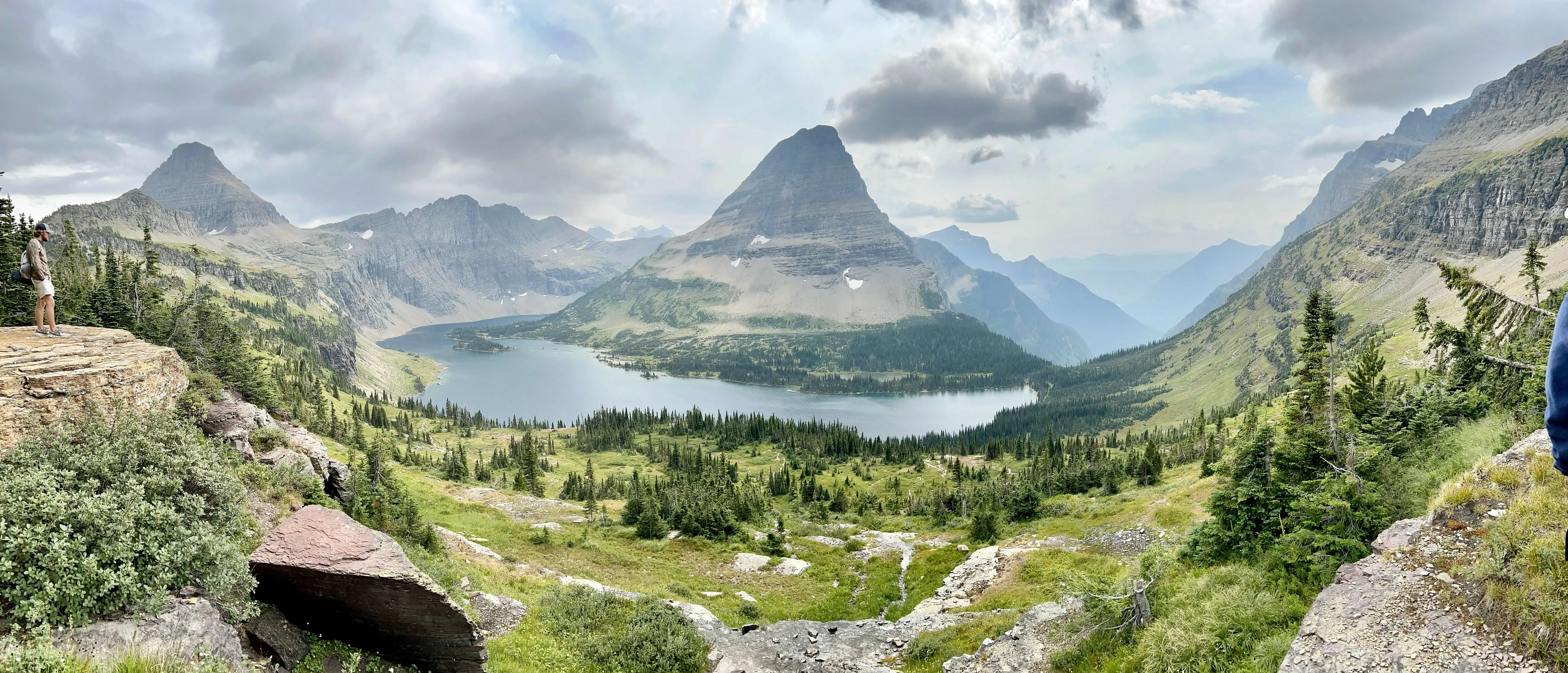
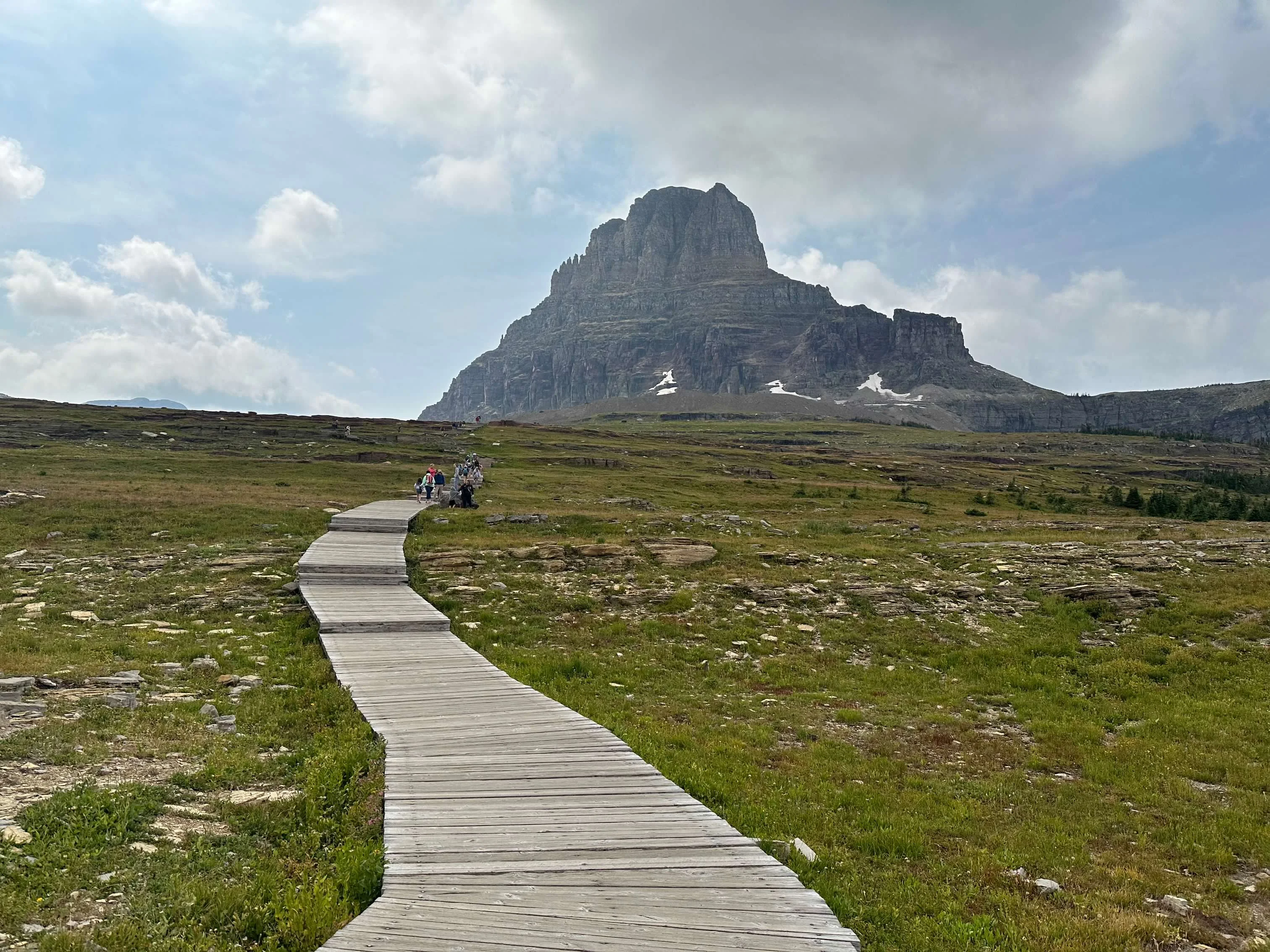
Straight out of Logan Pass, the boardwalk to the Hidden Lake Overlook is short, easy, and absolutely packed — which is fine, because the payoff is one of the most photographed views in the entire park. Bearhat Mountain rises straight up behind a lake so clear you can pick out individual rocks on the bottom from the overlook.
Avalanche Lake and Avalanche Gorge — Where We Actually Got in the Water
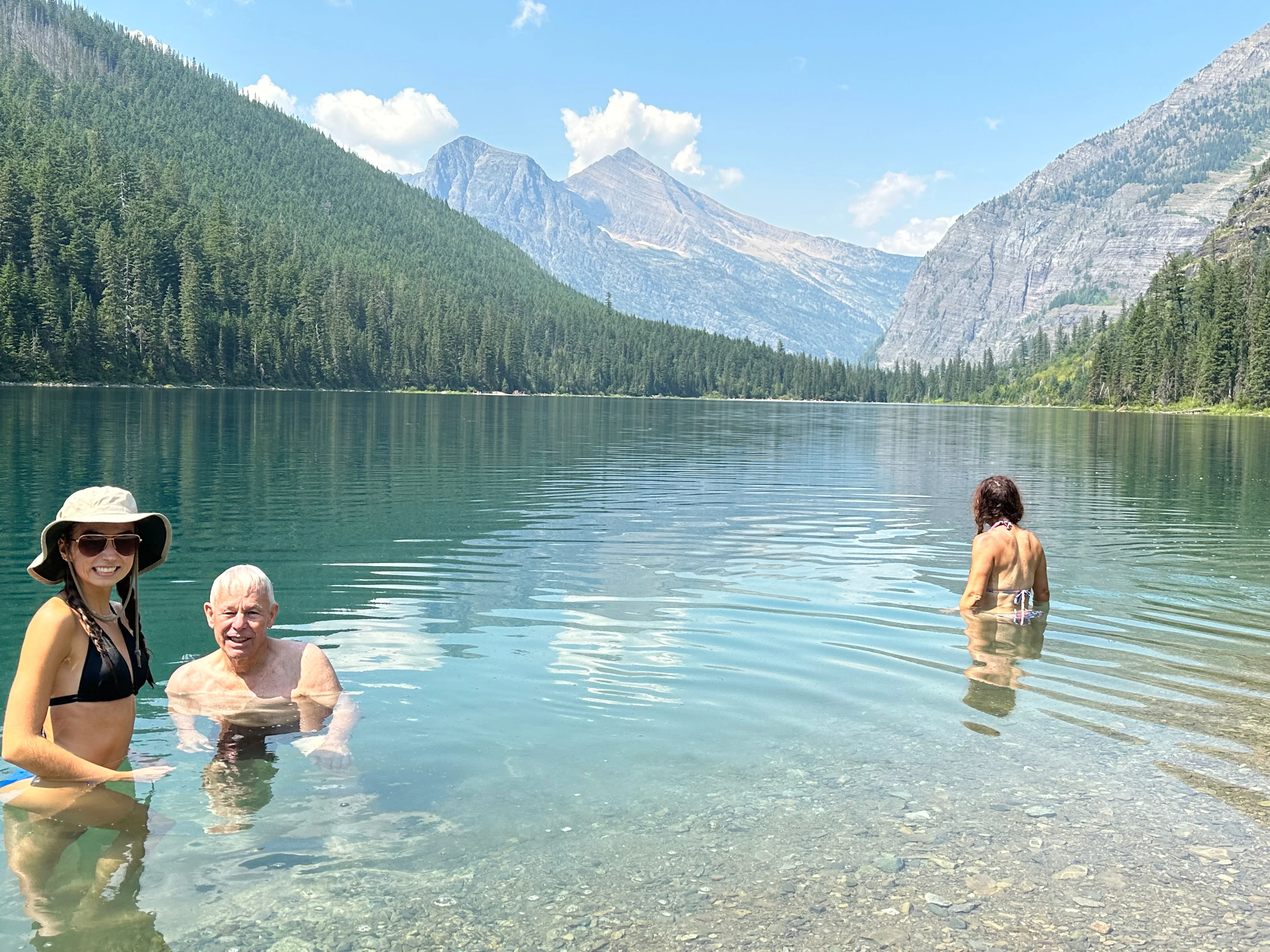
This is where the swimming happened. The water is glacially fed and genuinely freezing — good for sore knees and joints, brutal for anyone hoping to do more than wade. A few of us went in past our waists; others in the group refused to go past ankle-deep, and honestly that was the more reasonable choice.
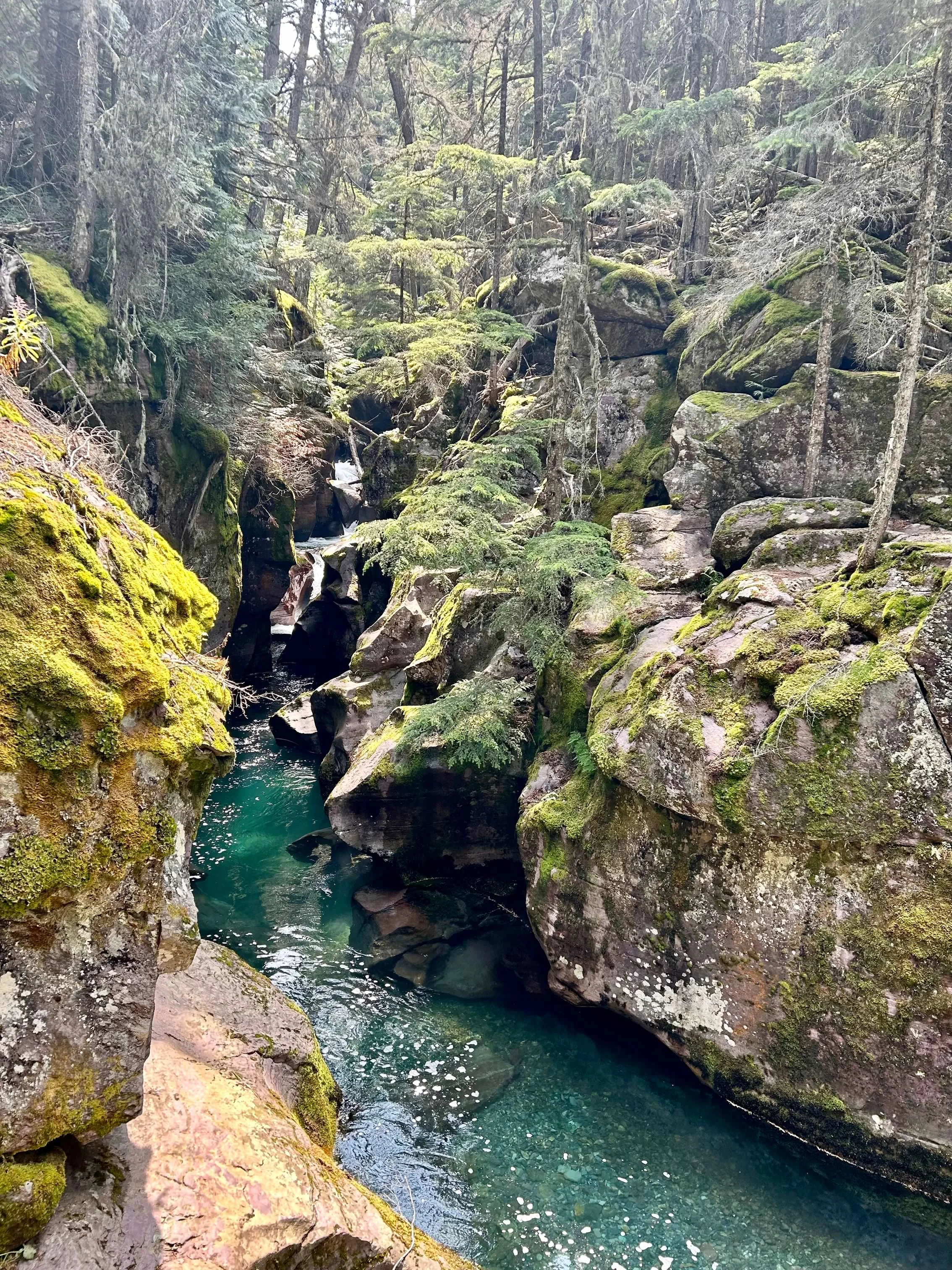
The gorge itself, cut through moss-covered rock with water so clear it reads turquoise, is worth the stop even if you don’t get in.
Wildlife: What We Actually Saw
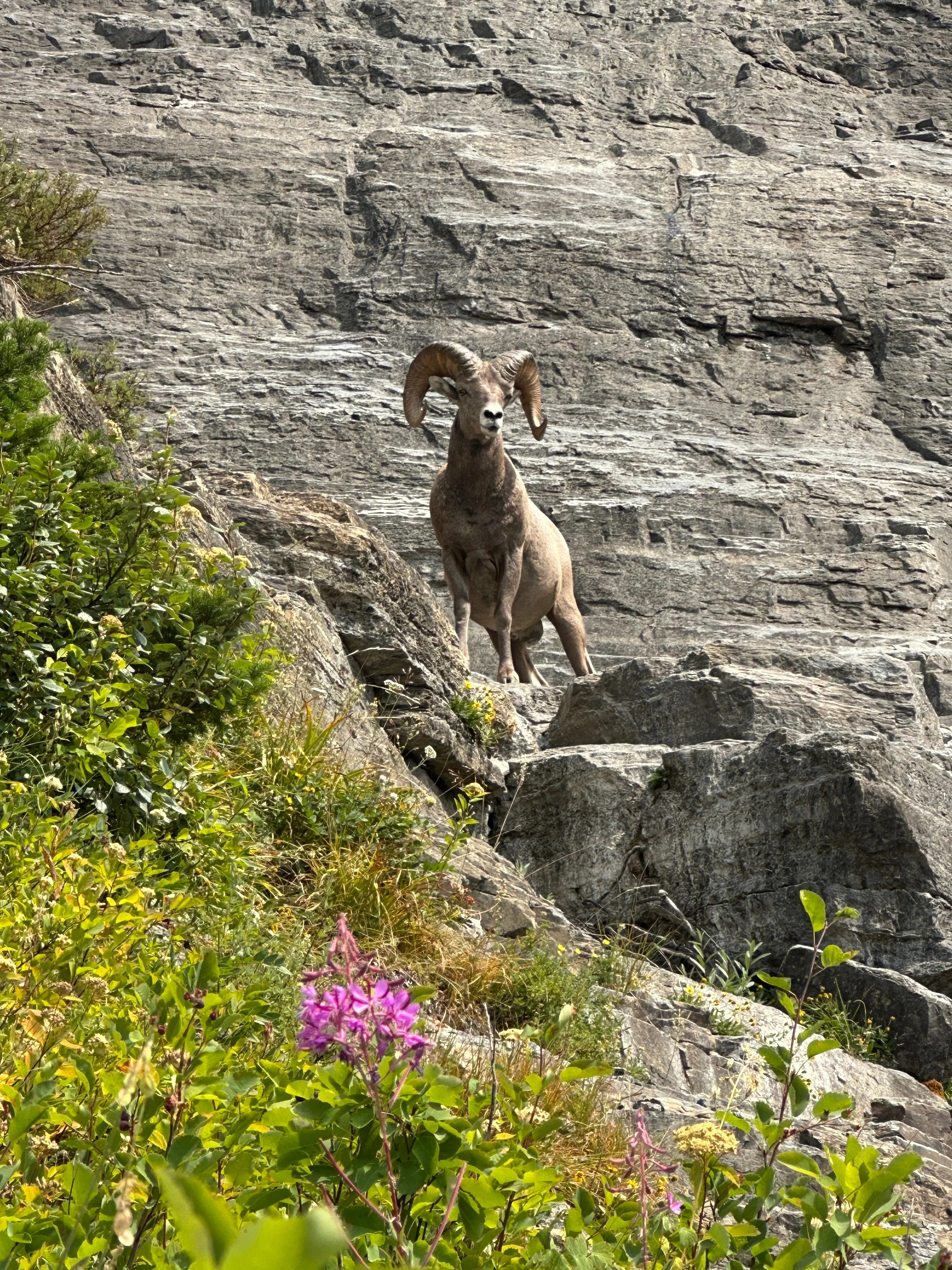
Beyond the grizzly, the animal we spent the most time debating was this ram, photographed on a rock face along the trail. This is a bighorn sheep, not a Barbary sheep — Barbary sheep aren’t native to North America at all, and the curled horns and build here are textbook bighorn, which is the sheep species Glacier actually has.
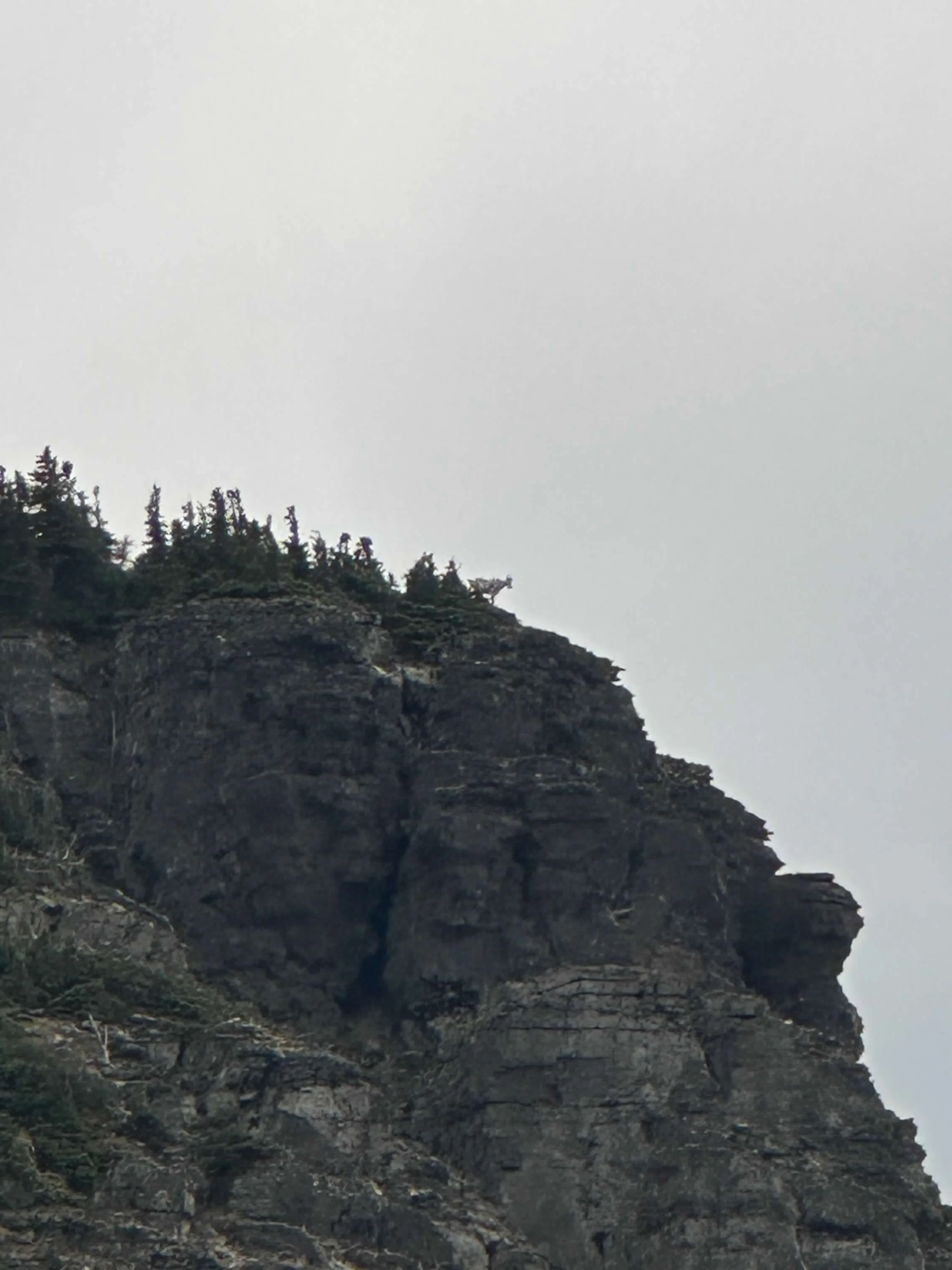
We also spotted a mountain goat picking its way along a cliff edge high above one of the trails — barely visible without zooming in, which is about right for how these animals actually behave up there.
Going-to-the-Sun Road: Drive It or Ride It
We took the shuttle up Going-to-the-Sun Road, and after watching the drive from the window, we were glad we did. It’s a genuinely nerve-wracking road — narrow, high, with drop-offs that don’t leave much room for error, and it gets more intense the higher you climb.
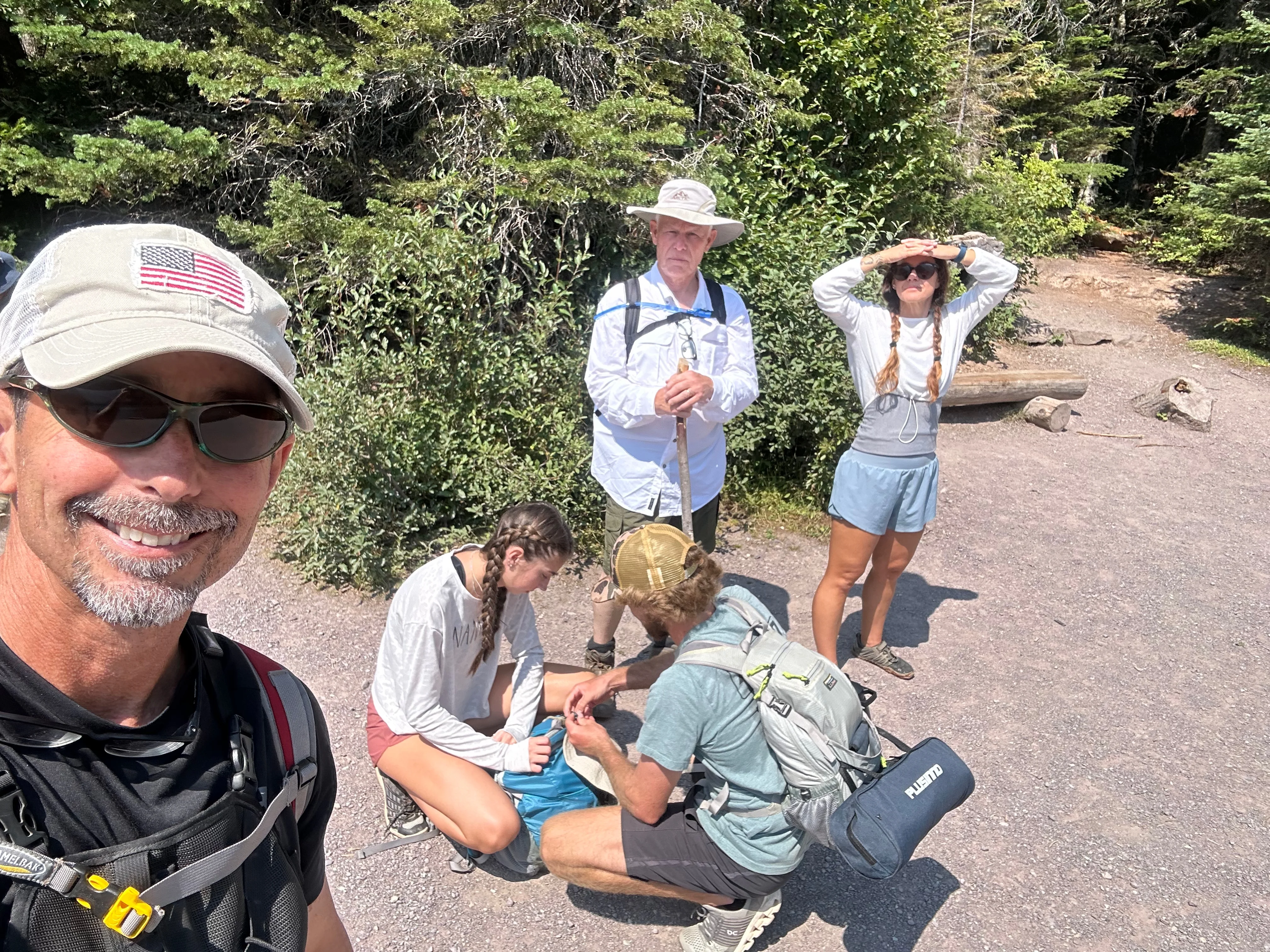
We ended up with the same shuttle driver several days in a row, purely by coincidence, and got to know him a little each ride. Somewhere along the way we found out this was his rhythm — Florida in the winter, driving the Glacier shuttle all summer, a pattern he’d kept up for years. Polly claimed the front seat every single ride. She gets carsick, and on switchbacks with a cliff on one side, the front seat isn’t a luxury, it’s a requirement.
What We’d Tell You Before You Go
- Glacier’s season is short. Snow closes most of the park outside summer — don’t plan around a shoulder-season visit and expect full access.
- You cannot fully plan your park entry in advance. Whether it’s the older vehicle reservation system or the current ticketed shuttle, expect a last-minute booking window, often the night before.
- There is no cell service inside the park. Book your basecamp somewhere with reliable signal — we used Whitefish/Martin City — because you’ll need it to actually execute the entry system.
- Arrive at parking around 9–10am to catch spots as the early crowd clears out, then shuttle the rest of the way up.
- Pack for sudden storms, even in July and August. Mountain weather at elevation changes fast and without much warning.
- Carry bear spray and know how to use it — the Highline Trail is stunningly maintained and also genuine grizzly habitat, sometimes both at the same time.
- The shuttle is worth it even beyond the parking strategy. Going-to-the-Sun Road is not a relaxing drive. Let someone else do it.
Glacier is not an easy park to plan around, and it’s not going to get simpler anytime soon — the system changes almost every season. But nothing about the difficulty took away from standing on that boardwalk looking at Bearhat Mountain, or watching a grizzly roll a boulder above the Highline Trail, or finally getting into water cold enough to make you forget every mile you’d just hiked to reach it.