Free Camping Near National Parks: What We Actually Found
Free Camping Near National Parks: What We Actually Found
The national park campground reservation system is a six-month advance booking lottery that costs $45 a night and packs you shoulder-to-shoulder with generator neighbors until 10pm. There is a better way. We’ve found some of it firsthand.
The rule that changed everything: the best camping near most national parks isn’t inside the park at all.
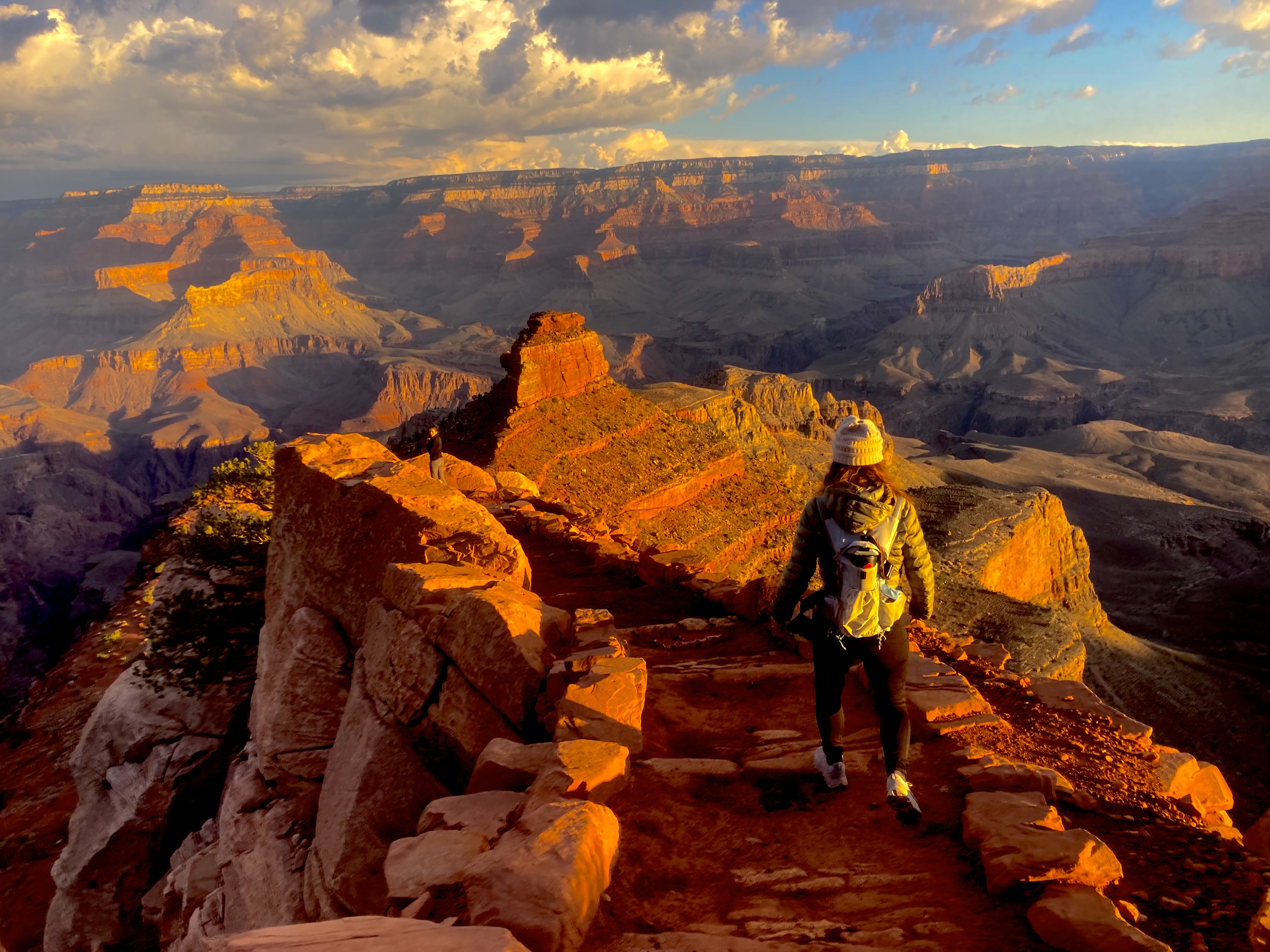
Grand Canyon: Long Jim Loop (The Real Find)
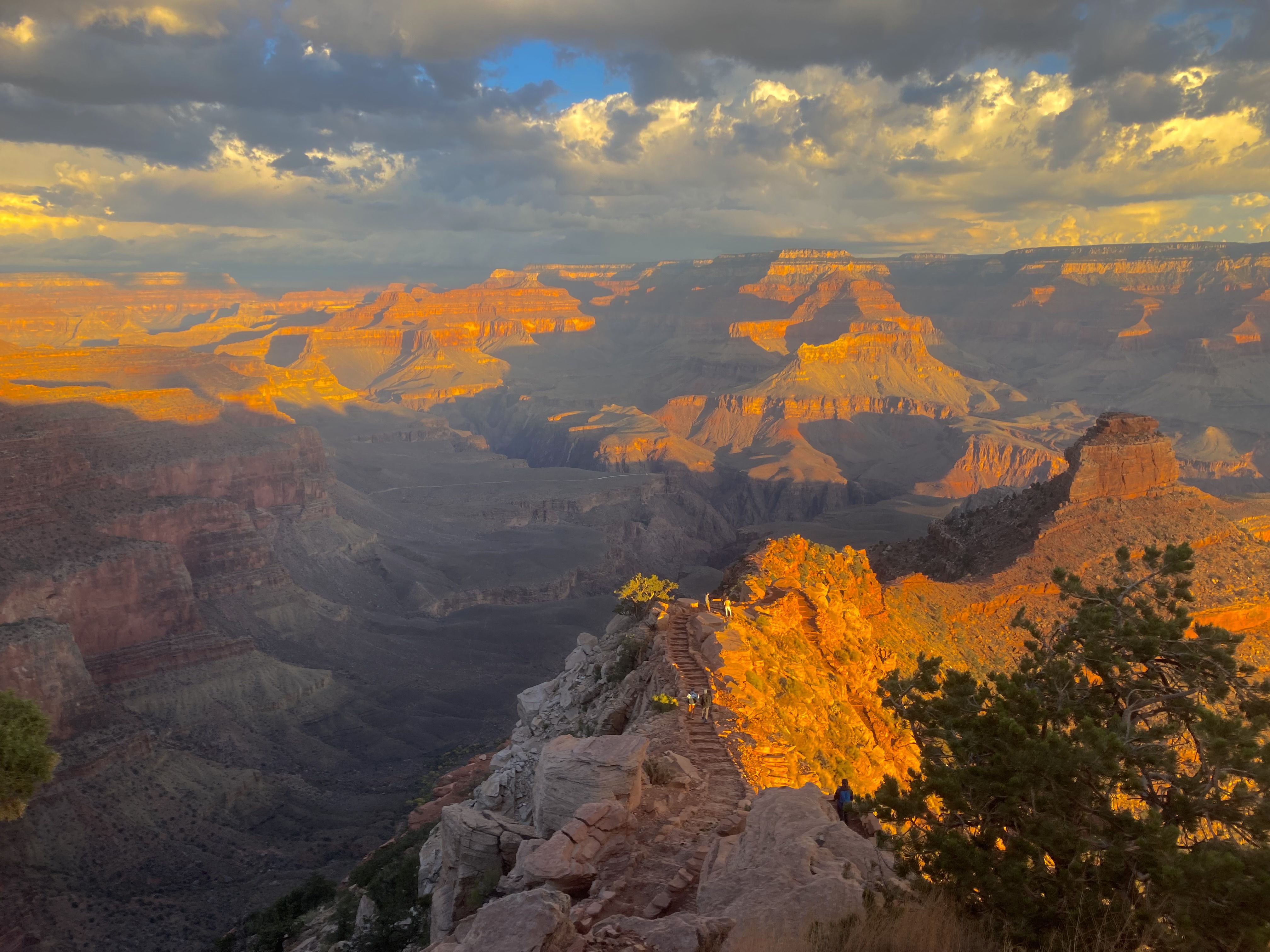
If there’s one free campsite in this country that earns the word “gem,” Long Jim Loop in the Kaibab National Forest is it. Free dispersed camping in the ponderosa pines, walking distance from the South Rim, connected to the main park area by a bike trail.
No fee. No reservation. No generator neighbors. Just high desert air and a short ride to one of the seven wonders of the world.
We saw wild horses. Not from a car. At camp.
Long Jim Loop Dispersed Camping on Trek4Free →
Pack in, pack out — and that means everything. WAG bags are the move. If that’s a dealbreaker, Mather Campground inside the park has full facilities a short ride away. Use them, come back to the quiet. Best of both worlds.
The Greenway Trail connects the Kaibab National Forest into the South Rim village area — you can literally ride your bike from your tent to the canyon edge. Kaibab National Forest dispersed camping is free with a 14-day stay limit.
The Rim Cabins Are Worth Knowing About Too
While we’re here — the historic cabins right on the South Rim run around $120/night. That sounds steep until you realize the airport hotel in Flagstaff costs the same and faces a parking lot. These cabins face the Grand Canyon. We’ve done both. Do the cabins.
Not free, but cheaper than you’d think and they sit directly on the rim. Often overlooked because people assume anything at the Grand Canyon requires a second mortgage.
Browse Grand Canyon area free camping on Trek4Free →
Yosemite: Camp 4 Is $6 a Night in the Heart of the Valley
Camp 4 — also called Sunnyside Campground — is walk-up, first-come-first-served, and sits right in Yosemite Valley. Six dollars per person per night. It is a National Historic Landmark.
That last part isn’t a joke. Camp 4 was designated a National Historic Landmark in 2003 because it’s the birthplace of modern big wall climbing. Every major ascent of El Capitan and Half Dome was planned from these picnic tables. The first people to free climb The Nose started their mornings here.
When we came through, we found climbers living out of vans with gear stacked everywhere, chalk on their hands, talking routes at 6am. The energy was electric — not peaceful, electric. If you love rock climbing or just want to be near people doing extraordinary things, there is no better campground in America.
We got lucky that trip — scored a condo at $80/night, which was a steal and we took it. But if we go back, we’re doing Camp 4. The vibe inside the valley at ground level is completely different from looking at it from above.
Walk-up spots are still available — arrive early, especially summer weekends.
Browse Yosemite area free camping on Trek4Free →
Great Smoky Mountains: Read the Dog Policy Before You Go
Dogs are not allowed on trails in Great Smoky Mountains National Park. This is one of the most restrictive dog policies of any major national park and it blindsides people constantly — including us. We showed up with our dogs and found out we couldn’t hike the trails we’d planned.
Dogs are allowed in campgrounds, on paved roads, and on a couple of specific paved paths. Not on hiking trails. If you’re planning a Smokies trip with dogs, adjust your expectations before you leave home.
Here’s what happened instead: Smokemont Campground on the North Carolina side turned our detour into a highlight. It sits along the Oconaluftee River, set back from the main tourist corridors, with a camp host who actually knew the area and made you feel like you were camping rather than parking.
About 50 feet from our tent, a mama black bear and her two cubs climbed into apple trees and went to work. Just matter-of-factly, while we watched from camp. The Great Smoky Mountains has the highest concentration of black bears of any national park — roughly 1,500 bears in 520,000 acres. You will see them if you camp here.
Smokemont isn’t free, but it’s inexpensive and completely worth it for even one night. We were passing through and stayed longer than planned.
For actual free camping near the Smokies, Cherokee National Forest on the Tennessee side has dispersed sites through the forest. Browse Tennessee free camping →
Bringing dogs? Our hiking with dogs trail guide → covers the parks that actually welcome them and what to know before you go.
Other Parks: The Short Version
We haven’t camped at all of these personally, so we’ll keep it honest — here’s where Trek4Free data points you toward free land adjacent to the big parks:
Yellowstone — Gallatin National Forest to the south and west has free dispersed sites within an hour of multiple entrances. Browse Montana free camping →
Grand Teton — Bridger-Teton National Forest east of Jackson, dispersed sites with Teton views. High clearance helps. Browse Wyoming free camping →
Arches / Moab — BLM land surrounds Moab on all sides. Some of the best desert dispersed camping in the country. Browse Utah free camping →
Zion / Bryce — Dixie National Forest and surrounding BLM land on both sides. Browse Utah free camping →
How to Find the Sites
The pattern: identify the National Forest or BLM land adjacent to the park. Those maps show where dispersed camping is allowed. Standard rules are 14-day stay limit, pack in/pack out, camp in established sites when possible.
The Trek4Free Explore map → puts free camping, campgrounds, trailheads, and swimming holes on one map across the whole country — no login, no paywall. Filter by Free Camping and zoom to the park you’re visiting.
More: what nobody tells you about your first dispersed camping trip → · hiking with dogs → · browse free camping by state →