Where the Wild Things Are — What Rockport Doesn't Put in the Brochure
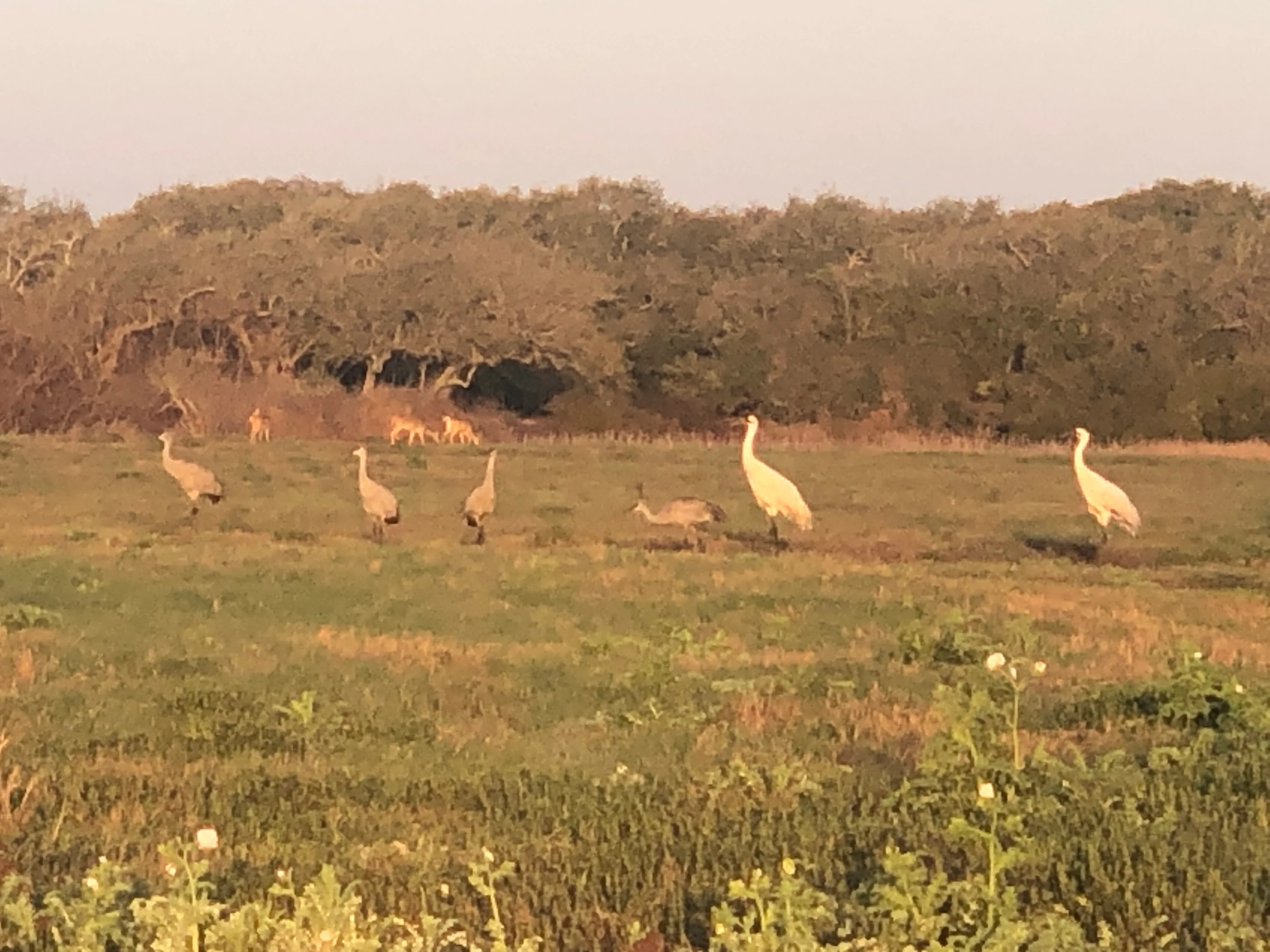
Pick up the chamber of commerce brochure and you will find birds, beach, butterflies, and fishing. Whooping cranes in the winter. Roseate spoonbills at sunrise. The big tarpon run in the summer. Charter boats and birding tours and restaurants on the water.
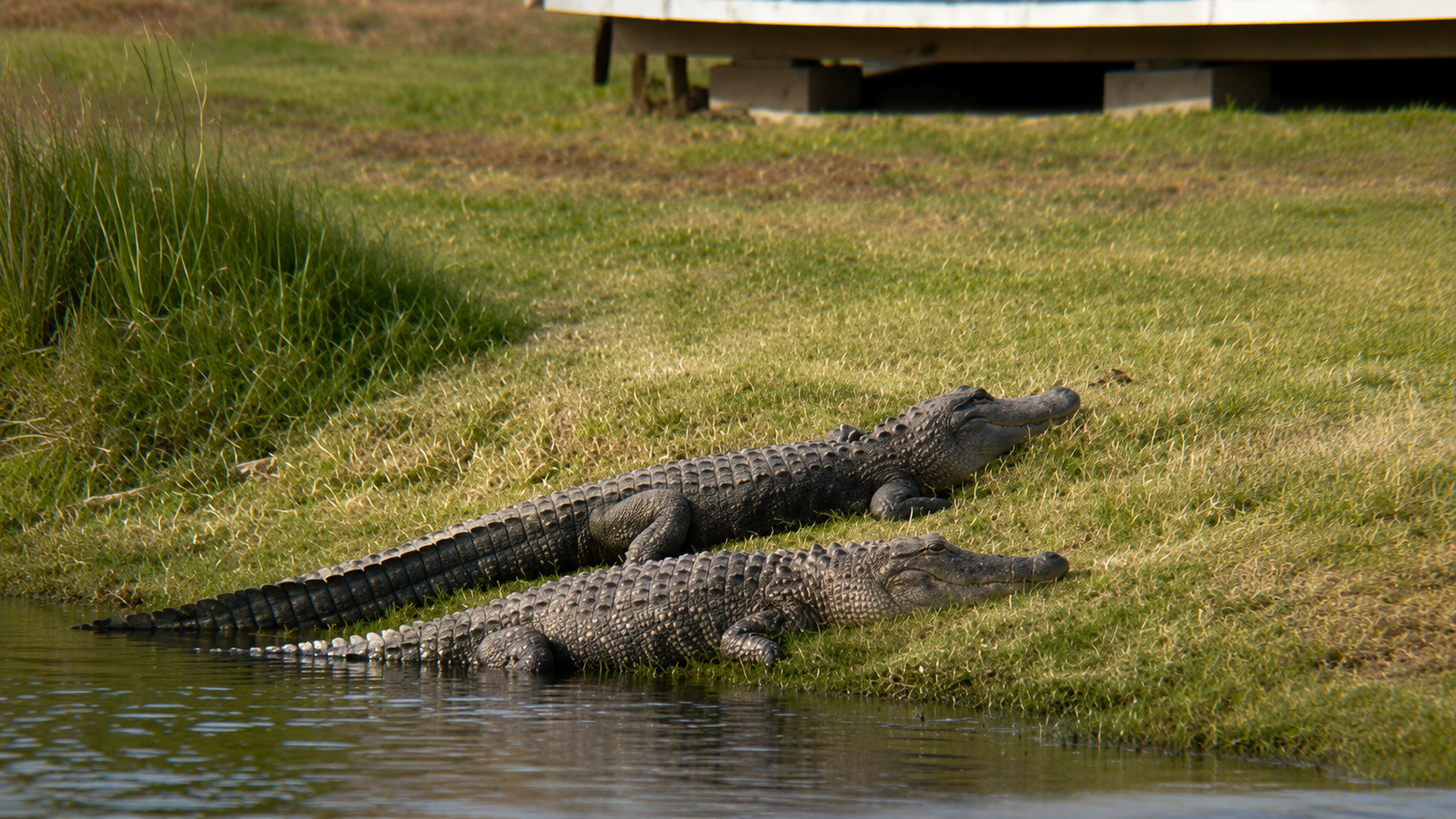
What you will not find is any mention of the alligators.
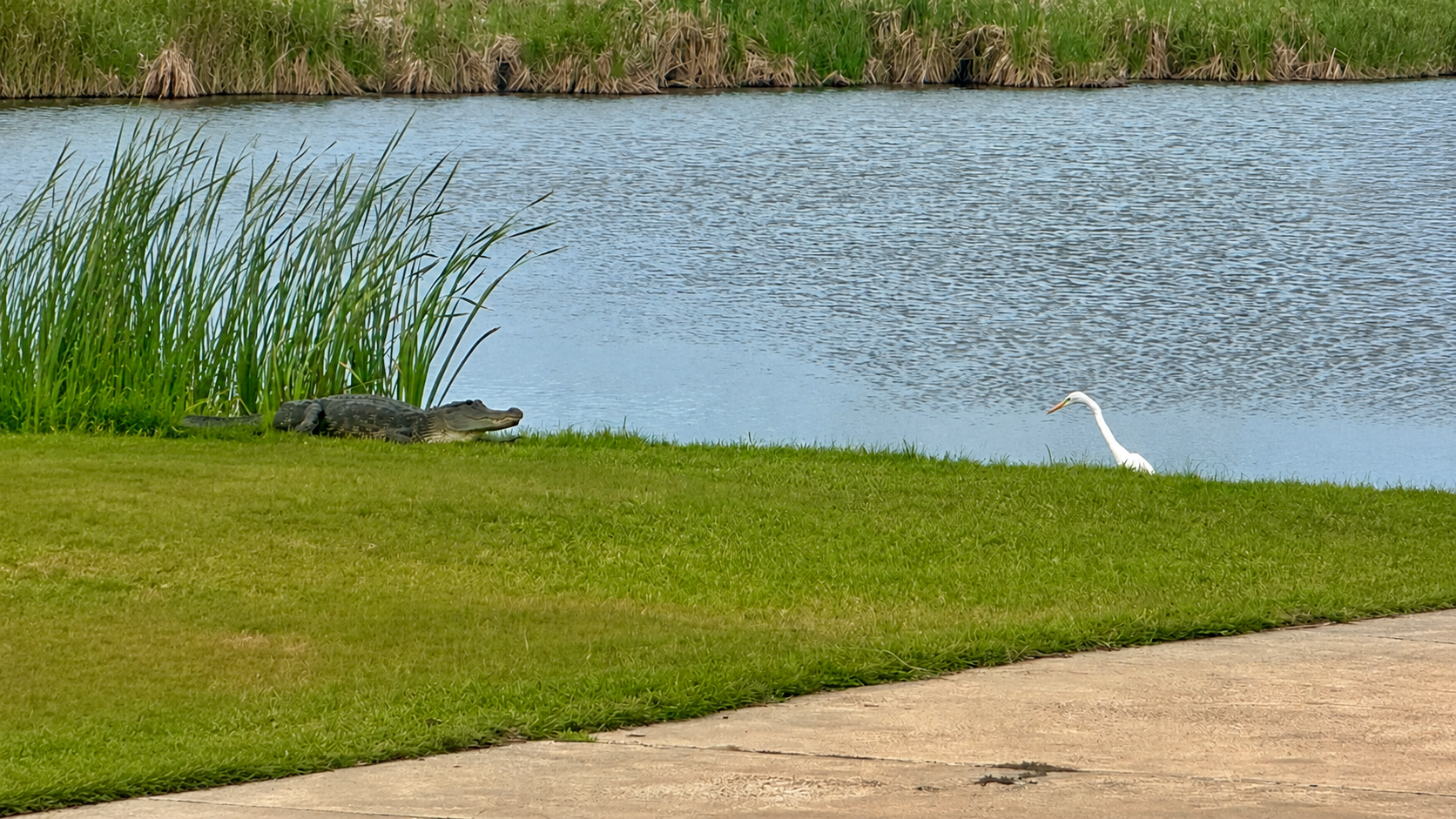
They are here. They have always been here. They were here before the brochures, before the tourists, before the condos on the waterfront and the snowbirds in their seasonal rentals. They will be here after all of that too.
I lived in Rockport for five years before I ever saw one.
The Day You Start Seeing Them
For five years I heard the stories. Someone saw one crossing Haggy. One walking across Beach Road. There was one over by the pond on the golf course. I hunted the likely spots — the alligator-looking ponds, the marshy edges of the bay, the drainage ditches that sit still and black in the summer heat. Nothing.
Then something clicked. I do not know exactly when or why. One day I started seeing them.
Now I cannot stop.
I went running this afternoon and saw two. One was a baby — three feet long, sitting in the grass about three feet from where my foot landed. I was watching for snakes. I almost stepped on it.
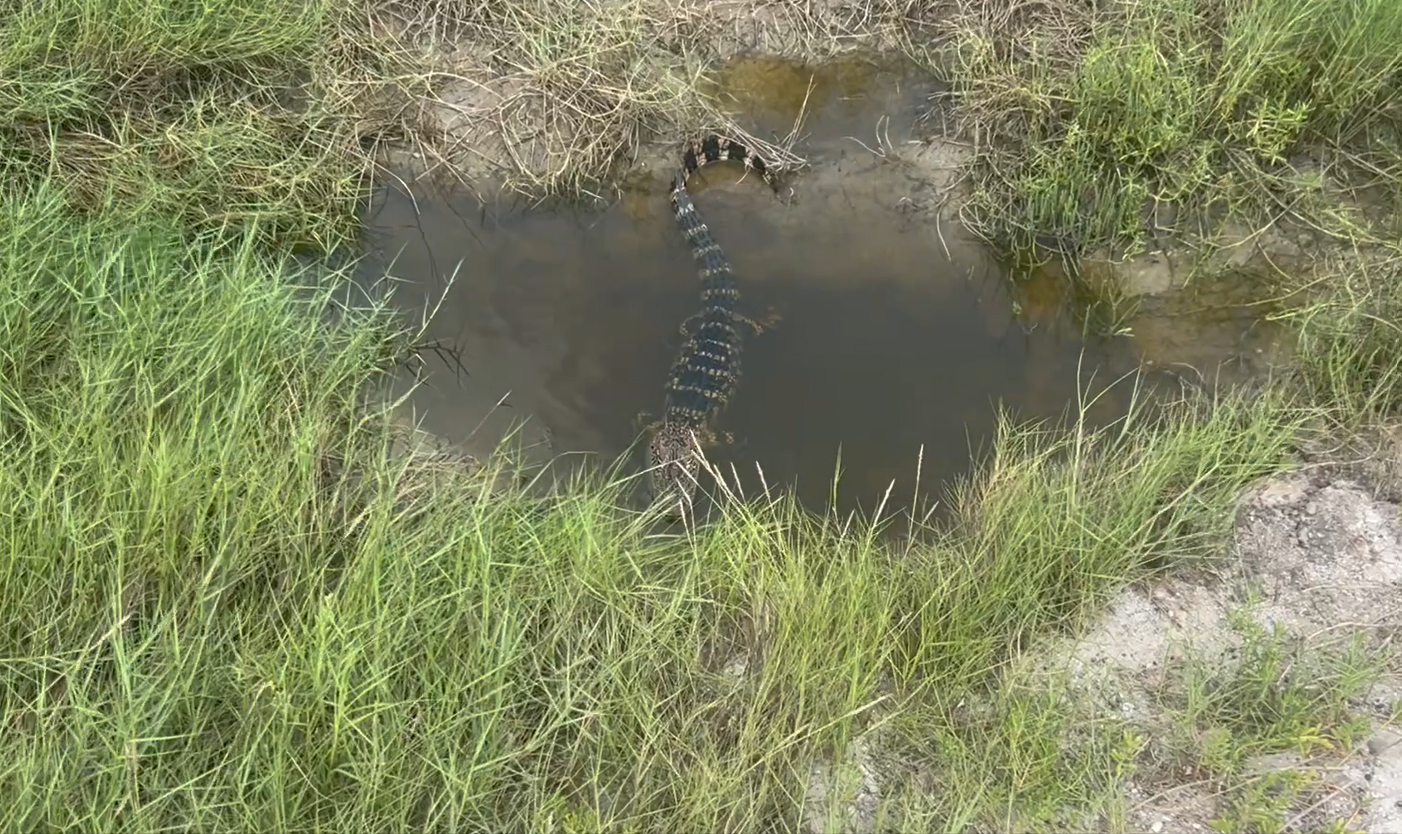
Once you have the eye for it there is no going back. The shape of a log that is not quite right. The waterline that has one small break in it. The stillness that is slightly too still.
How They Disappear
This is the part I cannot explain and have given up trying to explain.
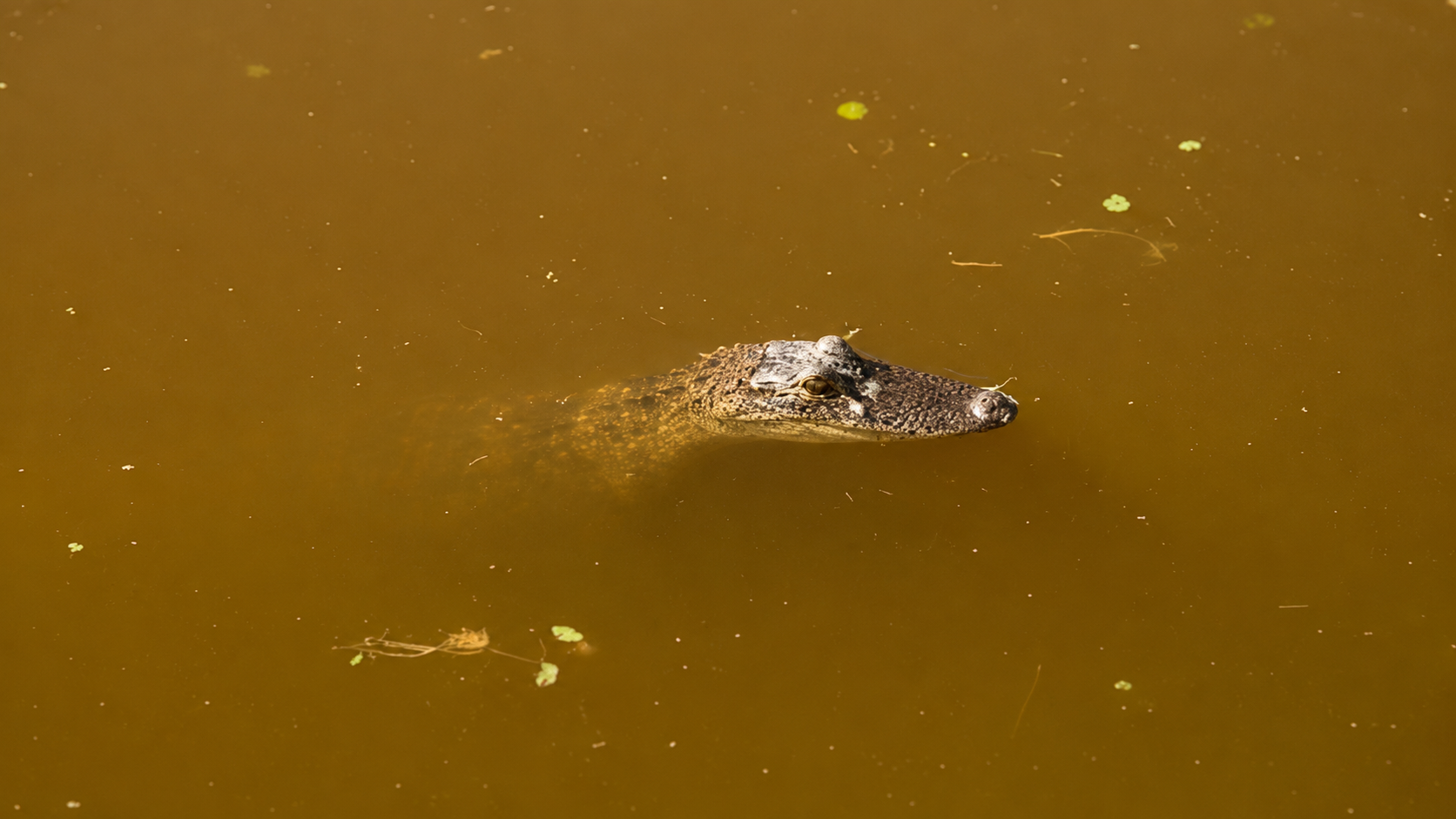
A ten-foot alligator is an enormous animal. Standing on the bank it is four feet tall at the spine. When it decides to go underwater it creates no wake. No shadow. No bubbles. It does not splash or thrash. It simply inches downward and it is gone. The surface of the water closes over it like a curtain.
I know it is still there. I cannot see any evidence that it is there. I cannot figure out how something that large moves without disturbing anything.
They do it every time.
What the Old-Timers Actually Know
The old-timers here will tell you alligators are nothing to worry about. They will wave off your concern and tell you the story about the one their grandfather used to hand-feed. They are cavalier about it and they say so loudly.
I have sat around enough of their campfires to know that the bravado is not the whole story.
Watch them when they are fishing the reefs and a large alligator turns their direction. That casual dismissal disappears. They know exactly what the animal is doing. I have watched them pass hand signals through the group — slow and deliberate — and seen everyone ease back toward the boat without a word. They do not fish where a large alligator is facing them. They give up good water over it without a second thought.
They know. They just do not want to sound like tourists.
The Basics
A few things worth knowing before you go walking the shoreline:
When you can’t find them: The first hard freeze they retreat. As a rule of thumb, Christmas through Easter they are largely dormant and out of sight. Every year is a little different, but that window is your baseline.
How big: Big enough to take a large dog or a deer. I have not personally known anyone in Rockport to be hurt by an alligator, but I have heard the stories about dogs and deer. The danger scale goes up significantly when tourists feed them. An alligator that has lost its fear of humans is a different animal entirely — this is why, when one turns to look directly at you, you should calmly go the other direction.
How to judge size: The old-timers taught me this one. Measure the gap in inches between the eyes and the tip of the snout. One inch equals one foot of alligator. A twelve-inch gap is a twelve-foot alligator. File that away.
The Stories They Do Not Put in the Paper
Most of what happens here never makes the news. The ones that do make the paper people forget about. Here are a few that stuck with me.
There was a large alligator found in the garden center at the Rockport Walmart — sitting under the plants, unbothered, as if it had a loyalty card. It made the local paper. Most of the encounters do not.
At the 7-Eleven in Lamar a six-foot alligator blocked the front door. Customers could not get in or out. Hmmm. What do you do when a six-foot alligator is blocking the door of your convenience store at eleven in the morning? In most of the country this would be a crisis. In Lamar it was a Tuesday.
A buddy of mine walked to his car one night and heard a hiss from underneath. Five-foot alligator. He did what any local would do — roped it and walked it down to the water. There were a few death rolls along the way. He expected that. He was fine.
The Fire Calls
I was a volunteer firefighter here for years. Three calls come to mind immediately, and there were others.
The medical emergency. We rolled the big structural engine — the heavy truck we use for house fires. When we pulled up to the address there was a large alligator basking in the driveway between the house and the pond. It did not move when we approached. It was standing four feet off the ground at the spine and it did not move. We stopped with it directly beside the right-side doors — the doors the crew exits from. Nobody said anything for a moment. It had apparently called 911 hoping to improve its odds of lunch. We figured out another way out of the truck.
The car accident. There are bad accidents out here on the county roads. This one put an alligator in bad shape. By dinnertime it was fried and battered at the firehouse. I will leave it at that.
The silver alert. An elderly woman disappeared in the middle of the night onto the local golf course. We responded. I walked to the pond with a flashlight. In the beam I could see an alligator doing a death roll in the water.
My heart sank.
She was found in a neighbor’s house. She was fine. I have never been so relieved in my life over something I had entirely wrong.
Hogs Bayou
This is the one I think about most.
The bay was too windy to paddle. I had a better idea — we would kayak the river. The Guadalupe enters the coastal waters just north of Tivoli, and that was my target. Polly loaded up. We drove out.
Just past Tivoli I saw a public boat ramp. Easy put-in. We pulled over, launched, and started paddling.
Not fifty yards in, Polly called back to me. Is that an alligator?
It was. It was a massive alligator, swimming in the same direction we were paddling, arms reach from her kayak. We looked around.
There were alligators along both banks. Mouths open. Watching us.
We turned around. Immediately and without discussion. We pointed the kayaks back toward the ramp and paddled.
The alligator began hitting Polly’s kayak from underneath.
Polly was hyperventilating so badly she was close to passing out. At that point it stopped being an interesting story and became something serious. I talked her back to the ramp. We loaded up and left.
When we told the story around the fire that night, one of the old-timers asked about the gap between the eyes on the one in the water next to Polly. About twelve inches, I said.
He nodded. Twelve-foot alligator.
It turned out we had not launched on the Guadalupe River. We had launched on Hogs Bayou. The locals stay off Hogs Bayou. They do not explain this to visitors. They just know.
We were not locals yet.
St. Charles Boat Ramp
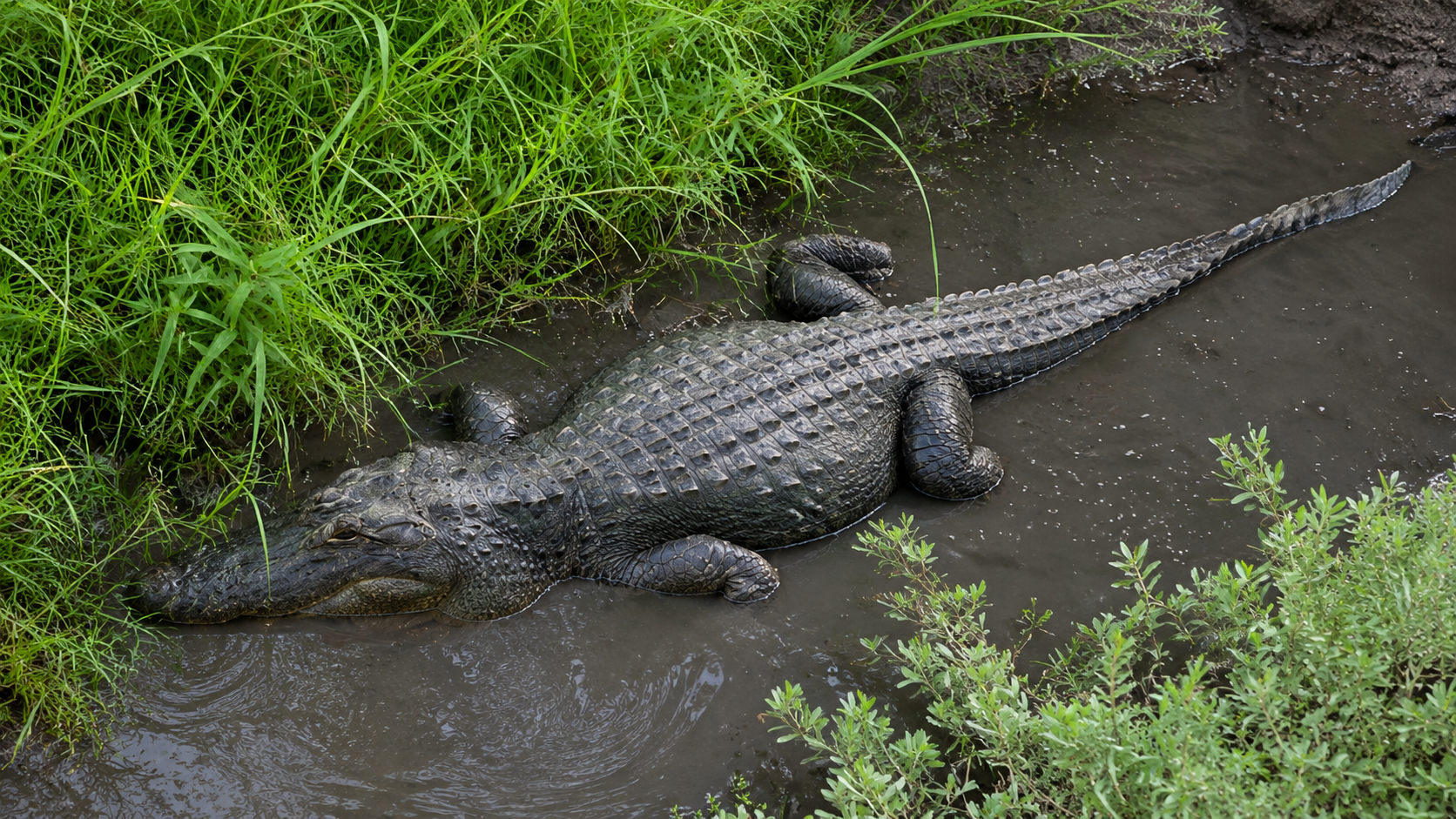
There is a ten-foot alligator that spends time near the St. Charles Bay boat ramp. I see it regularly. I have watched tourists walk their children along the shoreline directly past it.
I warn them. Most of them look at me with polite dismissal. Oh, really? An alligator? Out here?
Sometimes I can point directly at it on the bank. That changes things. I have watched parents scoop up their kids mid-stride and move to the other side of the ramp without another word.
That is the thing about alligators in Rockport. The moment you see one, you understand immediately. It just takes seeing one.
They are not in the brochure. They are not on the tourism signs. The Chamber of Commerce has other things to focus on.
But they are here. They were here before you arrived and they will be here after you leave.
When you are walking the shoreline and something feels slightly wrong — a log that is too still, a waterline that does not quite add up, a shape that your brain cannot categorize — trust that feeling.
You are probably right.
They are always there. You just cannot see them yet.
Rockport, Texas is one of the most extraordinary places on the Texas coast. Run the trails, paddle the bay, watch the whooping cranes come in at sunset. Just know what else is watching.