The Mountains Don't Forget
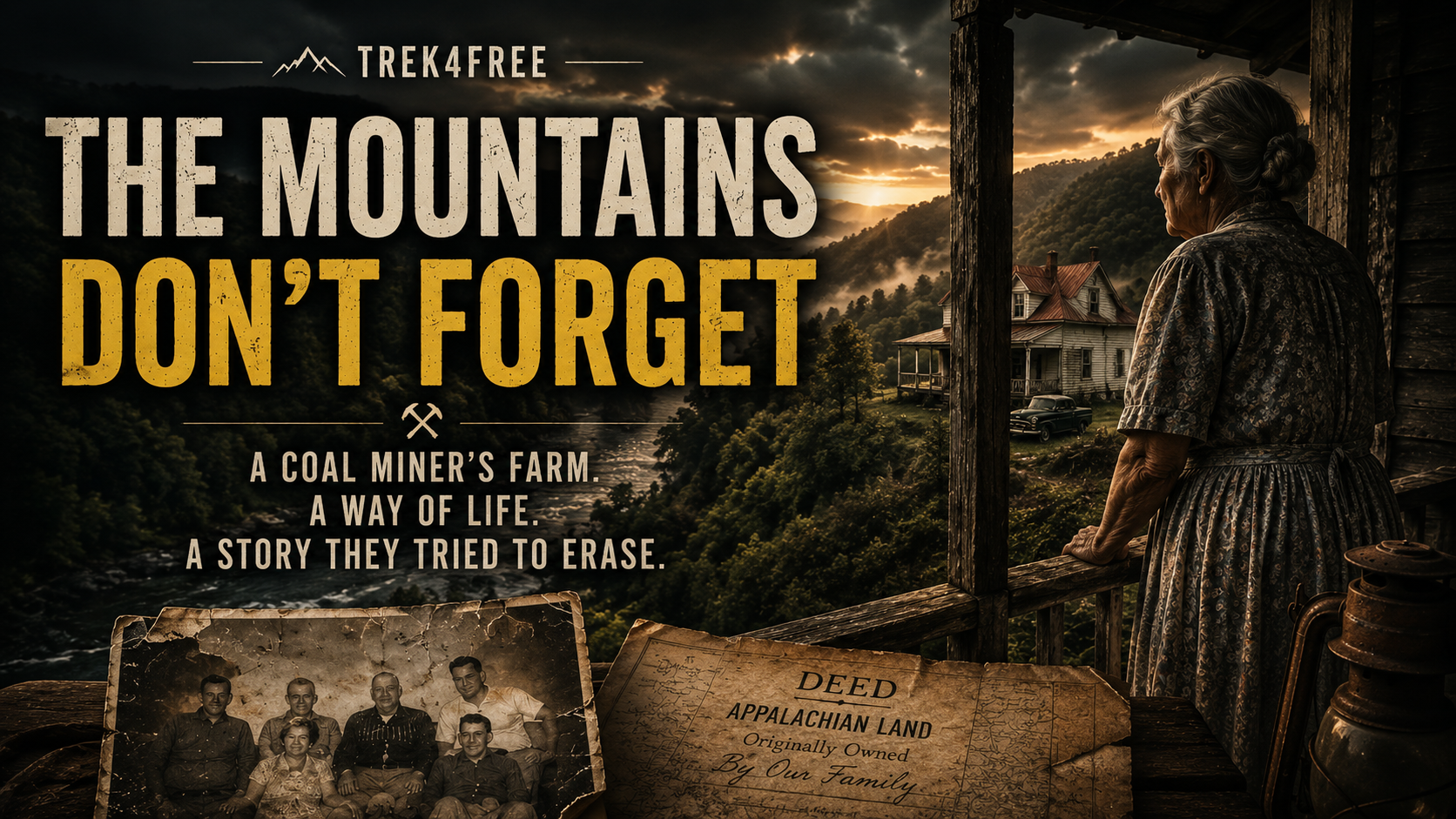
I saw her from the river.
- West Virginia. A whitewater trip through a gorge cut through mountains so old they’ve forgotten how to be sharp. And there she was — a woman in her 90s, in a cabin on the bank, watching us pass.
No electricity. No phone. No store within reach.
The government had told her she could not pass her land to her children. She could live there until she died — that was the arrangement. When she was gone, the land would become public land.
We floated past in our rubber boats and helmets, twenty-first century people moving fast through her world, and she watched us from her porch the way you watch traffic on a road that used to be a field.
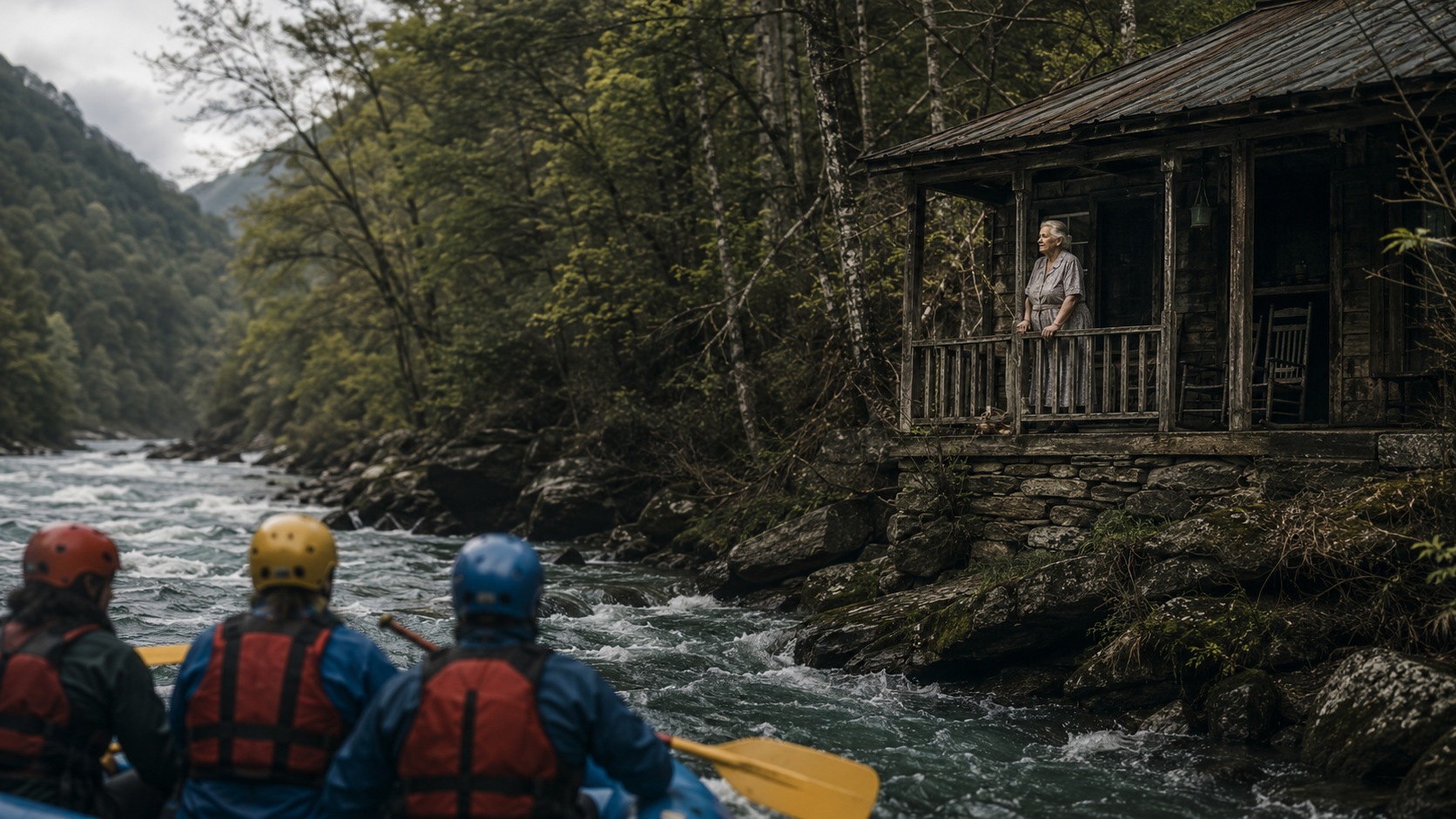
I have thought about her many times since.
I love hiking these mountains. Camping in national forests. Running trails that belong to everyone.
But somewhere along the way I started asking a question I couldn’t stop asking.
Where did this land come from?
Not the geological answer. The human one. Who was here before the trail? Whose fence post is that? Whose basement is underneath the foundation I passed three miles back?
It makes me mad when I think about it too long. Not mad at the trail. Not mad at the forest. Mad at the story nobody tells — the one about how public land actually became public.
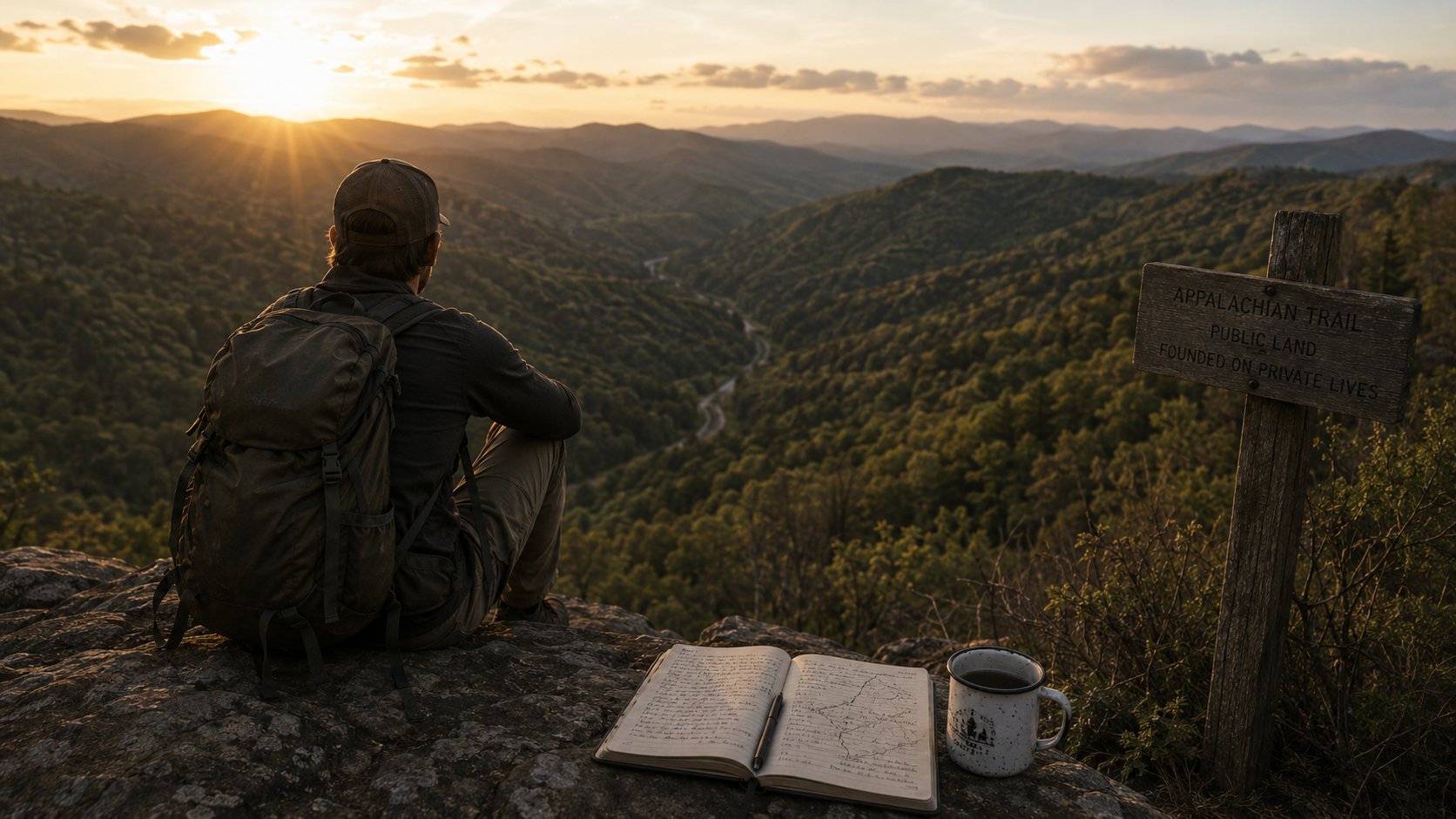
My Polly’s family came from these mountains. Her great-grandparents farmed Virginia hills that look exactly like the ones I run through on weekends. They didn’t visit these mountains. They were these mountains.
This is the story of that world. And what happened to it.
These mountains are older than the country that claimed them.
The Cherokee had been here for thousands of years before any European set foot on these ridges. They had names for every gap, every creek, every high point. They had paths through the Blue Ridge that became the roads that became the interstates. They knew where the sang grew, where the silver was, and how to winter in these hollows without losing anyone.
Then the surveyors came.
- George Washington was sixteen years old, working for Lord Fairfax, mapping the Virginia frontier. He walked ridges that are now hiking trails. He slept in hollows that are now campgrounds. And at Natural Bridge — a 215-foot limestone arch in the Virginia hills — he did what sixteen-year-old boys have done since the beginning of time.
He carved his initials.
Twenty-three feet up the wall.
Nobody knows exactly how he got there. The future first president, a teenager with a surveyor’s compass and nothing to prove yet, found a way to get twenty-three feet up a limestone cliff and scratch his name into it.
Thomas Jefferson bought Natural Bridge from the British Crown in 1774. Twenty shillings. He called it “the most sublime of nature’s works.” He built a log cabin there for guests. He wrote about it in Notes on the State of Virginia. The man who wrote that all men are created equal owned a piece of these mountains.
Daniel Boone punched the Wilderness Road through the Cumberland Gap in 1775 — the same year the Revolution started. The same mountains, the same hollows, already full of families who had been there for generations, who would be there for generations more, long after the famous men moved on.
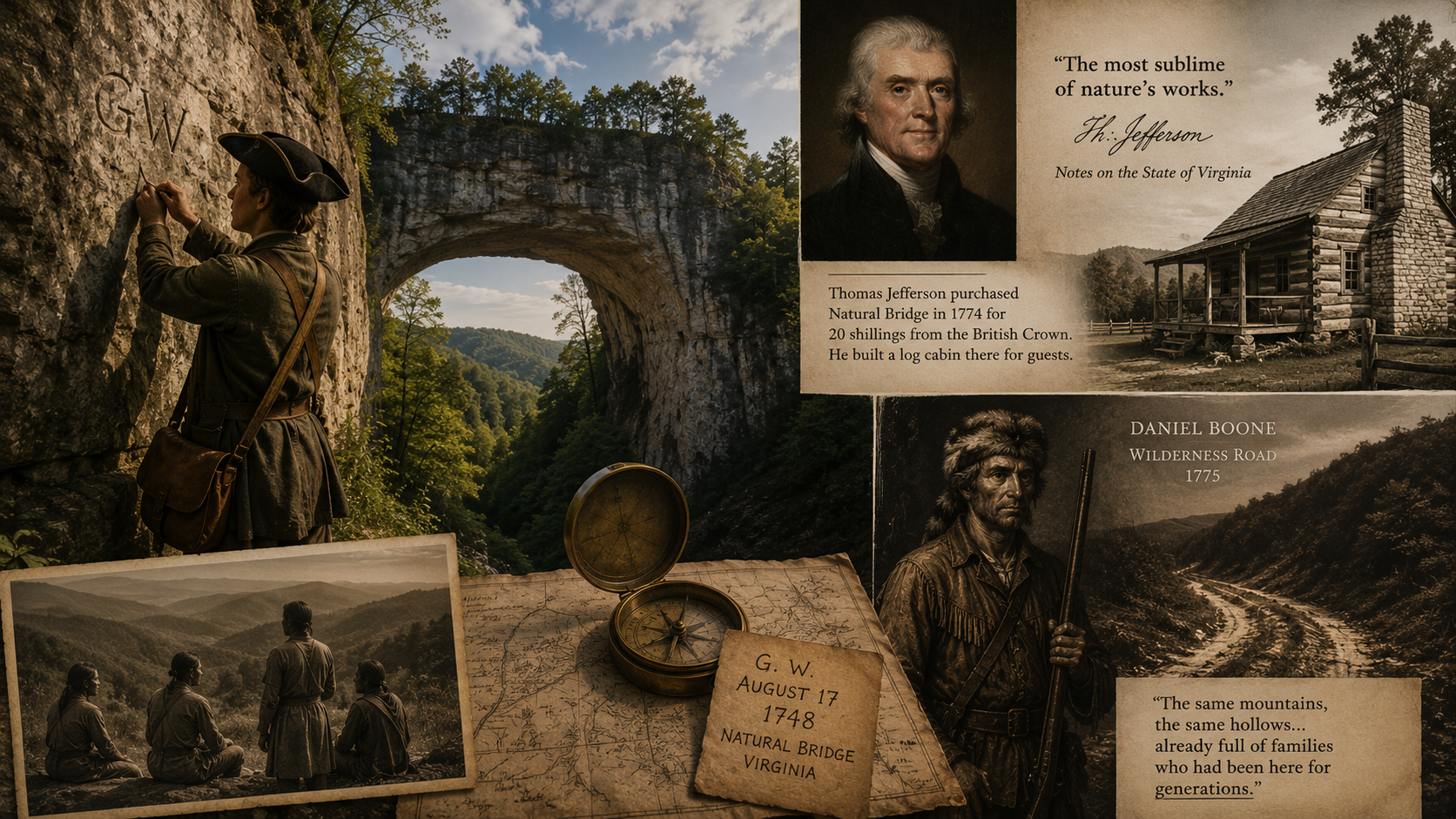
These same mountains. These exact ridges.
Everyone knows about the moonshine.
That’s the one thing outsiders remember. But the Appalachian mountains ran on something deeper and older — a whole economy that left almost no paper trail, because paper wasn’t the point.
Sang. That’s what they called ginseng. The slow-growing root that sells for hundreds of dollars a pound. Mountain people knew exactly where the wild patches grew — the north-facing hollows, the old-growth shade. They didn’t tell their neighbors. They didn’t tell their children until they were old enough to keep a secret. Locations passed down the way you’d pass down a name.
Bee trees. A hollow tree with a wild colony inside — you’d mark it with a cut only your family knew. Come back in fall. Take the honey. Leave enough for the bees to winter. That tree would be there next year, and the year after, and you never needed a grocery store.
And underneath all of it — barter. A man who could cure a ham, shoe a horse, or doctor a sick cow didn’t need cash. He had what the neighbors needed. Trade ran through those communities like a river, invisible to the tax man, invisible to the company store.
My friends Joe and Pat grew up knowing this world. Joe’s the kind of man these mountains made — quiet and straight, the kind you want next to you when things get hard. Pat’s an engineer now, but his people came from the hollows. They still know things about this land that don’t get written down.
And then there are the secrets nobody talks about at all.
These mountains are riddled with caves. Some hold old stills. Some hold canned goods buried deep where the temperature never changes. And some — the old-timers will tell you if they trust you — hold something else. Maps scratched on bark. Locations that only two people knew, and one of them is gone.
Swift’s silver mine. Somewhere in the Kentucky and Virginia hills, a man named Swift found silver in the 1760s — before Daniel Boone, before the Revolution, before any of it. He drew a map. He buried the evidence. He came back years later and couldn’t find it. Or said he couldn’t. The mine has never been found. People are still looking.
That’s the Appalachian mountains. The trails and overlooks are one layer. Underneath are the people who knew where the sang grew and kept it to themselves. Family caves with secrets nobody wrote down. Silver that may or may not still be there.
And underneath that — the people who got pushed off so we could have the trails.
Polly’s great-grandparents were those people.
A two-story farmhouse in the Virginia hills. A full basement of canned goods. A big garden, chickens, cows, pigs — everything they needed, built by people who intended to stay.
He went into the coal mine. She ran the farm.
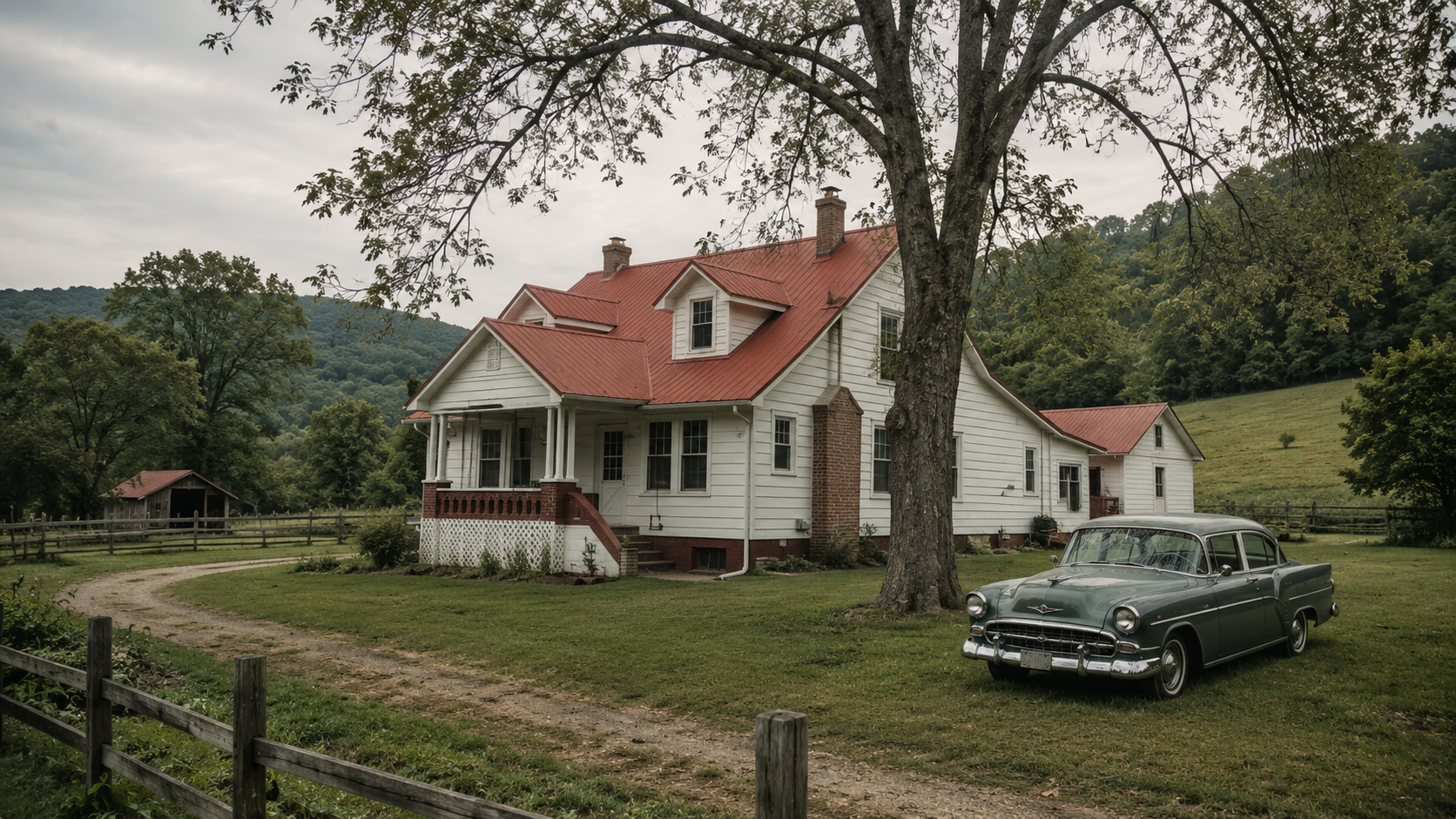
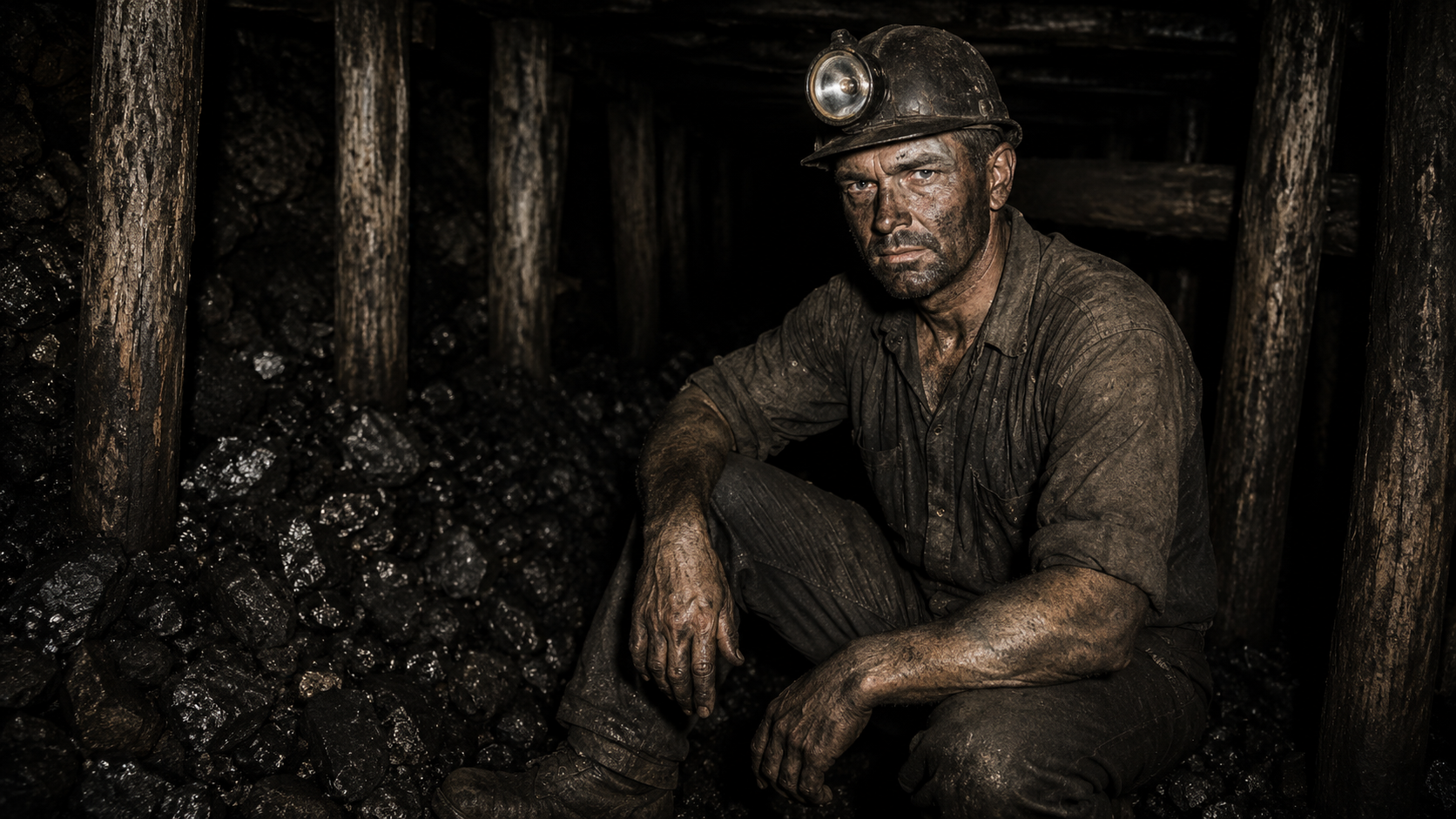
Every morning before dawn — biscuits, butter churned by hand, three meals a day, a party line telephone their great-granddaughter Polly got in trouble for listening in on. He brought home coal wages, sometimes in scrip — company money that went back before it could become anything. The farm was his protection. A man with a farm has options a man without one doesn’t.
They were not rich. They were something better. They were independent.
In the back of the property, there was a tunnel.
Polly’s mother remembers it. Her brother wouldn’t go near the entrance. Polly’s father went partway in and backed out, scared.
Grandpa was not worried about the tunnel.
A man who went underground every working day of his life knew the difference between a hole that would hold and one that wouldn’t. Whatever was in that tunnel, he had made his peace with it long before his grandchildren came to visit.
Nobody knows what was in it. Nobody knows where the land is now. The family moved to the city — gradually, the way these things happen — and the farm stayed behind. Nobody knows where the tunnel went.
Here is the question that took me years to think through clearly.
If this family was self-sufficient — if they grew their own food, raised their own animals, preserved their own harvest — how did the government extract anything from them?
You cannot pay property taxes in eggs and butter.
That is how it was done.
The moment you require cash payment for the right to stay on your own land, you have created a dependency that didn’t exist before. Not a cruel law. Not a gun at the door. Just a tax bill that has to be paid in a currency the farm doesn’t produce.
The coal companies understood this perfectly. They paid in scrip — money that couldn’t leave the company ecosystem. Workers couldn’t accumulate real dollars. Couldn’t build independence. The farm was the only escape hatch, and the farm only worked if you could hold the land.
We hear about what the government did to Native Americans. The coal miners don’t get the same chapter. But the mechanism was identical — unlimited resources and lawyers against families without phones, sometimes without the ability to read the documents they were signing.
The barter economy didn’t collapse on its own. It was taxed into extinction. Slowly. Quietly. On purpose.
Polly was three or four years old the last time she visited the farm with a pacifier.
The family wanted her to give it up. She wouldn’t. Finally they talked her into throwing it to the pigs.
She did.
She immediately regretted it and cried and cried and cried.
Her great-grandfather slaughtered the pig and retrieved the pacifier.
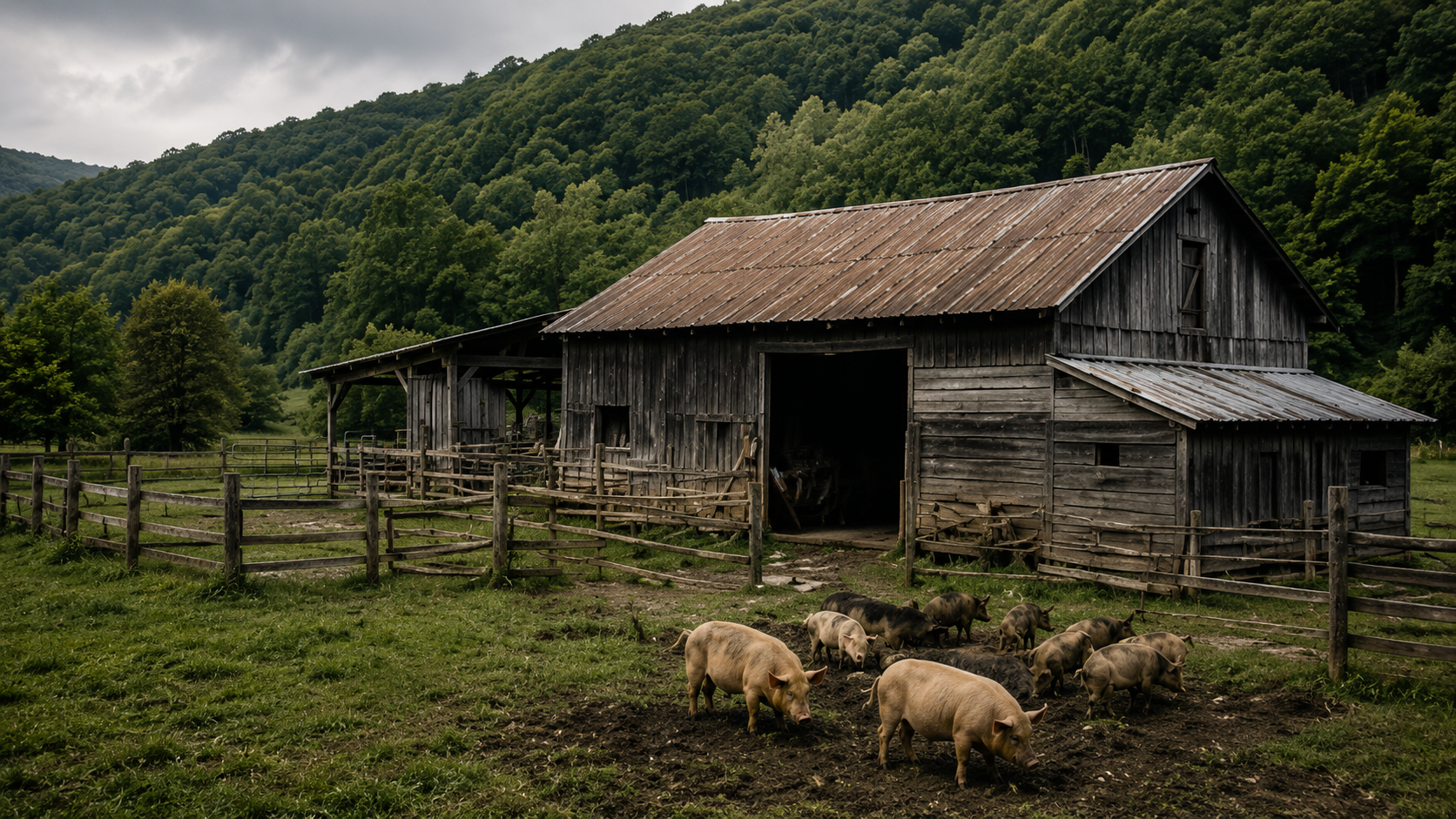
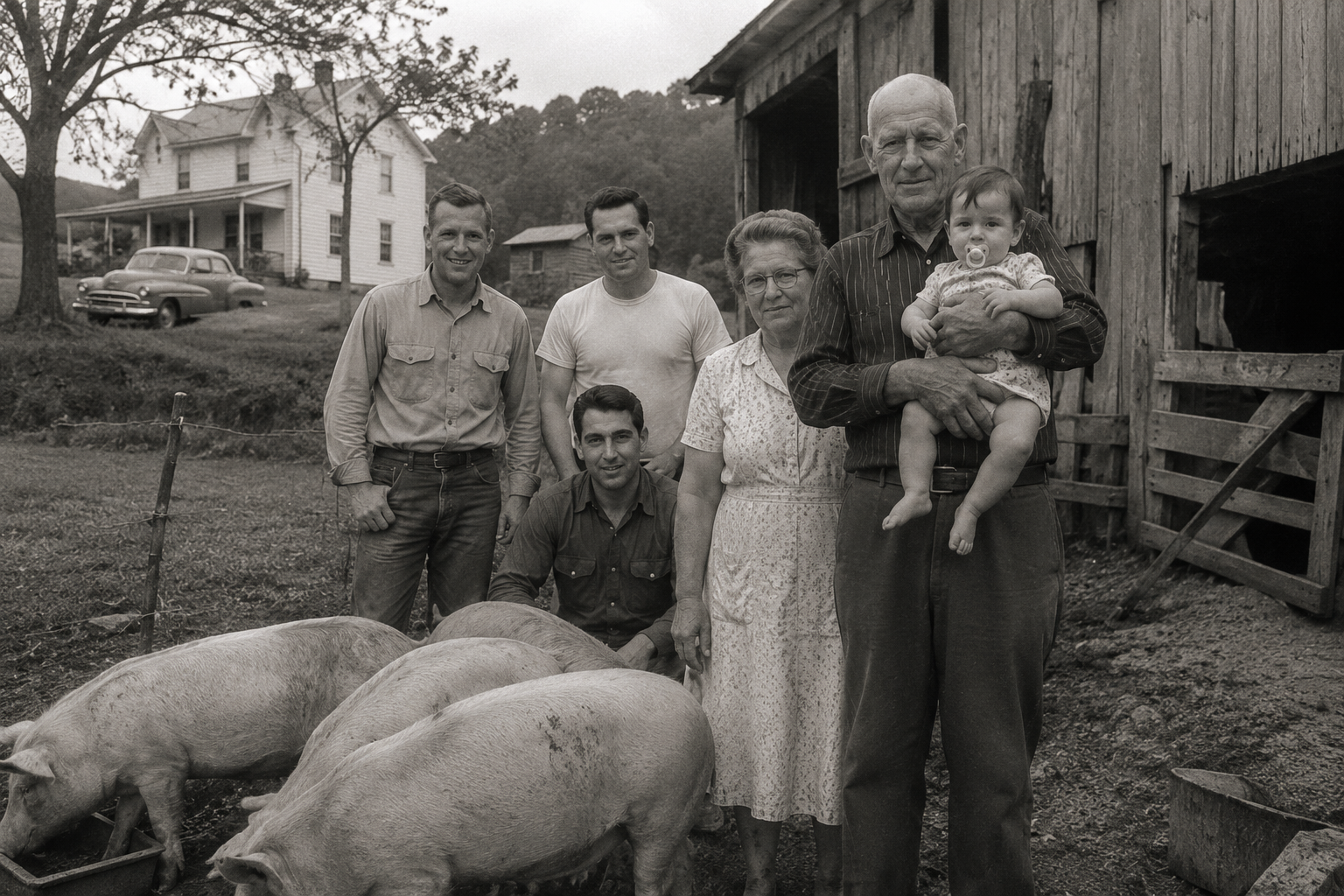
That man loved that little girl with everything he had. That is the whole story of these people in one moment — the lengths a man will go to for the child in front of him, on land his family built with nothing but time and work and the knowledge of how to stay alive in the mountains.
In 1966, an English teacher named Elliot Wigginton at a school in the North Georgia mountains had a problem. His students were mountain kids who couldn’t connect to standard curriculum. He handed them tape recorders and sent them to talk to their grandparents.
They published a magazine. It became twelve volumes of books — hog slaughtering, moonshining, faith healing, snake lore, log cabin building, planting by signs, butter churning, and a hundred other things that were disappearing without anyone writing them down.
They called it Foxfire. Named for the bioluminescent fungus that glows on rotting wood in Appalachian forest darkness — light that’s there if you know to look for it, invisible in daylight, gone if you wait too long.
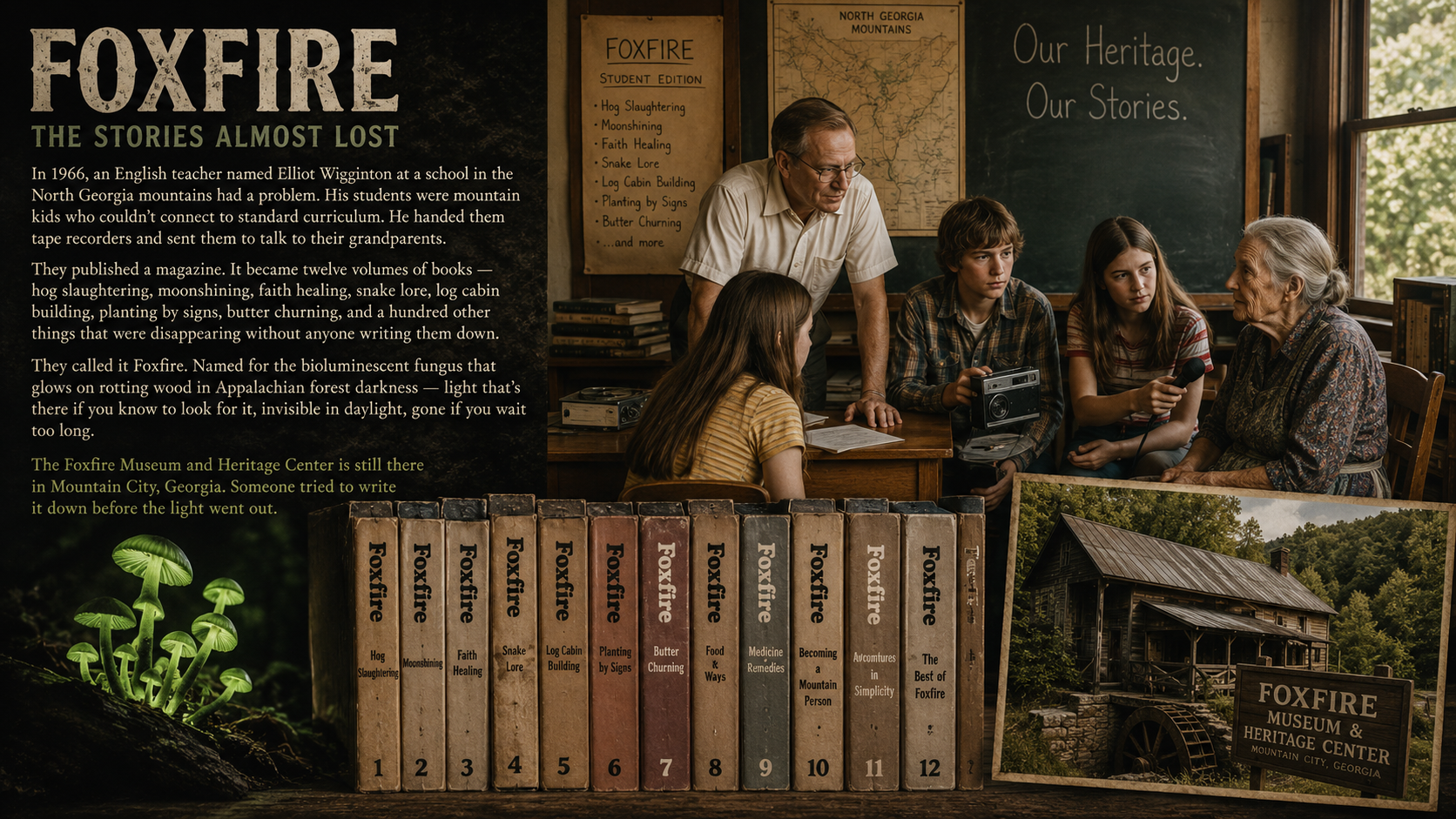
The Foxfire Museum and Heritage Center is still there in Mountain City, Georgia. Someone tried to write it down before the light went out.
Not all of it. Most went with the people who lived it. But Foxfire got enough — the hog slaughtering, the sang hunting, the moonshine caves, the faith healing — to prove that what outsiders called poverty was something else entirely. It was a complete way of knowing how to be alive in a place most people couldn’t survive a week in.
That woman I saw from the river was probably still living some version of it. Boiling a pig’s head to clean every bit of meat off the bone. Putting up jars before the first freeze. Keeping warm the way she always had. Life in those mountains was never easy. It was never meant to be easy. But it was the only life she had ever known, and she knew it completely.
In 2015, on a river in West Virginia, the light was still on in one cabin on the bank.
She watched us float past. I don’t remember if she waved. I remember her cabin, the way it sat on the land like it had grown there, and I remember thinking that whatever she knew about surviving alone in those mountains was going to die with her on that porch.
The government had already made sure it couldn’t be passed on.
Her land is a hiking trail now. You walked on it this weekend, or you will. It is public land. It belongs to everyone.
Which is another way of saying it belongs to no one who ever called it home.
The Mountains Don’t Forget is a Trek4Free series about the Appalachian mountains — the people, the history, and the land that is still there to walk, for free, right now.
Glade Creek Campground — New River Gorge National Park, WV. Free. First come, first served. ~14 primitive sites, vault toilets. Dogs allowed. (304) 465-0508.
Foxfire Museum and Heritage Center — Mountain City, Georgia. The living record of what these mountains knew.
Rapidan Camp (Camp Hoover) — Shenandoah National Park, VA. Free to visit, 4 miles round trip from Milam Gap trailhead on Skyline Drive. Built in 1929 on land taken from families like these.