We Came to Oregon Without a Plan — Then We Ran Our Way Across It
We Came to Oregon Without a Plan — Then We Ran Our Way Across It
We flew to Oregon without much of a plan.
That’s probably not how you’re supposed to start a travel article, but it’s the truth.
We knew we wanted to see Oregon. We knew we wanted mountains. We wanted to hike and trail run. We wanted to see the Pacific, some wildlife and waterfalls. We wanted to poke around a few towns and get a feel for the place.
Beyond that?
We really didn’t know what we wanted to see because we’d never been there.
Turns out, that may have been the best possible way for us to experience Oregon.
We rented an Airbnb in Eugene for the week, rented a minivan and basically gave ourselves permission to figure it out as we went.
By the end of the trip we’d run beside rivers, across deserted beaches, through forests, over basalt and through volcanic landscapes. We’d soaked in a clothing-optional hot spring, stood beside massive waterfalls, watched sea lions, crossed lava fields, fallen completely in love with a town we’d barely planned to visit and stood underneath a snow-covered volcano.
Oregon just kept throwing something different at us.
And we kept running toward it.
Day One: Just Follow the River
Our first full day started with one basic idea:
Let’s head east.
From Eugene we started following the McKenzie River. While looking at the Trek4Free map, we noticed Terwilliger — better known as Cougar — Hot Springs near Cougar Reservoir.
Well, that sounded interesting.
The hot springs were $12 per person, clothing optional and limited to a two-hour visit.
But two hours sitting in hot water before running didn’t sound like a particularly good plan.
So we asked about nearby trails and went exploring.
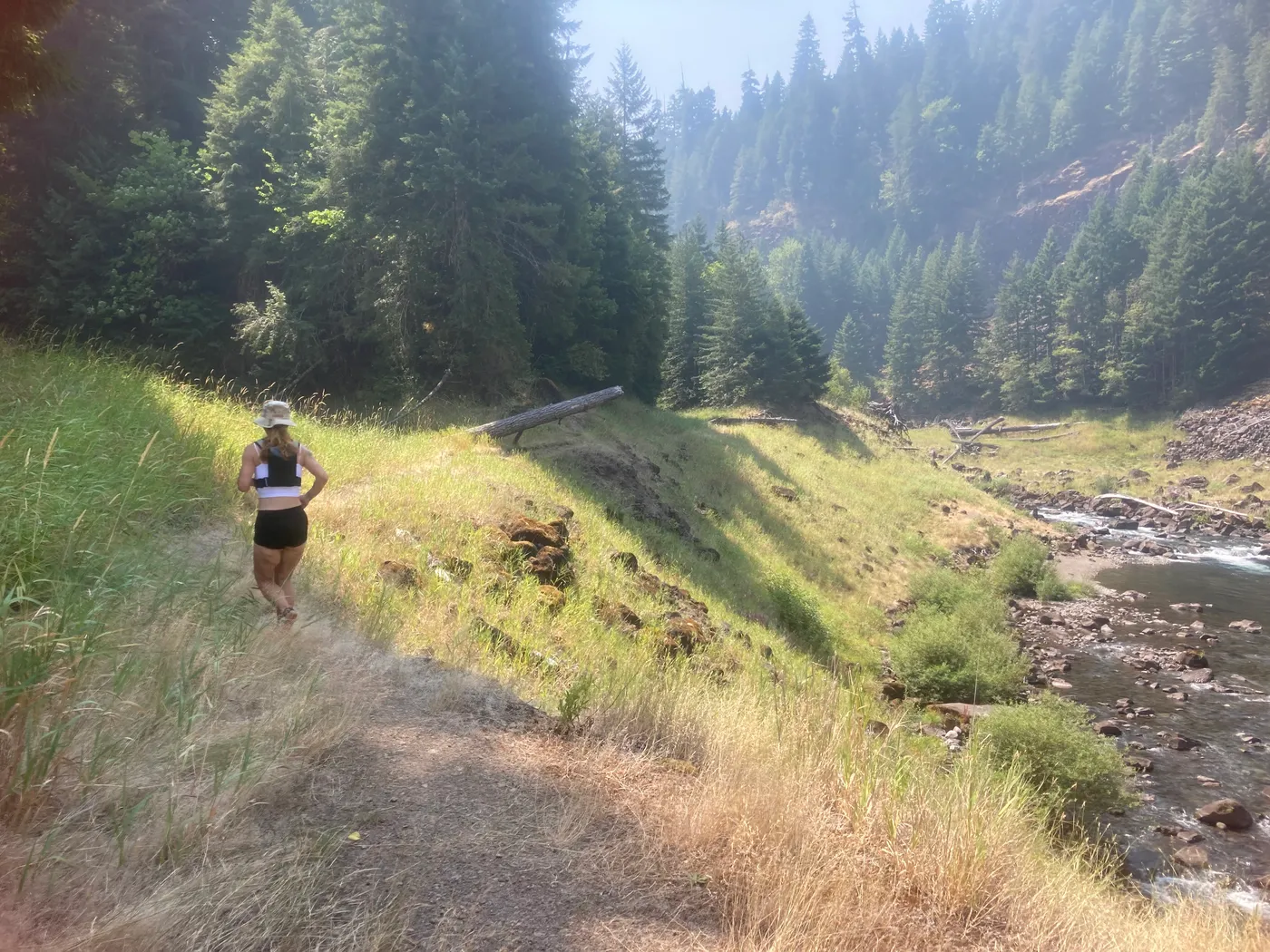
We ended up around Cougar Campground and spent somewhere between six and ten miles running back and forth along the river system.
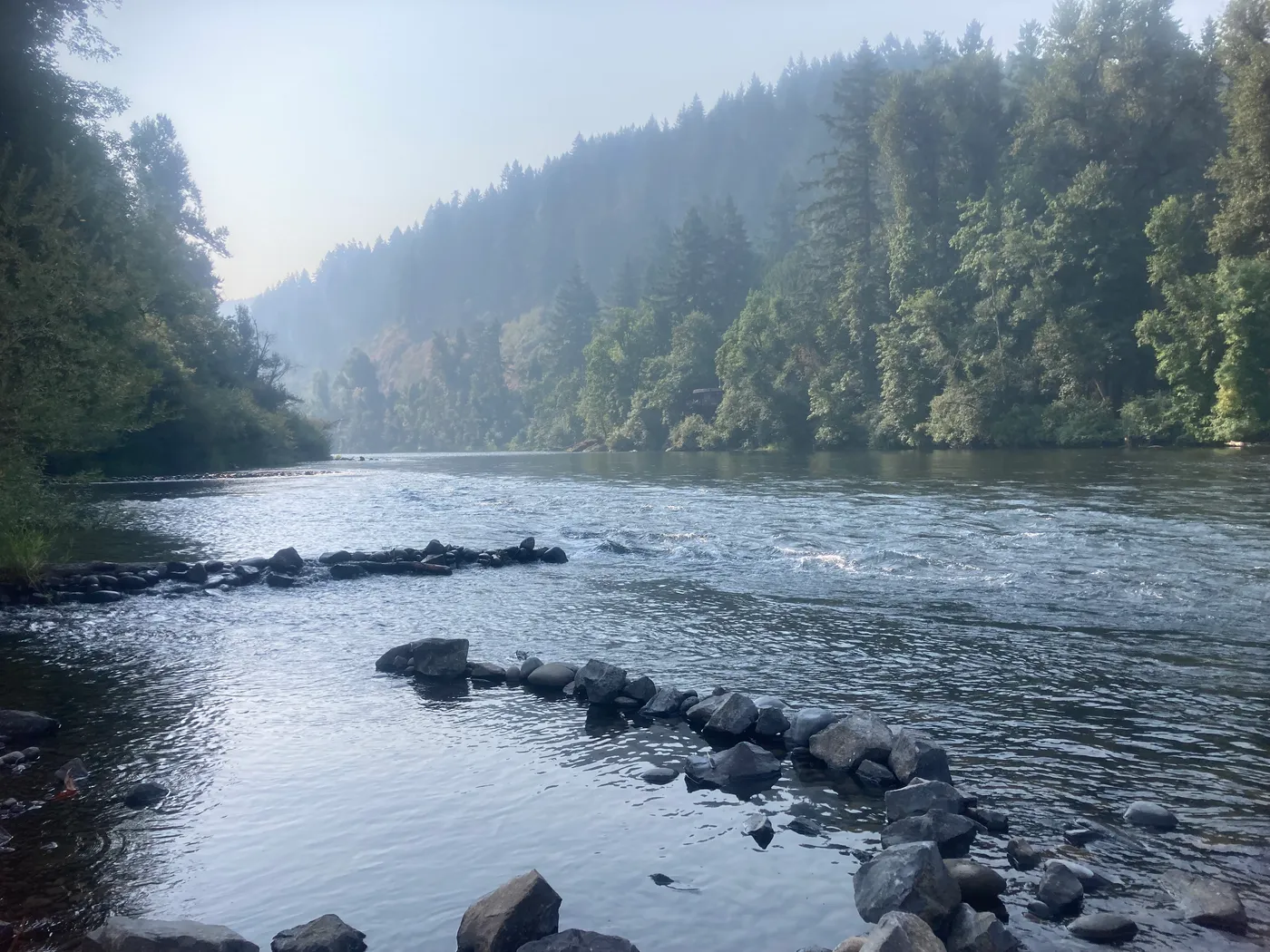
Afterward, we found a little swimming hole below the trail.
Now this looked perfect.
We climbed down, stretched out on the little beach, pulled out our picnic and soaked up the afternoon sun.
Then I tried getting in the river.
NOPE.
Absolutely freezing.
My legs basically turned to ice.
Welcome to Oregon.
That freezing water did, however, make the next stop feel fantastic.
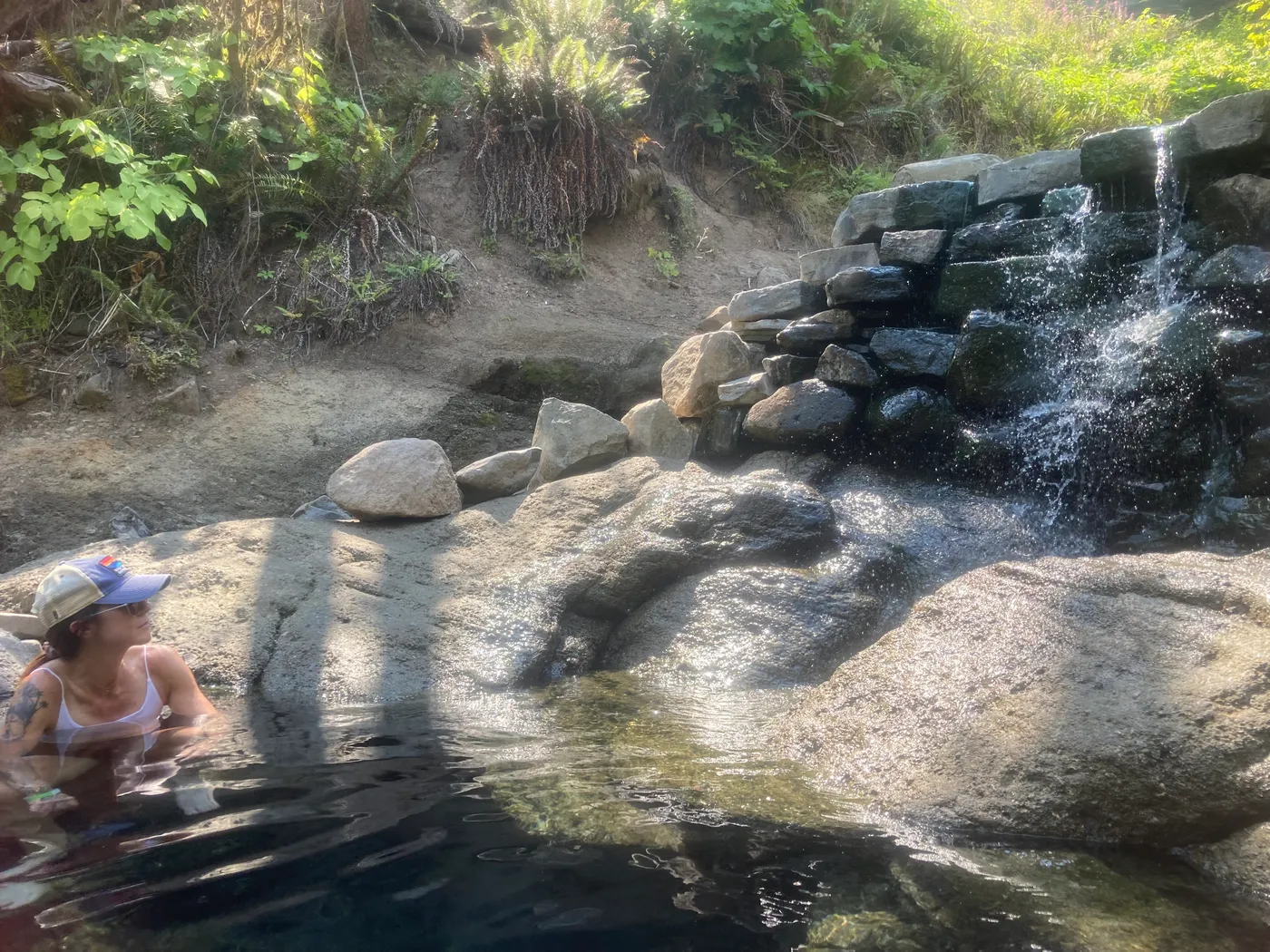
Terwilliger Hot Springs consists of a series of pools cascading down the hillside. The upper pool was around 113 degrees when we visited, with each pool becoming progressively cooler.
We decided pool number three was just right.
Initially, we had the place completely to ourselves. Eventually two other couples joined us, apparently visiting from outside the United States, and everyone was incredibly friendly.
After running several miles, unsuccessfully attempting to freeze ourselves in a river and then sitting in hot water on a warm afternoon, we also discovered something else:
Two hours is plenty of time in a hot spring.
Oregon Has a Refrigerator Setting
The next morning we went the opposite direction.
West.
We headed toward Florence, the Oregon Dunes and the Pacific.
And somewhere between Eugene and the ocean, somebody apparently turned off summer.
The temperature difference was astonishing.
We’d left warm inland Oregon and arrived at a beach where we suddenly needed more clothes.
This was emphatically not bikini weather.
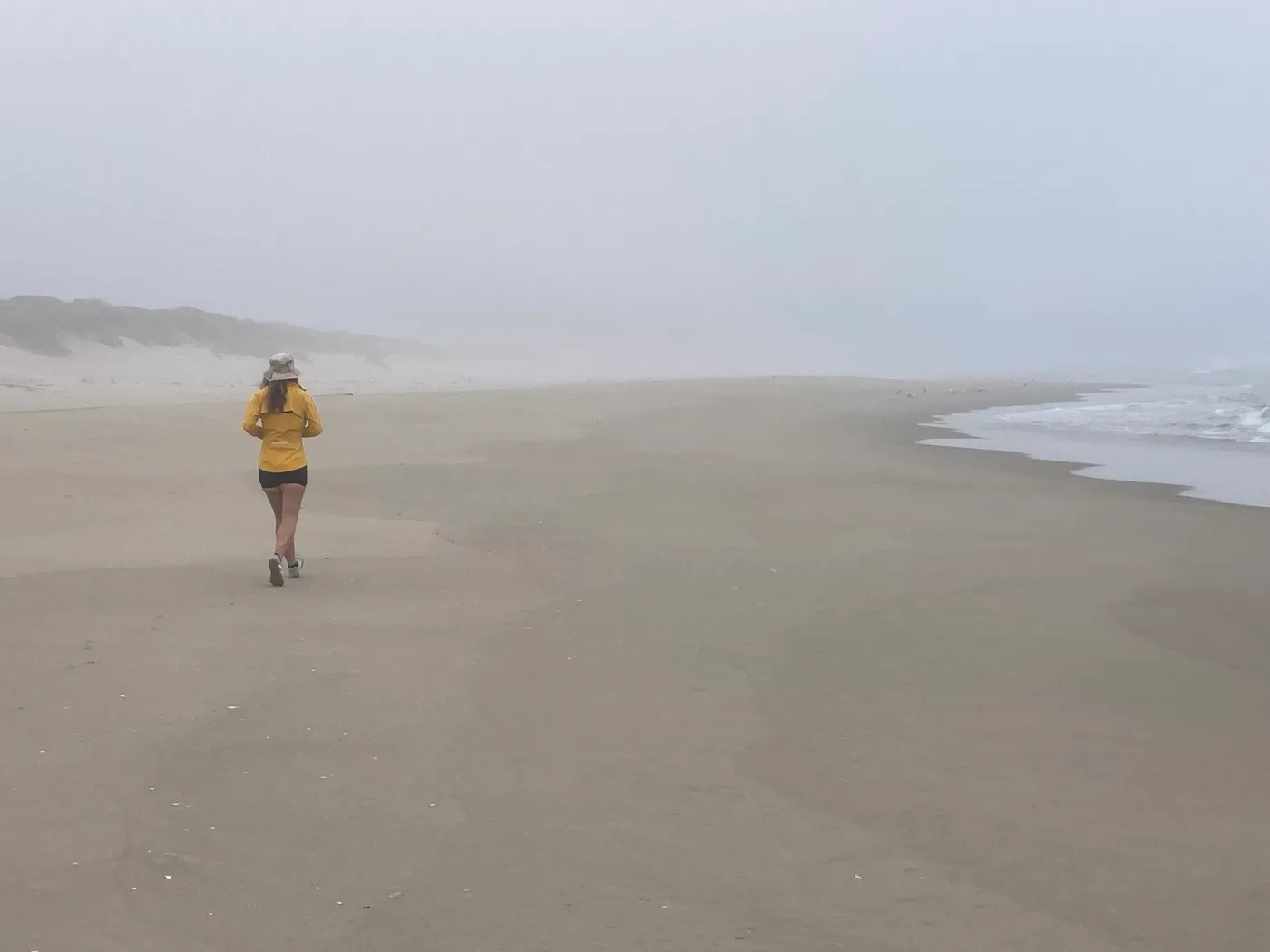
Polly pulled on her Little Donkey Andy running jacket — the hi-viz yellow one you can see her wearing on the beach below — and it stayed on for the rest of the afternoon. Oregon coast weather doesn’t negotiate.
But what really caught our attention was the landscape.
The forest seemed to run practically into the beach.
Coming from the Texas coast, that was fascinating.
We found a huge stretch of beach and dunes with virtually nobody around and went running.
No crowds.
No rows of beach houses.
No beach bars.
Just sand, ocean, dunes and forest.
It felt raw and remote.
We explored the jetty and watched surfers working the water beside the rocks. Naturalists stood with spotting scopes watching wildlife. We had the Nocs compact binoculars in the pack, which turned out to be useful approximately immediately. Fishermen and crabbers worked from the piers.
And the Pacific water was unbelievably clear.
Then there were the campers.
Much of the area was public land, and around the dunes near the jetty were signs very clearly announcing:
NO CAMPING.
And quite literally behind what seemed like every NO CAMPING sign was a camper van that looked as though it might have been there since the Carter administration.
We couldn’t stop laughing.
From there we headed up the coast to Sea Lion Caves and got our wildlife fix before eventually returning inland.
We had just learned our second major Oregon lesson:
You can apparently experience several seasons in a single afternoon.
Eugene Wasn’t What We Expected
We had pictured Eugene as something like Boone, North Carolina — a college town embedded in an outdoor playground.
That wasn’t really how we experienced it.
Eugene reminded us much more of Austin.
University town. Bike lanes. City streets. Parks and paved paths.
We found a park with several miles of paved trail and even stumbled into a charity 5K there, but we didn’t encounter the walk-out-the-door mountain trail culture we’d imagined.
There were also things about Eugene that made us uncomfortable.
In some of the areas we explored, visible homelessness and severe drug use were hard to ignore. We also noticed fewer of the casual greetings and eye contact we’re accustomed to in smaller Texas communities.
None of that means Eugene is a bad place.
It simply wasn’t what we had imagined.
What Eugene was, however, was an excellent base camp.
Go west and we had the Pacific.
Go east and we had the Cascades.
And about 15 minutes outside Eugene proper, we found exactly the running we’d been looking for.
Ten Miles Up Thurston Hills
We headed east to Thurston Hills Natural Area and immediately knew we’d found our playground.
Real dirt trails.
Forest.
Climbing.
Mountain-bike trails.
Basalt.
Views.
We ended up running about ten hard, hilly miles, eventually climbing into the Basalt Rim area with overlooks that made every bit of climbing worthwhile.
This was the Oregon running experience we’d imagined.
And our legs knew it.
Laundry Day in TrackTown USA
The following day became a much-needed recovery day.
Laundry.
Walking.
Exploring Eugene a little more.
We found the 5th Street area, which felt completely different from some of the places we’d explored earlier — more polished, walkable and inviting.
And then Eugene finally revealed another side of itself.
TrackTown USA.
There was an international under-20 track event happening while we were there, and we met a five-time world-record holder who had come for the event.
Suddenly Eugene’s running history started coming together.
This was the home of legendary University of Oregon running culture. The land of Bill Bowerman and Steve Prefontaine. A place intertwined with the history of American distance running and, eventually, Nike.
For two people spending their vacation running everywhere they could find dirt, that was pretty cool.
Fun fact: Eugene and the University of Oregon were also major filming locations for National Lampoon’s Animal House.
We weren’t expecting that either.
But by now we’d stopped expecting Oregon to behave predictably.
Then Oregon Showed Us the McKenzie
Sunday morning we packed an overnight bag.
We had already paid for our Eugene Airbnb for the entire week, but we’d realized something:
Trying to drive into the Cascades, explore waterfalls, cross McKenzie Pass, see Sisters and Bend and then race all the way back to Eugene in one day sounded miserable.
So we did something financially ridiculous but experientially brilliant.
We booked two nights in Sisters for another $284.
Best decision of the trip.
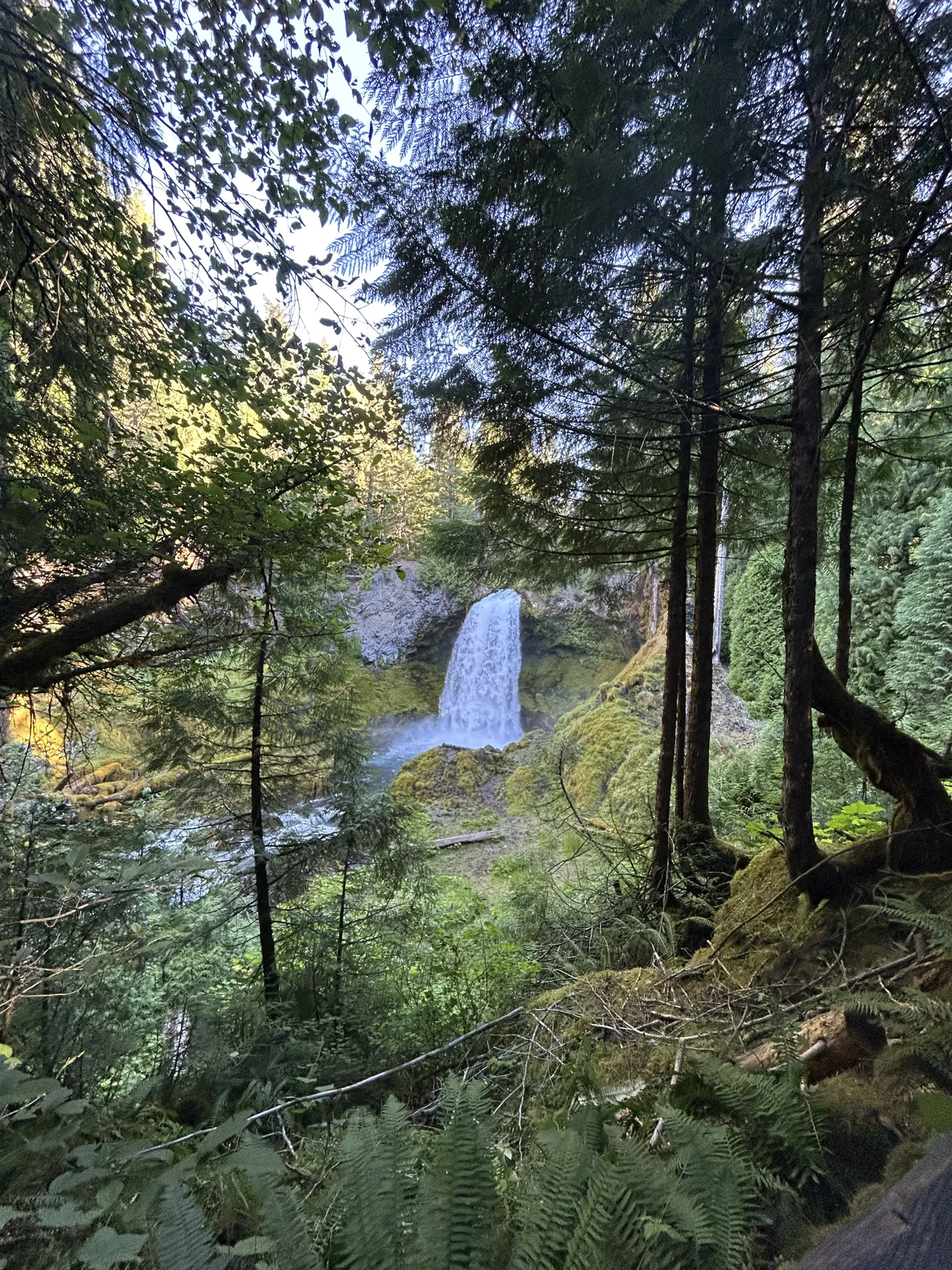
We headed east from Eugene along the McKenzie again, this time continuing toward Sahalie and Koosah Falls.
The river itself fascinated us.
The water.
The forest.
The fertility of everything surrounding it.
And then the waterfalls.
Oregon waterfalls don’t seem particularly interested in being subtle.
We explored both before backtracking toward McKenzie Pass.
And that’s when Oregon completely broke our brains.
Wait. Oregon Has Volcanoes?!
We knew there were mountains.
Of course we knew there were mountains.
Somehow neither of us had really processed the fact that we were driving straight into a landscape dominated by volcanoes.
One minute we’d been surrounded by incredibly lush forest and water.
Then…
LAVA.
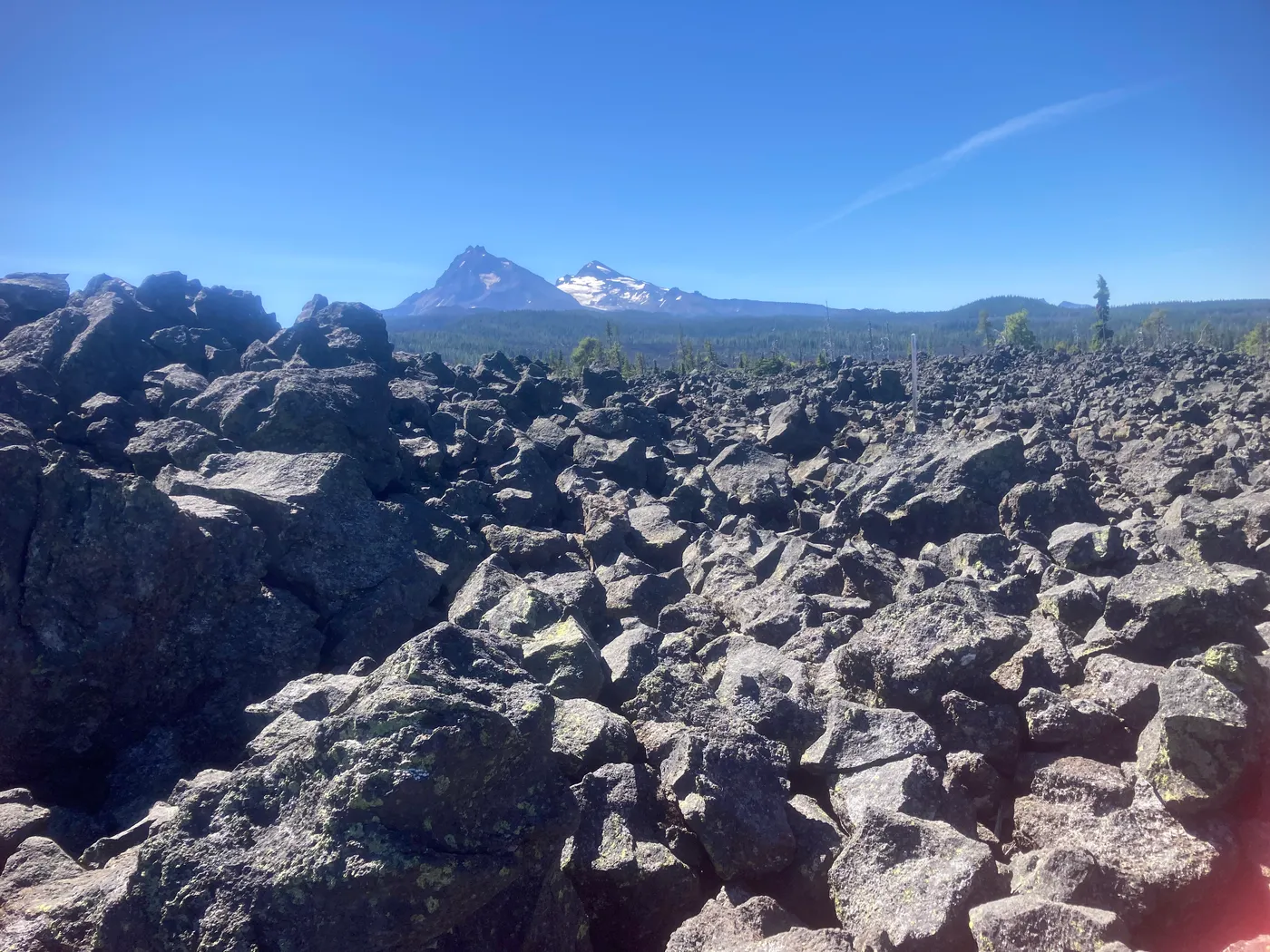
Huge expanses of black volcanic rock.
It looked like another planet.
We couldn’t comprehend the amount of lava surrounding us or how dramatically the landscape had changed in such a short distance.
At some point one of us finally said:
“Volcanoes? What does Oregon NOT have?”
And that became a running joke for the remainder of the trip.
Then we descended toward Sisters.
That’s where things got dangerous.
Because we fell in love.
Oh No. We Love Sisters.
Sisters wasn’t originally supposed to be a major part of this trip.
Within hours we wished we’d given it more time.
Main Street was packed when we arrived, but we quickly discovered that slipping onto the back streets made the congestion disappear.
Then we found the Peterson Ridge Trail system.
Naturally, we went running.
Just a few miles this time.
And it was fantastic.
We walked through town afterward, grabbed a small plate of nachos and found ourselves watching old-school footage about Yosemite climbing legends.
Mountains.
Trails.
Climbers.
Runners.
Tall trees.
Cool nights.
Dry air.
Huge western views.
A little downtown.
This felt like us.
Sisters immediately joined a very short list of mountain towns that have really clicked for us: Boone, North Carolina; Damascus, Virginia; Beckley, West Virginia; Cloudcroft, New Mexico.
And now Sisters, Oregon.
Then we looked at real estate.
Never mind.
Apparently everybody else figured this out before we did.
How About a Volkswagen Instead?
This is approximately where rational vacation conversation deteriorated.
If we couldn’t afford a house in Sisters, perhaps we could keep a vehicle in Oregon.
Maybe revive our old VW Vanagon.
Maybe store it near Redmond.
Maybe fly in.
Maybe camp.
Maybe turn the VW into a mobile trail-running base camp for us and the dogs.
Maybe put a diesel engine in it someday.
You know — perfectly normal vacation thoughts.
Eventually reality returned.
Getting ourselves and two dogs back and forth from Texas to Oregon regularly would be expensive and complicated. Aging parents make disappearing across the country for months more difficult. And driving thousands of miles repeatedly isn’t exactly free either.
Cloudcroft suddenly started looking pretty smart again: mountains, cooler summers, more affordable property and within one long day’s drive of home.
But we realized something else.
We don’t have to own Sisters to love Sisters.
We can come back.
In fact, we’ve already found an excuse.
Peterson Ridge Rumble.
April.
We’ll see you again, Sisters.
Apparently One Volcano Wasn’t Enough
For our second full day in Sisters, we debated hiking farther into the Three Sisters Wilderness.
Instead we decided to save that for another trip and headed toward Newberry National Volcanic Monument.
We’d hoped to explore Lava River Cave, but timed reservations were unavailable.
Fine.
Oregon had other ideas.
We found a river trail and ended up running roughly ten miles through volcanic country.
Again.
Views.
Lava.
Forest.
Water.
Terrain completely unlike what we run at home.
Afterward we found water and went swimming to clean ourselves off.
Run ten miles through volcanic Oregon.
Jump in the water.
LMNT.
Done.
We spent the remainder of the day wandering around Sisters and discovered one downside to charming little mountain towns:
Apparently everyone goes home at 5 PM.
Most of the shops were closed.
Fair enough.
We were tired anyway.
On Our Last Day, We Drove the Wrong Direction
Tuesday morning we needed to get to Portland.
So naturally we headed east.
We hadn’t seen Redmond or Prineville yet, and we were curious.
Immediately the landscape started changing again.
The public-land feeling we’d experienced around Sisters gave way to more private property and large ranches. Trees became thinner and shorter.
Then we reached Redmond.
And Redmond surprised us.
We liked it.
It was larger and more practical than Sisters but still seemed positioned beautifully between Sisters and Bend.
We noticed the airport and the firefighting aviation operations there, which were fascinating to see in a region where wildfire is part of life.
For the first time, Redmond made us think:
This could actually be a practical base.
We continued east to Prineville.
The smoke got worse.
Much worse.
Wildfire smoke had settled heavily into the valley, and between that and the additional distance from Sisters, we decided we’d learned what we wanted to know.
We turned around.
And Then Mount Hood Appeared
We returned toward Redmond and headed north.
The smoke gradually diminished.
We traveled through the Warm Springs reservation, passed the casino and followed beautiful river country.
Then the vegetation started changing.
Trees returned.
Then more trees.
Then dense forest.
And suddenly…
Mount Hood.
There are mountains that look beautiful from a distance.
Mount Hood became something else as we approached it.
Intimidating.
The closer we got, the larger it became.
Snow-covered upper slopes.
A jagged volcanic summit.
A visible treeline.
This enormous mountain simply dominating everything around it.
A wildfire had closed OR-35, but fortunately the smoke was blowing away from our approach, and our view of Hood remained remarkably clear.
Along US-26 near Government Camp, we stopped at a ski area.
We couldn’t resist.
We started walking uphill along one of the ski paths until we found ourselves standing above a field of wildflowers looking directly at snow-covered Mount Hood.
That was our final Oregon hike.
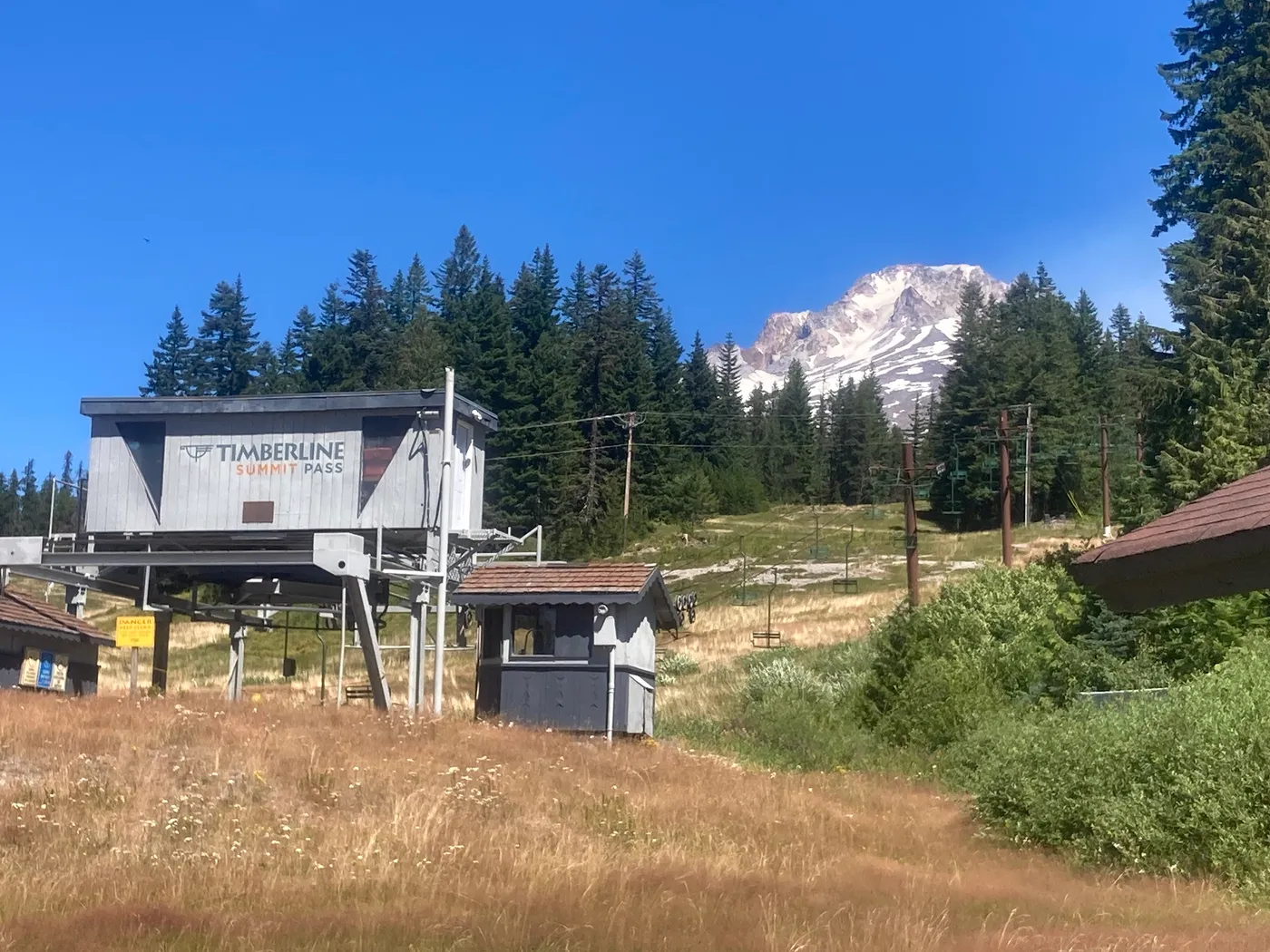
And what an ending.
Then We Went Home
Eventually Portland won.
We continued west through dense forests and little river communities toward the city.
We didn’t explore downtown Portland, so we can’t tell you what downtown Portland is like.
But the suburban areas we drove through surprised us.
They were tidy, comfortable and felt perfectly safe. We had none of the issues we’d encountered in parts of Eugene.
We found gas.
Reached our airport hotel.
Slept.
And early Wednesday morning we boarded a plane back to Texas.
We Never Really Did Make a Plan
Looking back, that’s probably my favorite part.
We didn’t arrive with reservations for every attraction.
We didn’t have a laminated itinerary.
Half the time we weren’t entirely sure what we’d do the following morning.
We had a place to sleep.
A minivan.
Running shoes.
And curiosity.
We followed rivers.
We followed trails.
We followed roads simply because we wondered where they went.
We changed plans when something looked interesting.
We stayed two nights in a town that wasn’t originally supposed to be a major destination.
We skipped things everyone says you’re supposed to see and discovered places we didn’t even know existed.
And we ran.
Along the McKenzie.
Across an empty Pacific beach.
Up Thurston Hills.
Around Peterson Ridge.
Through Newberry’s volcanic landscape.
The surface underneath our running shoes kept changing, and so did Oregon.
Forest.
River.
Sand.
Basalt.
Lava.
Mountain.
High desert.
Then forest again.
Maybe that’s what we’ll remember most.
We went to Oregon because we wanted an adventure.
We came home realizing that sometimes not knowing exactly where you’re going is part of the adventure.
There are trails we didn’t run.
Volcanoes we didn’t climb.
Places we didn’t see.
And somewhere in Sisters, Oregon, there’s a starting line for a race called the Peterson Ridge Rumble.
Sounds like a pretty good reason to go back.
Before You Go
These are affiliate links — we earn a small commission at no cost to you. Thank you for supporting Trek4Free.