Car Camping East vs West: Two Coasts, Two Completely Different Realities
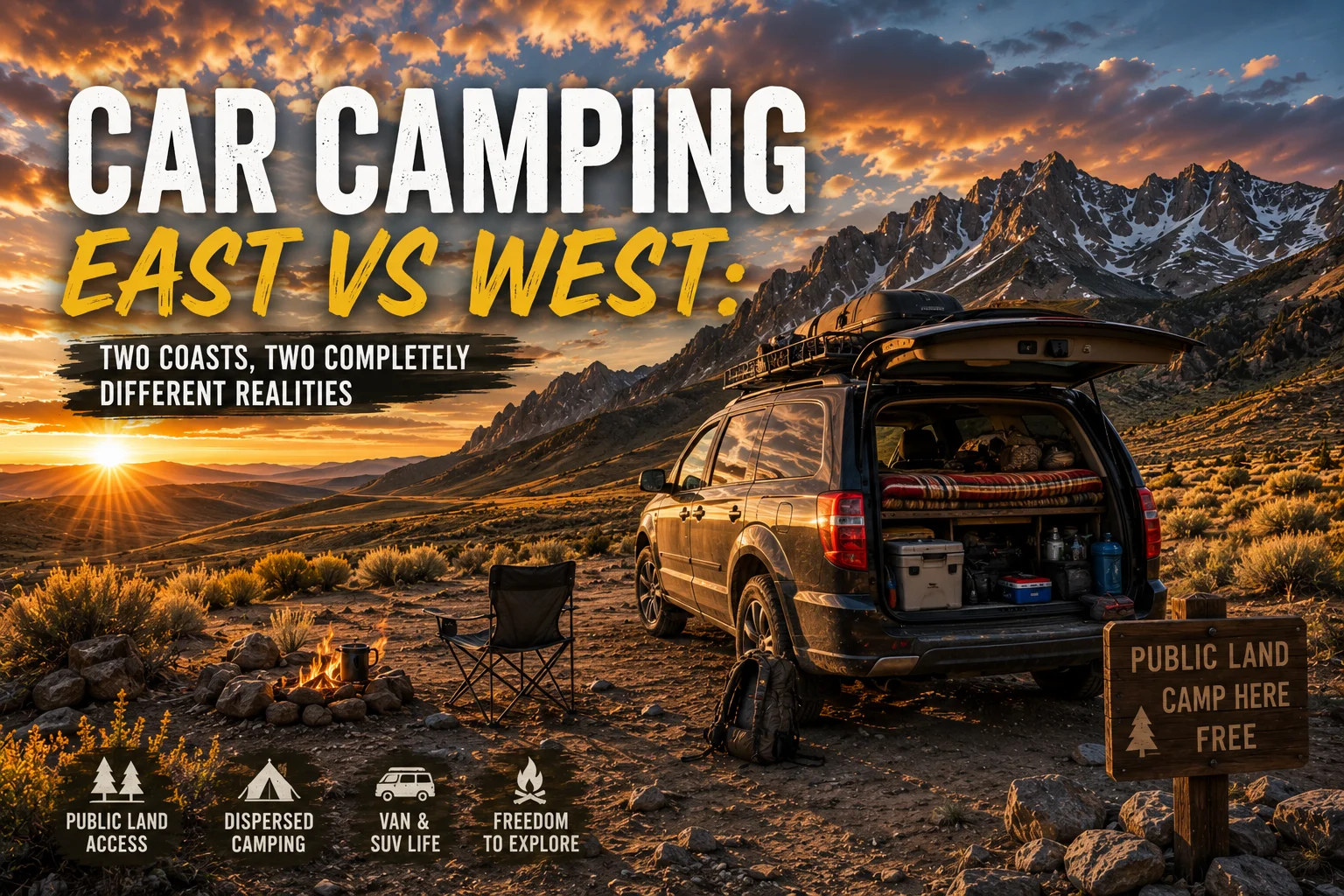
Car Camping East vs West: Two Coasts, Two Completely Different Realities
There’s a conversation that happens in every car camping group, forum, and Facebook community eventually.
Someone from the East Coast posts that they’re struggling to find places to stop. They’re getting turned away from Walmart. Love’s wants their parking spots for trucks. The state park campsite they found costs $40 and needs a reservation three weeks out. They feel like they’re doing something wrong, like everyone else has figured out a system they haven’t.
And then someone from the West replies: just pull off on a forest road.
Those two people are not having the same experience. And it’s not because one of them is more resourceful or better prepared. It’s because they’re operating in fundamentally different landscapes — not just geographically, but legally and logistically.
We’ve driven both. And the difference is more dramatic than we expected.
The Appalachians: Fall 2025
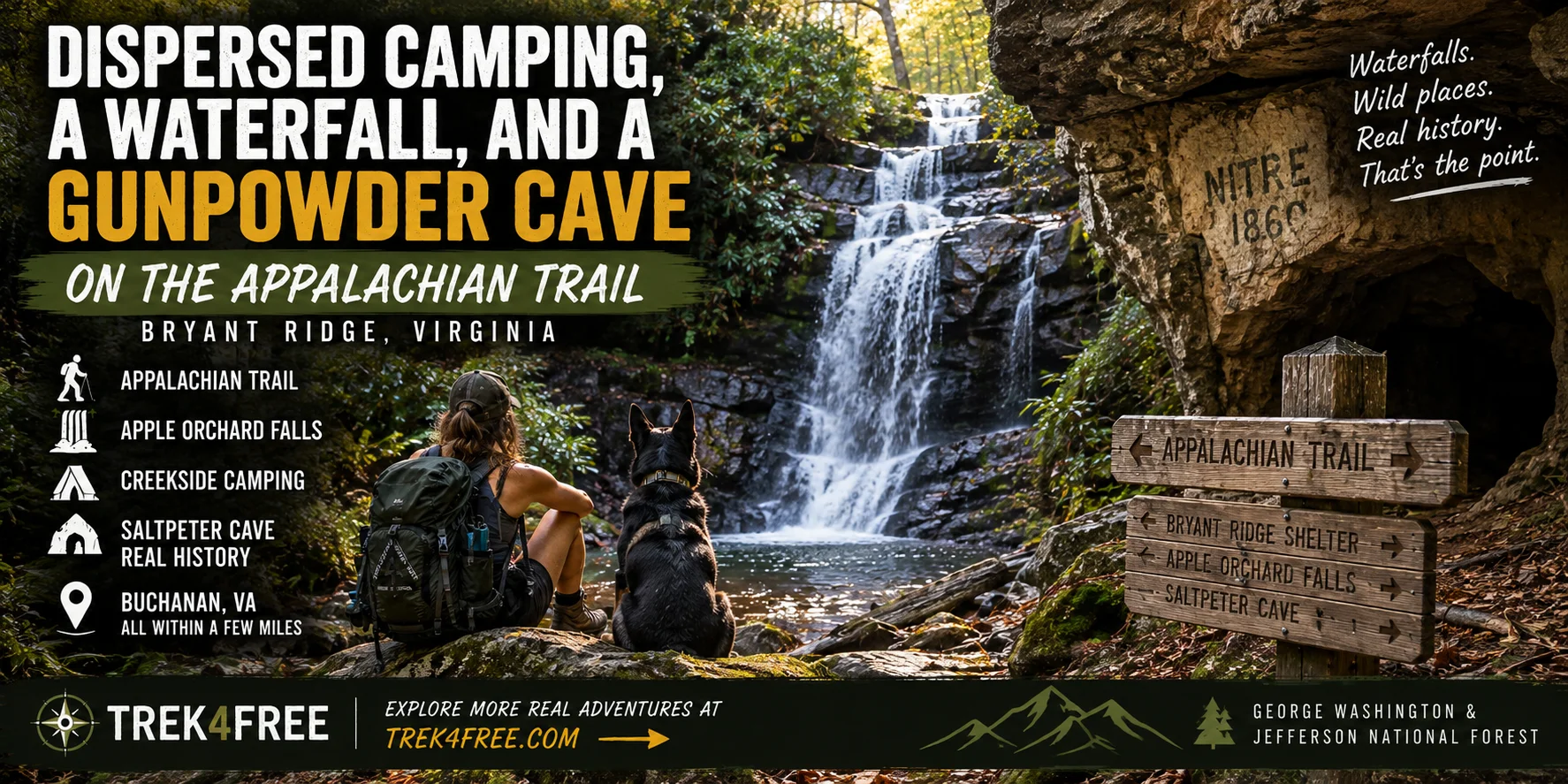
In the fall of 2025, we drove the Appalachian Mountains from Georgia to Virginia.
We’d done a version of this before, back in 2015. Not a weekend trip — we lived in our Toyota van for over three months, running the entire East Coast from Key West all the way to Maine. Every few days we’d find a trail, run it, move on. It was one of the best stretches of our lives.
That trip ended in the Virginia mountains.
We were climbing uphill somewhere in the Blue Ridge when we heard it — a mechanical pop from somewhere in the engine bay, and then the van just lost power. Not dramatically. It didn’t die, didn’t seize, didn’t strand us on the side of the road. That little Toyota kept going. I don’t know how. I turned it around so gravity was in our favor and coasted toward Richmond. We found a mechanic.
Blown head gasket.
The van sat at that shop for over a year before we got it back. And I’ll say this about that truck: it never truly left us stranded. Not once. Every time something went wrong, we made it somewhere — just maybe not fully capable of what it was supposed to be doing.
In 2015 the logistics had been manageable. Find a Walmart on the edge of town, park for the night, move on in the morning. Hop off the interstate at a Love’s or a Pilot for a truck stop overnight. Find a National Forest road and pull in. It wasn’t glamorous, but it worked — and we made three months of it work without much friction.
The 2025 version was different.
Walmart after Walmart in the larger towns and tourist corridors had posted no-overnight signs. City ordinances, store management decisions, liability concerns — the reasons varied, but the result was the same. We’d scout the lot, find the sign, and keep driving. Some stores were still welcoming. Others had tightened down. The smaller, rural locations were more likely to wave you through. The ones near interstates or in busy areas had often changed their policy.
Love’s and Pilot were hit or miss. Truck parking lots technically exist for commercial vehicles, and in practice, a car or SUV sitting overnight sometimes draws attention and sometimes doesn’t. We made it work. But it required more checking, more asking, more uncertainty than we remembered.
The frustration wasn’t any single rejection. It was the accumulation of them.
By the time you’ve been turned away twice, checked two more Walmarts on your phone, circled a Love’s parking lot once to read the signs, and settled on a rest area that technically doesn’t allow overnight parking but seems to be tolerated — you’ve spent an hour and a half just trying to sleep somewhere legal.
That’s not car camping. That’s car camping paperwork.
What Changed
The short answer is that the East Coast has been catching up to the modern reality of van life and car camping culture — and not in a welcoming way.
As the community grew, so did visibility. And as visibility grew, so did pushback from municipalities, property owners, and businesses managing their lots for their primary customers. Walmart’s corporate policy still officially allows overnight parking where local law permits, but an estimated 20% of stores now prohibit it — mostly in larger cities, tourist destinations, and anywhere that’s seen problems with people treating a parking lot like a campsite for weeks at a time.
None of this is irrational from a business standpoint. But for car campers threading through the Appalachians trying to move efficiently and sleep legally, it adds up fast.
The eastern National Forests exist — Pisgah, Nantahala, George Washington, Jefferson, Chattahoochee — and they do allow dispersed camping. But they’re smaller, patchier, and often hemmed in by private land on all sides. Finding a legal pullout that’s clearly on National Forest land, accessible by a passable road, flat enough to sleep on, and not posted with restrictions takes research. Sometimes a lot of it.
The East has public land. It just doesn’t have enough of it in the right places.
Oregon: Ten Months Later
We went to Oregon in the summer of 2026.
We rented a minivan — no custom build, no roof rack, nothing fancy — and drove across the Cascades, the Jemez equivalent of which doesn’t exist on the East Coast.
What we found was almost embarrassing by comparison.
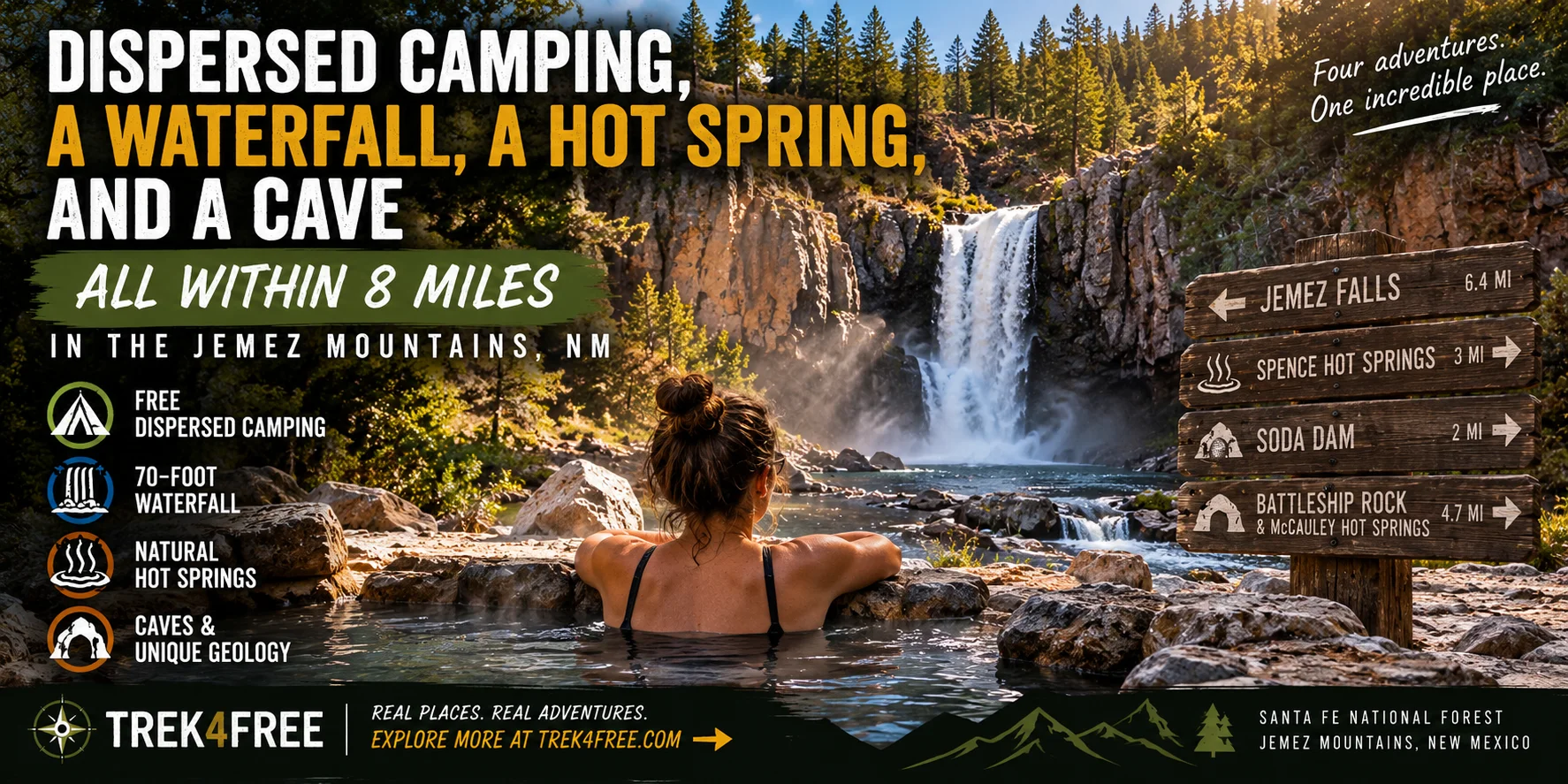
Along Highway 4 in the Jemez, along the McKenzie River corridor in Oregon, along virtually every forest road we turned down: dispersed camping pullouts. Vault toilets every few miles. Rivers close enough to filter for washing up. Sites that were established enough to have fire rings but primitive enough to be free and first-come.
In the Cascades and high desert east of Sisters, we passed what felt like a campsite opportunity every two or three miles. We didn’t fight for spots. We chose them.
The feeling isn’t just logistical convenience. It’s something harder to name — a sense that you’re allowed to be there. That the land around you is public land, that you have as much right to it as anyone, and that no one is going to knock on your window at 2 AM.
That feeling is what car campers are chasing. In the West, it’s the default. In the East, it’s the exception you have to work for.
The Number That Explains Everything
Here’s the data point that reframes the whole conversation:
The Bureau of Land Management manages 264 million acres west of the Mississippi River.
East of the Mississippi? About 30,000 acres.
That’s not a typo. The BLM — the agency that manages most of the open dispersed camping land in the country — has almost no presence on the East Coast at all. What exists is patchy, small, and not well connected to National Forest land.
Add the USFS holdings: the western National Forests are massive, contiguous blocks of public land. The eastern forests are real, but smaller and more fragmented, interleaved with private property, state jurisdiction, and county roads that may or may not be publicly accessible.
When you’re driving through Oregon or New Mexico and the map is green as far as you can see, that green is real. It means you can camp there. When you’re driving through Virginia or Georgia and you zoom the map in, the green patches are smaller, farther apart, and more likely to have restrictions attached.
This isn’t a moral judgment. The East was settled first and has had two extra centuries of land getting bought, deeded, built on, and regulated. The West was a late addition to the continental United States, and the federal government retained enormous amounts of land in the process. That’s just history.
But it shapes your experience on the road in ways that feel personal even when they’re structural.
East Coast Car Camping Still Works — With Different Tools
We don’t want to write off the East. We live in Texas, which splits the difference — some public land, some dispersed camping, nothing like the Rockies.
The Appalachian trip was harder than Oregon, but we did it. Here’s what actually worked:
The Appalachian National Forests. Pisgah, Nantahala, and Chattahoochee in particular have dispersed camping that’s genuinely accessible with a little homework. You need to identify which roads are Forest Service roads, pull up the forest map (not Google Maps — the actual USFS motor vehicle use map), and find a road that’s open to dispersed camping. It exists. It just requires more planning than the West.
Smaller Walmarts in rural areas. The stores that still say yes are almost always in small towns away from interstate corridors. A 24-hour Walmart in a county seat that sees mostly local traffic is a different environment than one off I-81 in a tourist town. Checking ahead via phone or the app saves time.
Rest areas and welcome centers. Technically limited in most states, but many tolerate overnight vehicles. Safer and more legal than a parking lot argument.
The Trek4Free Explore Map. Filter to free camping in any state and look at the density. The visual difference between a western state and an eastern one is striking. It’ll show you where the public land clusters are — which in the East often means driving slightly off your route to find a National Forest pocket.
The West Is the Answer — When You Can Get There
If you’re debating a trip, and you have the flexibility to choose your route, go west.
This isn’t about the scenery, though the scenery is incredible. It’s about the infrastructure of free camping that exists in the West in a way it simply doesn’t in the East. You’ll spend less time researching, less time rejected, less time circling parking lots, and more time actually sleeping outside with the windows cracked and no one bothering you.
Car camping was always supposed to feel like freedom. In the West, most of the time, it still does.
Find free dispersed camping near you on Trek4Free →
Gear That Works Both Coasts
These are affiliate links — we appreciate your support, no extra cost to you.